
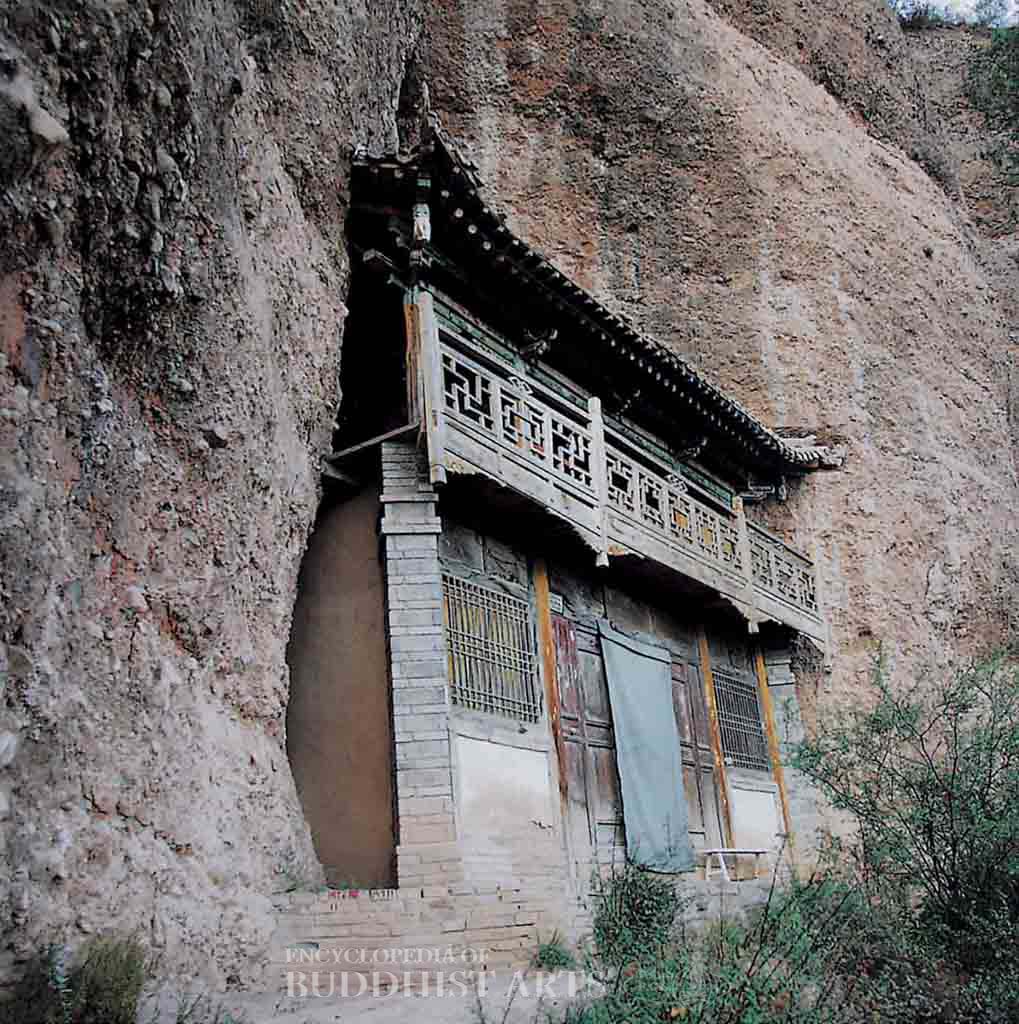
Muti Temple Caves: Cave 14
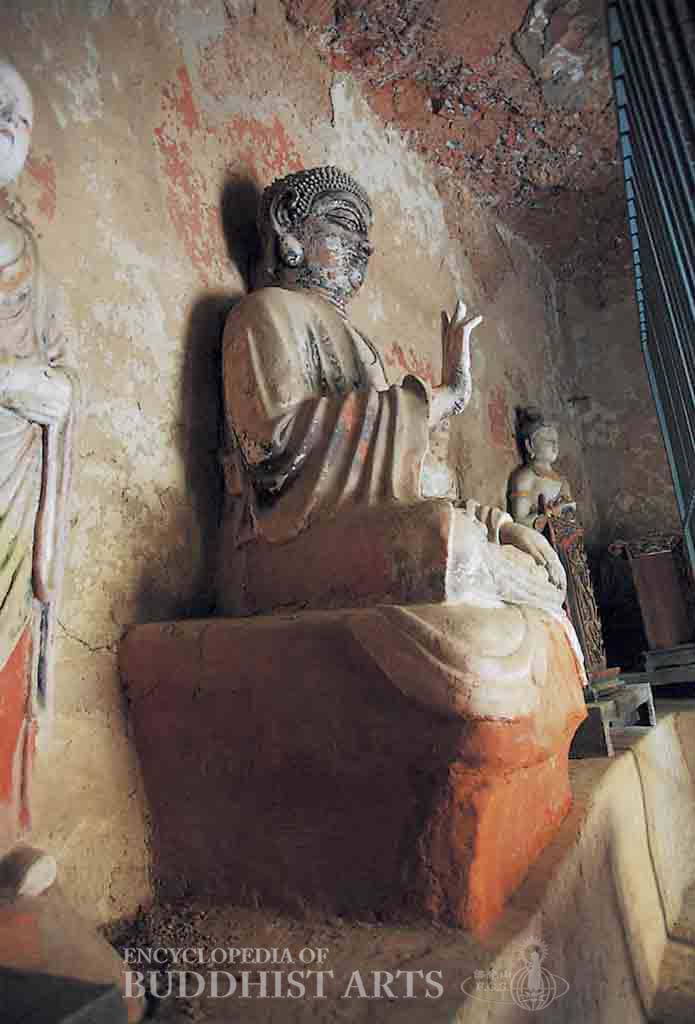
Muti Temple Caves: Cave 5 - Sculptures; Tang to Song dynasty; Stone-core clay
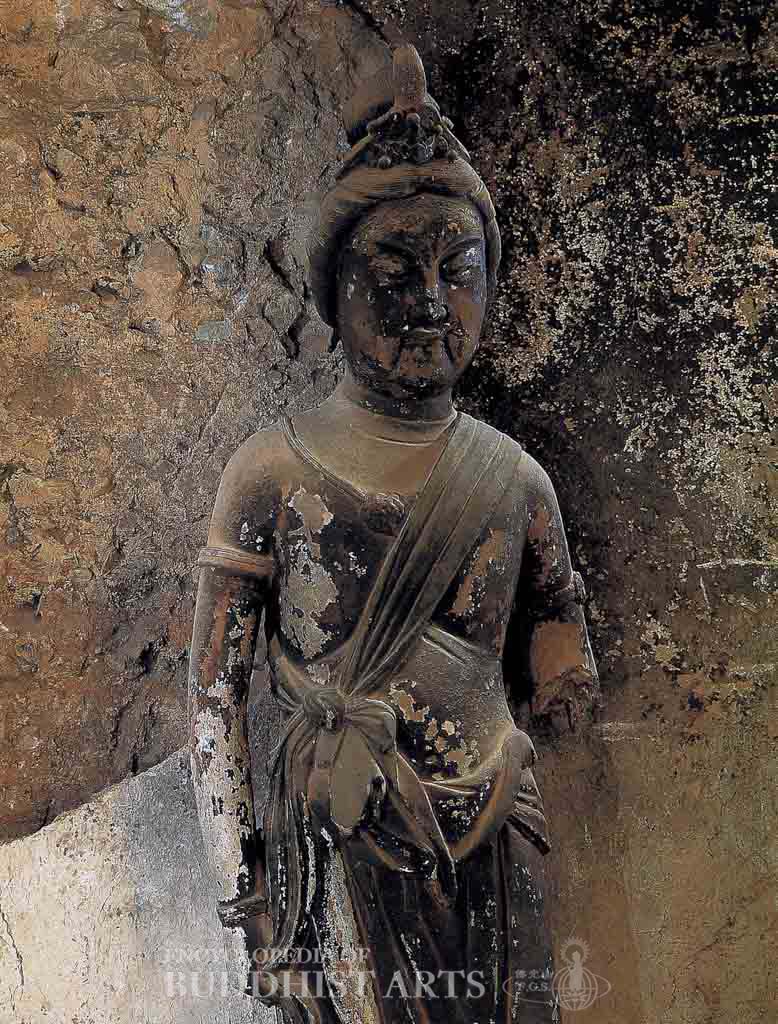
Muti Temple Caves: Cave 7 - Bodhisattva; Song dynasty; Stone-core clay; H: 2.15 m
Muti Temple Caves
CHINA, Gansu, Tianshui
The Muti (Wooden Ladder) Temple Caves are situated within a cypress forest near Mali, a town 30 km southwest of Wushan in Tianshui. They were excavated first during the Northern Wei dynasty (386–534) and further expanded throughout the Tang dynasty (618–907), Five Dynasties (907–960), Song dynasty (960–1279), and Yuan dynasty (1271–1368). Restorations were carried out between the Ming (1368–1644) and Qing (1644–1911) dynasties. They were listed as a National Cultural Heritage Site in 2006.
According to the Preface to the Restoration of Muti Temple, there were originally nine halls, ten caves, and two brick pagodas. The two brick pagodas are in ruins. At present, 80 sculptures and 234 murals can be found in the remaining halls, caves, and niches. The caves are varied in layout. Caves 6, 8, 9, and 10 were excavated during the Northern Wei dynasty and exhibit flat or truncated pyramidal ceilings. Cave 14 was excavated during the Tang dynasty and contains a Buddha figure with two Bodhisattvas. Caves 5 and 7 have flat ceilings and high altars; they originated in the late Tang to Song dynasties. Cave 11 is a Yuan dynasty shallow niche sculpted directly into the cliffside. Among the many caves and niches, Caves 1, 5, 7, 9, and 16 are considered works of high artistic value. They are also in relatively better condition. The Muti Temple Caves represent a valuable source for studying the development of Buddhist cave art in Gansu.
For more details, go to the Encyclopedia of Buddhist Arts: Caves Mo-S, page 1252.
Cite this article:
author = Hsingyun and Youheng and Johnson, Peter and Mankuang and Huntington, Susan and Edson, Gary and Neather, Robert,
booktitle = {Encyclopedia of Buddhist Arts: Caves Mo-S},
pages = 1252,
title = {{Muti Temple Caves}},
volume = 8,
year = {2016}}