
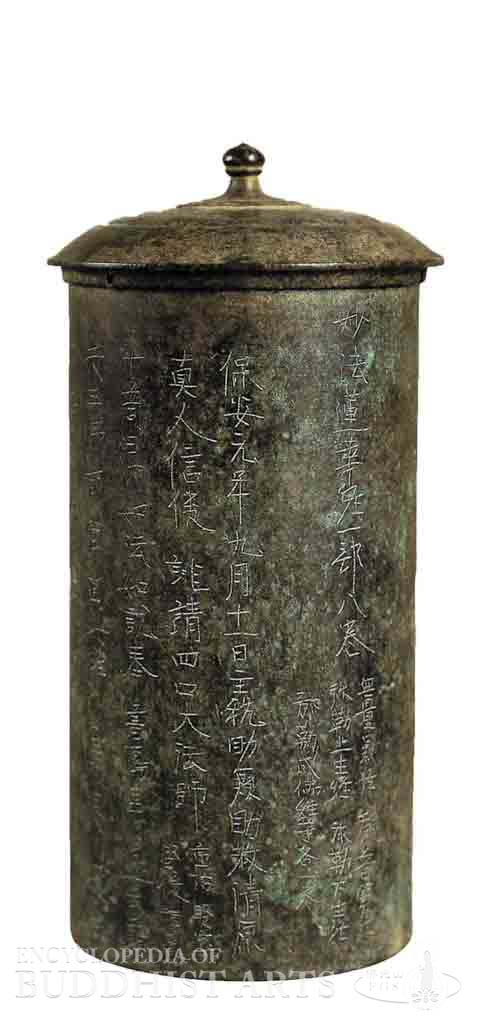
Kuramadera Temple Sutra Mound: Sutra Containers - Container with Inscription
Bronze
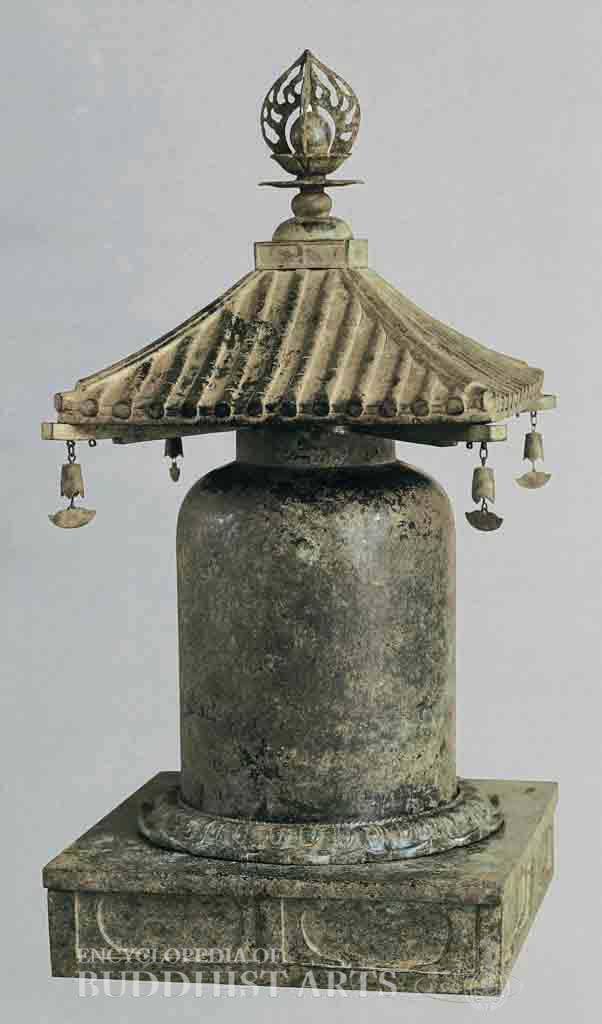
Kuramadera Temple Sutra Mound: Sutra Containers - Pagoda
Bronze
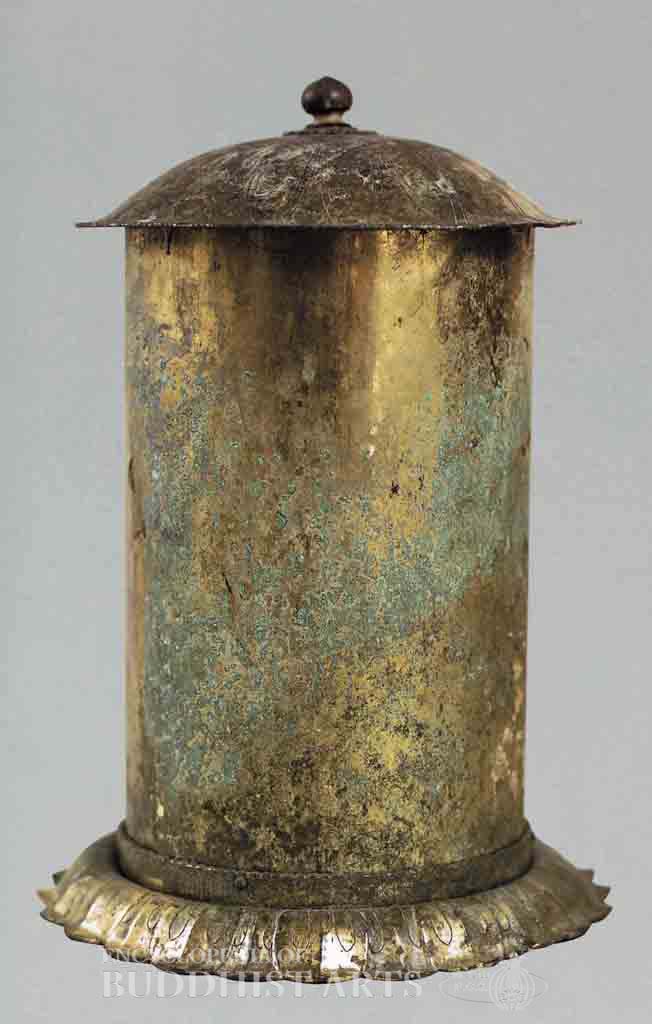
Kuramadera Temple Sutra Mound: Sutra Containers - Gilt Bronze Sutra Container
Gilt bronze
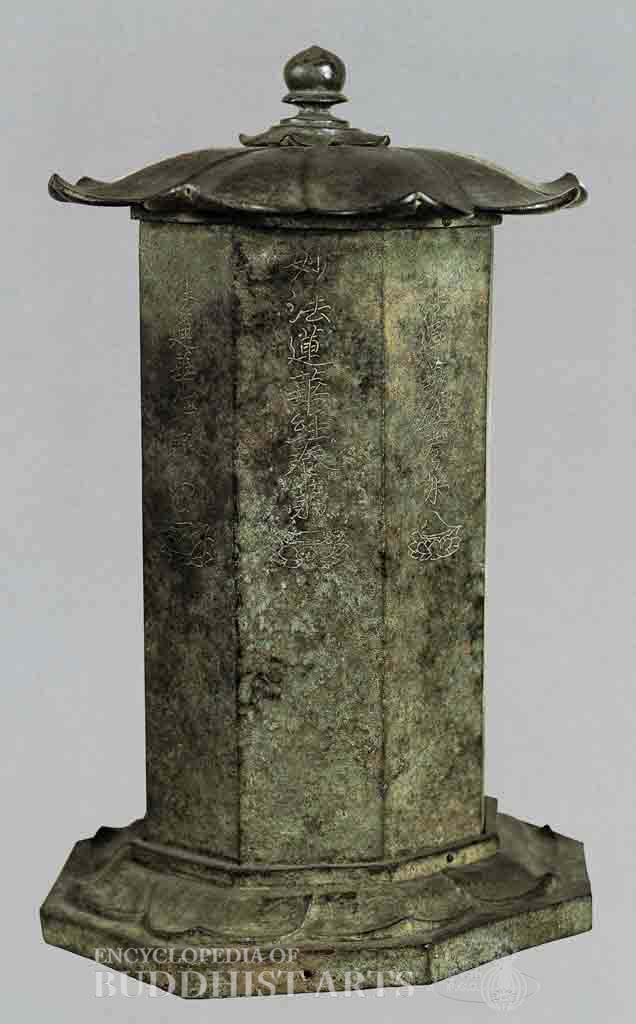
Kuramadera Temple Sutra Mound: Sutra Containers - Octagonal Sutra Container
Bronze

Kuramadera Temple Sutra Mound: Sutra Containers - Buddha Triad
Gilt bronze

Kuramadera Temple Sutra Mound: Sutra Containers - Mirror
Bronze
Kuramadera Temple Sutra Mound: Sutra Containers
JAPAN, Kyoto; Heian period
Created to preserve the Lotus Sutra during the predicted Age of Dharma decline, the Kuramadera Temple Sutra Mound was situated behind the main hall. More than 200 artifacts were discovered during excavations in 1878, 1923, and 1931.
These bronze sutra containers were the oldest among the artifacts discovered in the mound. They were listed as a National Treasure in 1955. The containers are cylindrical with a conical lid surmounted by jewels. One example has ten rows of inscriptions with a total of 108 characters and is dated to 1120. The sutra inside was written by a monastic from Kuramadera Temple at the request of Kiyohara Nobutoshi, in dedication to his parents.
Created during the later part of the Heian period, one of the bronze sutra containers is in the shape of a pagoda. This example consists of a base, body, roof, and spire. A ring of lotus petals on the base supports the body in the form of an inverted vase. On top of the body, there is a single-eave square pyramidal roof, with wind chimes hanging from the corners. The spire consists of a harmika, two inverted bowls, a canopy, an upright lotus, and a jewel surrounded by flames.
The gilt bronze container has a base decorated with lotus petals which supports the cylindrical body formed from forging. The lid is decorated with 16 lotus petals and is surmounted by a jewel.
The octagonal sutra container is reminiscent of a sutra pillar and consists of a base, body, and lid made of bronze. The octagonal lotus base supports an octagonal cylindrical body with a sutra title and a lotus carved on each side.
In addition, there are a number of artifacts of great historical value, such as a gilt bronze Buddha Triad and a mirror with Vaisravana, Heavenly King of the North, decorated with chrysanthemums and birds.
For more details, go to the Encyclopedia of Buddhist Arts: Artifacts, page 168.
Cite this article:
author = Hsingyun and Youheng and Youji and Pokorski, Stefanie and Mankuang and Fan, Wen,
booktitle = {Encyclopedia of Buddhist Arts: Artifacts },
pages = 168,
title = {{Kuramadera Temple Sutra Mound: Sutra Containers}},
volume = 18,
year = {2016}}