
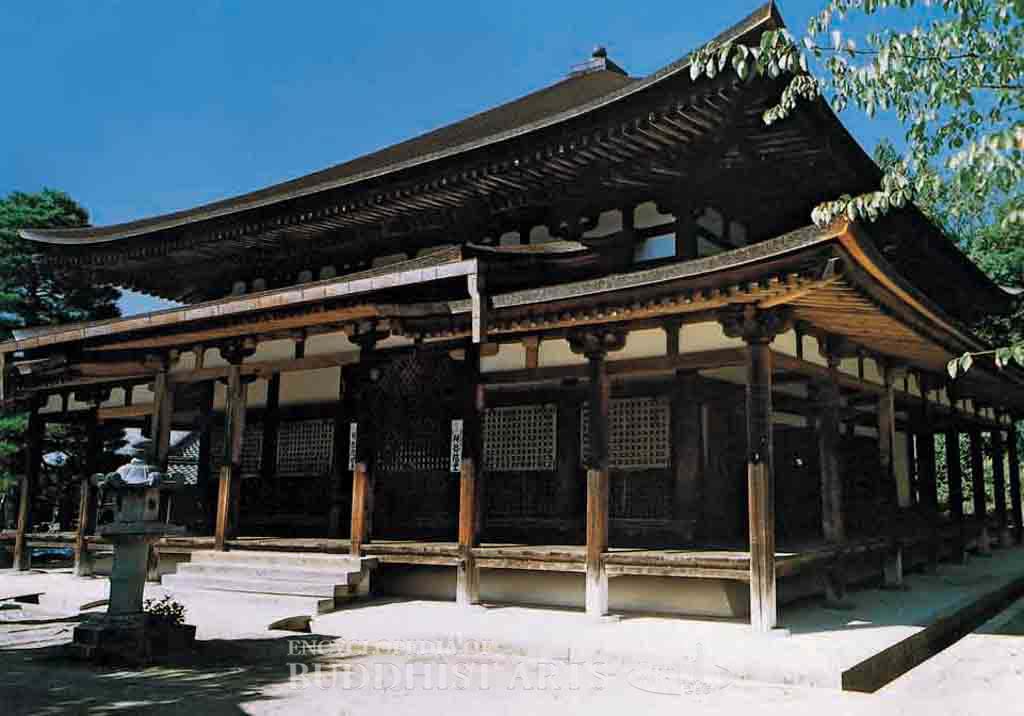
Hokaiji Temple: Amitabha Hall
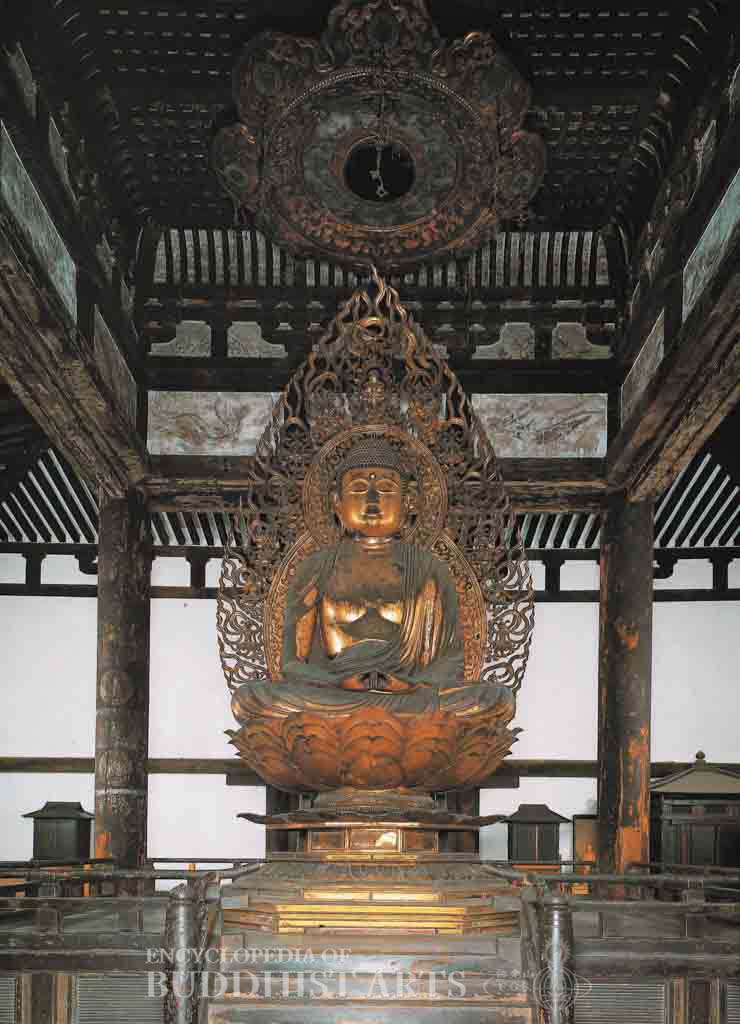
Hokaiji Temple: Amitabha Hall – Amitabha Buddha
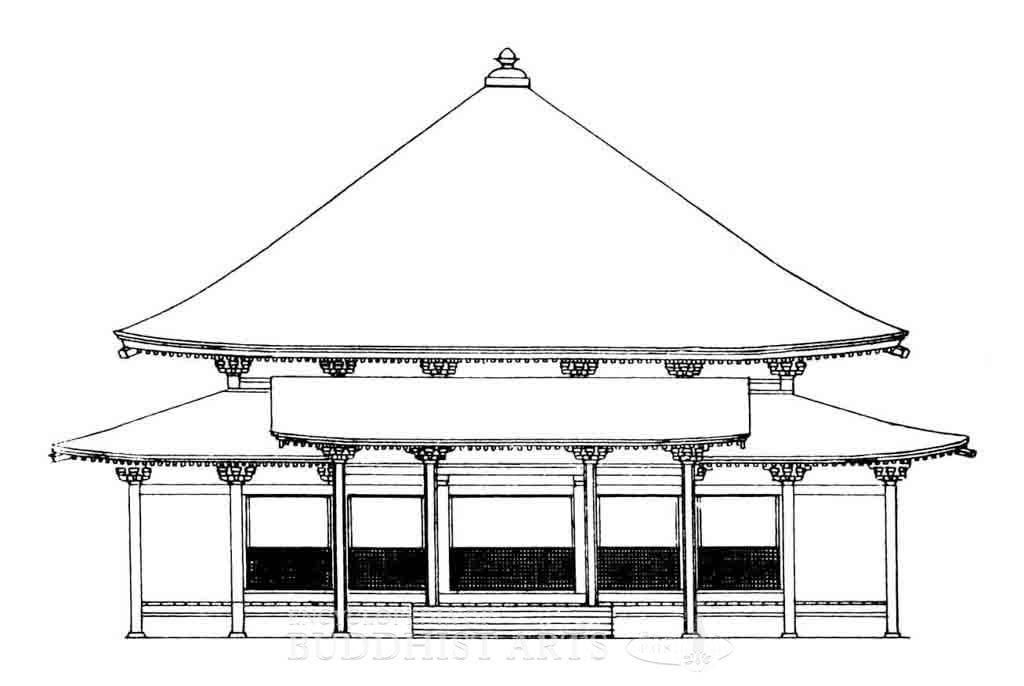
Hokaiji Temple: Amitabha Hall (elevation drawing)
Hokaiji Temple
JAPAN, Kyoto
The temple belongs to the Daigoji branch of the Shingon school of Buddhism. In 1051 during the Heian period, Sukenari Hino renounced and established the Medicine Buddha Hall, which he initially named Hinoji. The temple was later renamed Hokaiji. In the early Kamakura period (1185–1333), it was destroyed by fire and rebuilt several times.
The existing temple buildings are the Amitabha Hall and Medicine Buddha Hall. The five-by-five bay Amitabha Hall was rebuilt in 1226 during the Kamakura period. It has a double-eave pyramidal roof covered with cypress bark and a harmika and jewel at the apex. The raised ceiling is supported in the center by four wide pillars, which are painted with depictions of heavenly beings. There are also heavenly beings painted on the walls. The hall houses a statue of a seated Amitabha Buddha from the late Heian period (794–1185) styled after sculptor Jocho. The hall was listed as a National Treasure in 1951.
The Medicine Buddha Hall was rebuilt in 1456, during the Muromachi period, and contains a statue of the Medicine Buddha. Within the statue there is a small Medicine Buddha image sculpted by monk Saicho. It is supposed to fulfill the wishes of female devotees wanting to conceive or to have a safe birth.
For more details, go to the Encyclopedia of Buddhist Arts: Architecture G-L, page 445.
Cite this article:
author = Hsingyun and Youheng and Johnson, Peter and Mankuang and Lancaster, Lewis,
booktitle = {Encyclopedia of Buddhist Arts: Architecture G-L},
pages = 445,
title = {{Hokaiji Temple}},
volume = 2,
year = {2016}}