

Qinglian Upper Temple Sculptures
Clay
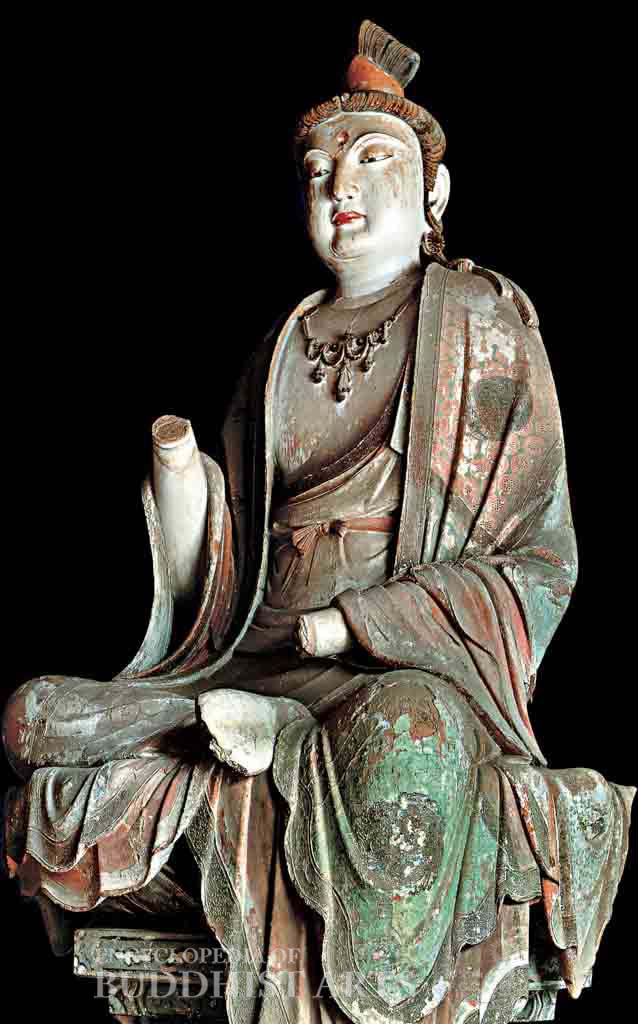
Qinglian Upper Temple Sculptures: Manjusri Bodhisattva
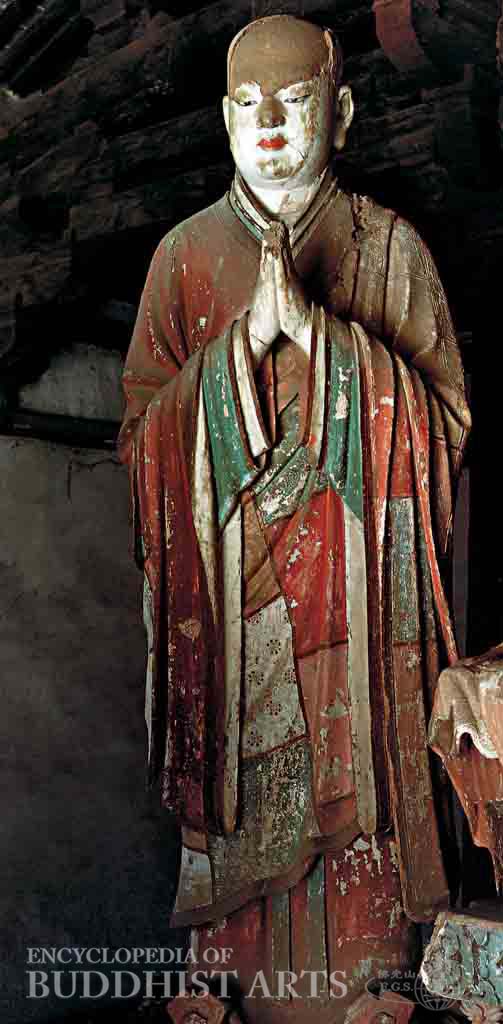
Qinglian Upper Temple Sculptures: Ananda

Qinglian Upper Temple Sculptures: Sakyamuni Buddha (detail)
Qinglian Upper Temple Sculptures
CHINA, Shanxi, Jincheng; Song dynasty
The temple’s sculptures are mainly found in the Sakyamuni Hall, Avalokitesvara Pavilion, and Ksitigarbha Pavilion. The Avalokitesvara Pavilion contains painted sculptures of Avalokitesvara and Sixteen Arhats created during the Song dynasty (960–1279). The Ksitigarbha Pavilion houses statues of Ksitigarbha and the Ten Kings of Hell, also created during the Song dynasty.
The statues of Sakyamuni Buddha and the Bodhisattvas Manjusri and Samantabhadra are located within the Sakyamuni Hall. The three main figures are seated cross-legged upon Sumeru thrones. Sakyamuni is accompanied by his disciple Ananda and supported from beneath by yaksas. The figure’s backscreen is scenic and lavishly decorated. Ananda stands on a lotus pedestal to the left with his palms joined in reverence. The statue of Mahakasyapa on the other side is now missing. The Bodhisattvas sit opposite each other with hair piled in high topknots. Their bright and flowing garments drape over the throne in a natural way and are arranged in a way that the lion and elephant, their symbolic vehicles below, are not covered.
For more details, go to the Encyclopedia of Buddhist Arts: Sculpture N-Sr, page 863.
Cite this article:
author = Hsingyun and Youheng and Lovelock, Yann and Chou, Yuan and Huntington, Susan and Edson, Gary and Neather, Robert,
booktitle = {Encyclopedia of Buddhist Arts: Sculpture N-Sr},
pages = 863,
title = {{Qinglian Upper Temple Sculptures}},
volume = 12,
year = {2016}}