
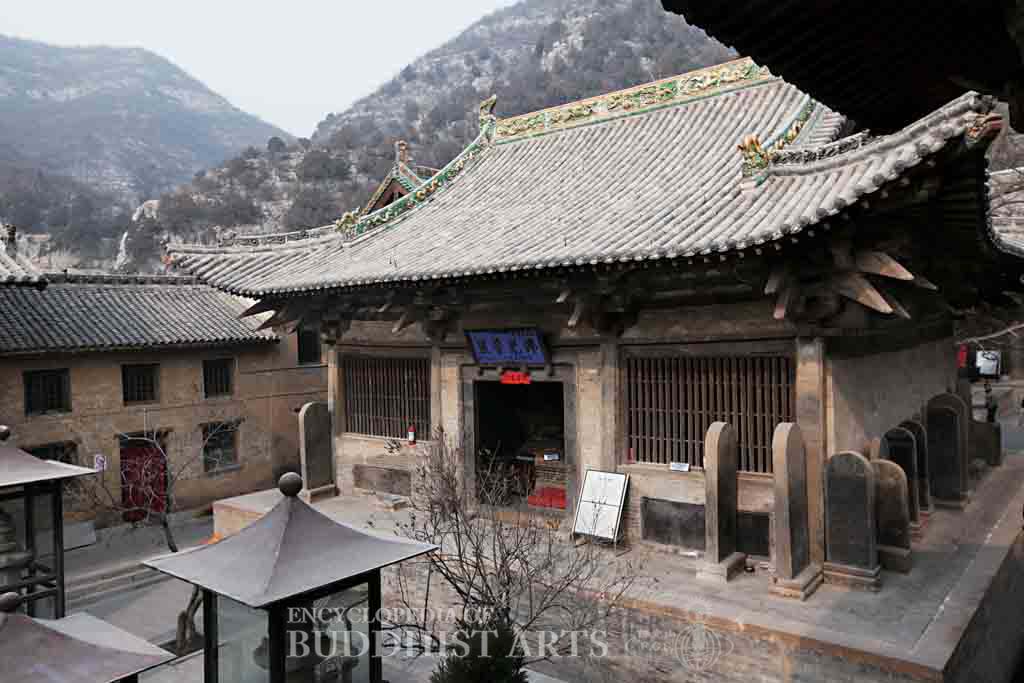
Qinglian Upper Temple: Sakyamuni Hall
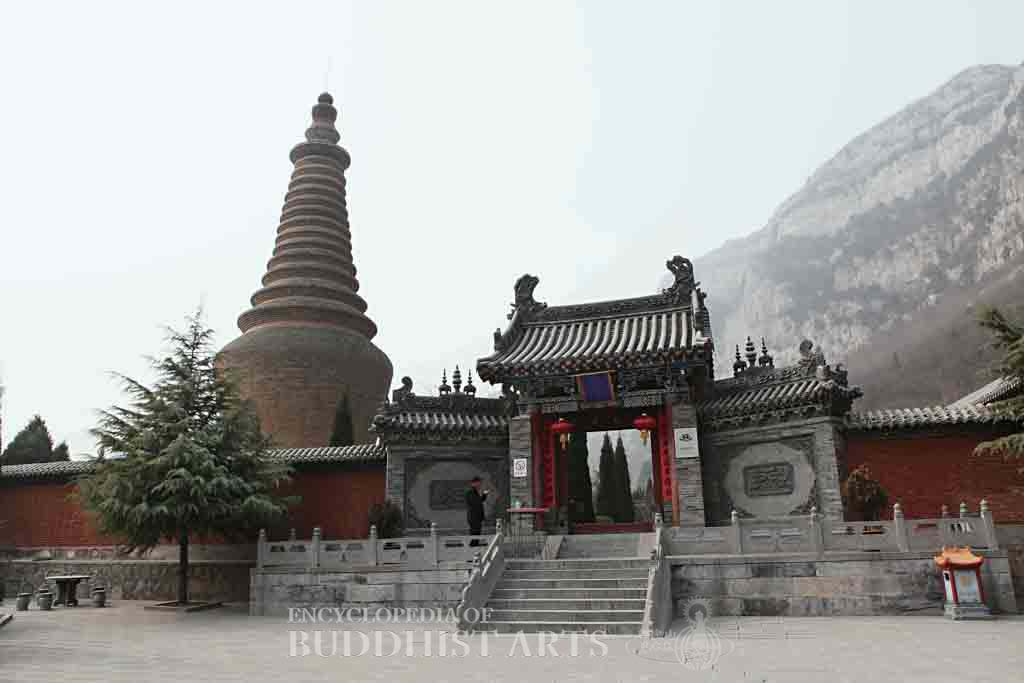
Qinglian Lower Temple
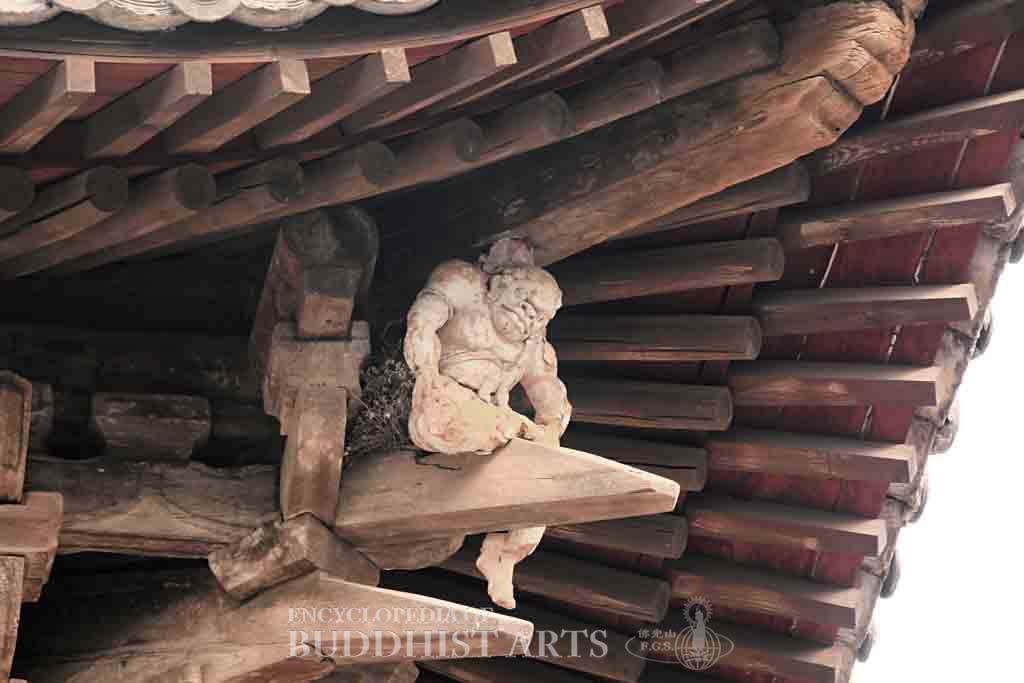
Qinglian Upper Temple: Sutra Repository - Corner Eaves
Qinglian Temple
CHINA, Shanxi, Jincheng
Qinglian Temple consists of Upper Temple and Lower Temple, which are 300 m apart. The Lower Temple was established by Master Huiyuan in 552 during the Northern Qi dynasty. In 828 during the Tang dynasty, the Upper Temple was built and they formed one temple. Although they became separate temples in 978 during the Northern Song dynasty, they were reunited during the Ming dynasty (1368–1644). The temple was listed as a National Cultural Heritage Site in 1988.
The Lower Temple, or Old Qinglian Temple, faces south and the buildings include the main hall, south hall and the Tibetan Relic Stupa. The central statue in the main hall is Sakyamuni Buddha accompanied by Mahakasyapa, Ananda, Manjusri Bodhisattva, and Samantabhadra Bodhisattva. Before the statue of Sakyamuni, there is a smaller statue of a youth making an offering, as well as Dharma protectors. These colorful molded statues were all created during the Song dynasty (960–1279). The three-by-three bay south hall has a single-eave overhanging gable roof. It contains a Buddha, two disciples, two Bodhisattvas, and two Heavenly Kings, which all date back to the Tang dynasty (618–907). There is a rare stele with a diagram of a Tang Buddhist temple providing valuable information for the study of Tang architecture.
The Upper Temple was constructed over different dynasties. In front of the temple is a platform with the east and west pavilions on top of it. Behind the pavilions there are the Heavenly King Hall, sutra repository, Sakyamuni Hall, and the Great Hero Hall. The side buildings include the Avalokitesvara Pavilion and Ksitigarbha Pavilion which are arranged symmetrically. The three-by-three bay Sakyamuni Hall was constructed in 1089 during the Northern Song dynasty and has a single-eave hip-and-gable roof. Statues of a Buddha, two Bodhisattvas, and two disciples are enshrined on a square altar within the hall. The Avalokitesvara Pavilion was built in 1101 during the Northern Song dynasty and houses painted sculptures of Avalokitesvara and the Sixteen Arhats from the Song dynasty. The Record of the Arhat Stele carved on the back wall dates back to 1118 and is considered to be an important historical text, since it contains the names of the Sixteen Arhats as well as the Five Hundred Arhats.
For more details, go to the Encyclopedia of Buddhist Arts: Architecture M-S, page 874.
Cite this article:
author = Hsingyun and Youheng and Johnson, Peter and Mankuang and Lancaster, Lewis,
booktitle = {Encyclopedia of Buddhist Arts: Architecture M-S},
pages = 874,
title = {{Qinglian Temple}},
volume = 3,
year = {2016}}