
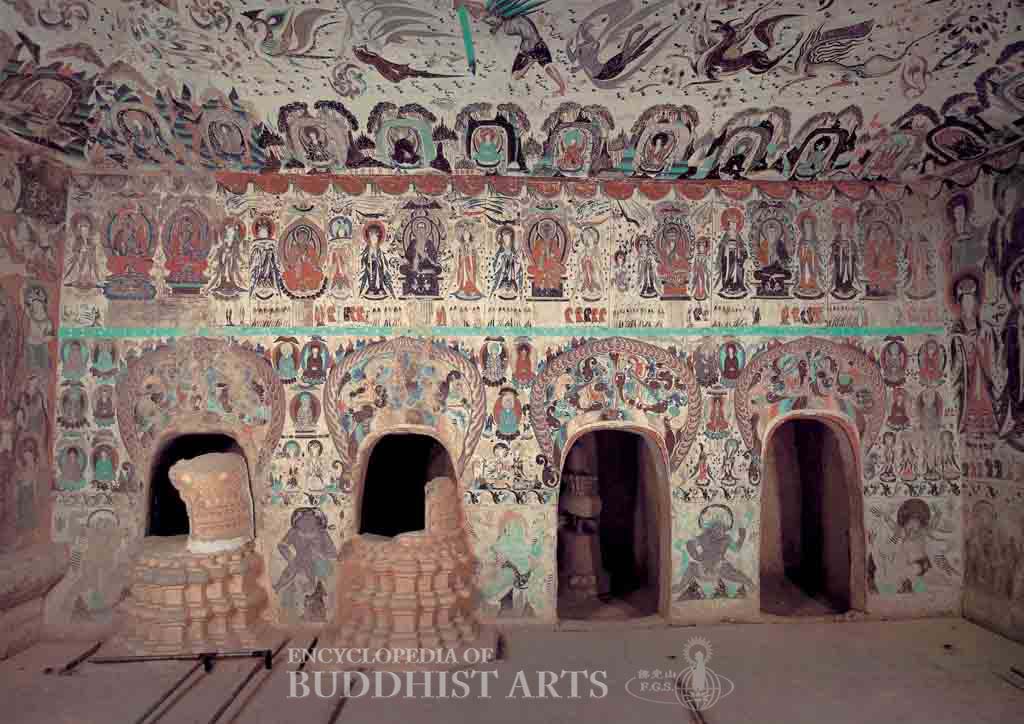
Mogao Cave 285: Meditation Cells (north wall)
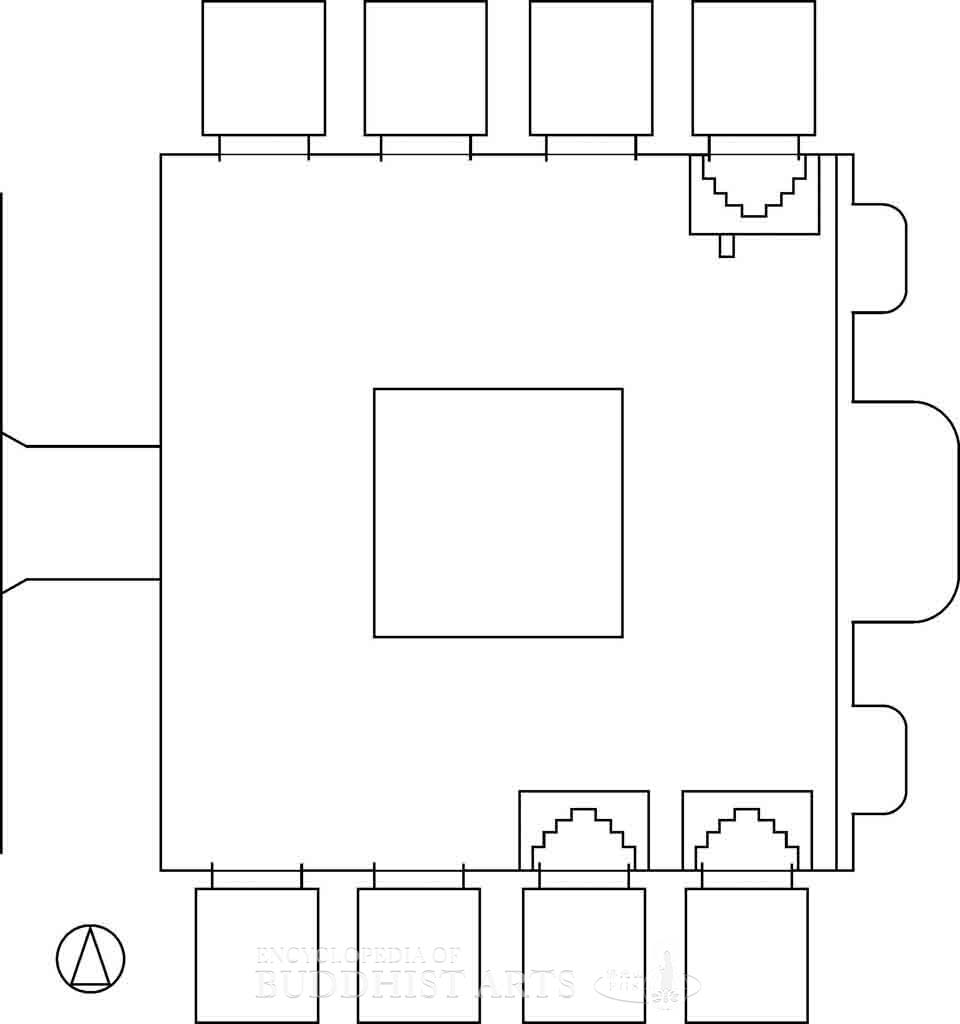
Mogao Cave 285: Meditation Cells (plan)
Mogao Cave 285: Meditation Cells
CHINA, Gansu, Dunhuang; Western Wei dynasty
Meditation caves are also known as vihara caves, and they consist of small cells used by monks for meditation practice. These eight small cells line the north and south walls of Cave 285. Such cells were an important architectural feature in early Buddhist caves. The structure of the meditation cells in this cave resembles that of Ajanta Cave 12 in Aurangabad, India. There are four square cells along each side wall, each measuring approximately 1 sq m in area and 1.3 m in height. Above the arched entrance to each cell is a flame-patterned border motif.
The thematic content of the surrounding sculptures and murals reflects the functional aspects of the cave. For example, there are statues of monks seated in meditation within the small niches on both sides of the back (west) wall; and on the slopes of the truncated pyramidal ceiling are landscapes comprised of mountain peaks, forests, and animals, interspersed with images of monks meditating in caves.
For more details, go to the Encyclopedia of Buddhist Arts: Caves Mo-S, page 1110.
Cite this article:
author = Hsingyun and Youheng and Johnson, Peter and Mankuang and Huntington, Susan and Edson, Gary and Neather, Robert,
booktitle = {Encyclopedia of Buddhist Arts: Caves Mo-S},
pages = 1110,
title = {{Mogao Cave 285: Meditation Cells}},
volume = 8,
year = {2016}}