
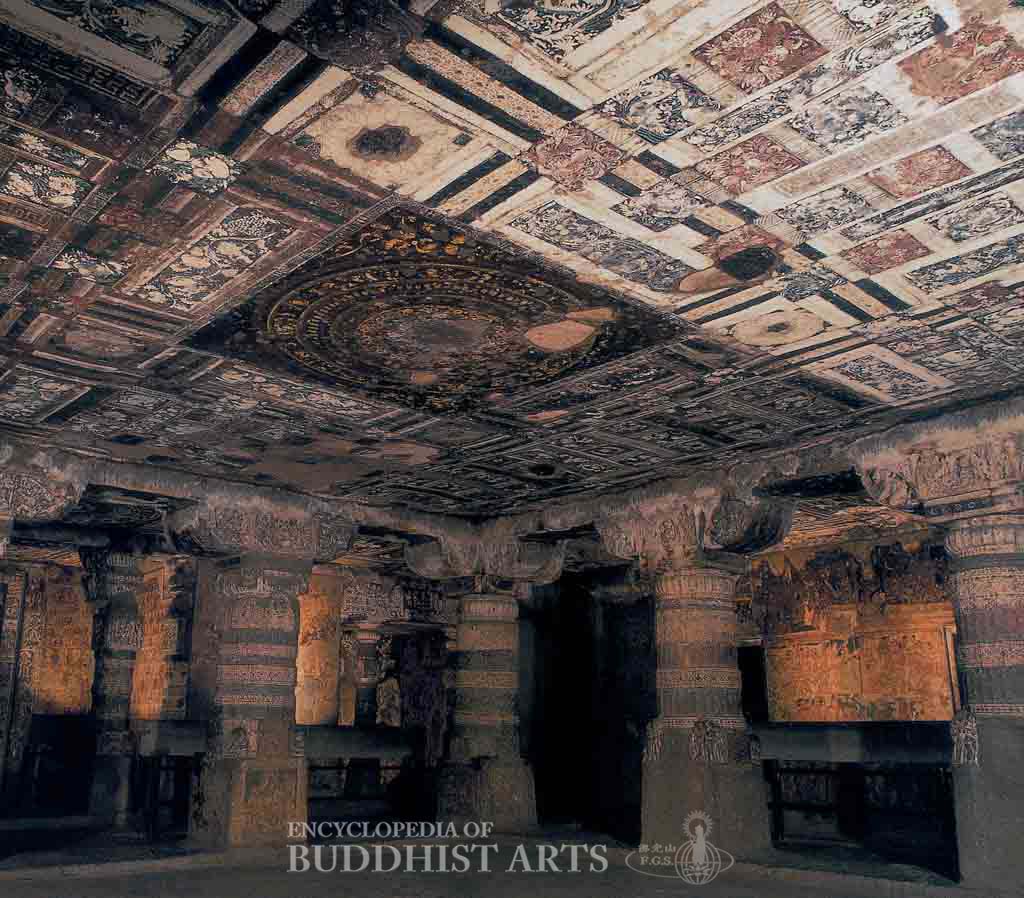
Ajanta Cave 2: Main Hall

Ajanta Cave 2 (plan)
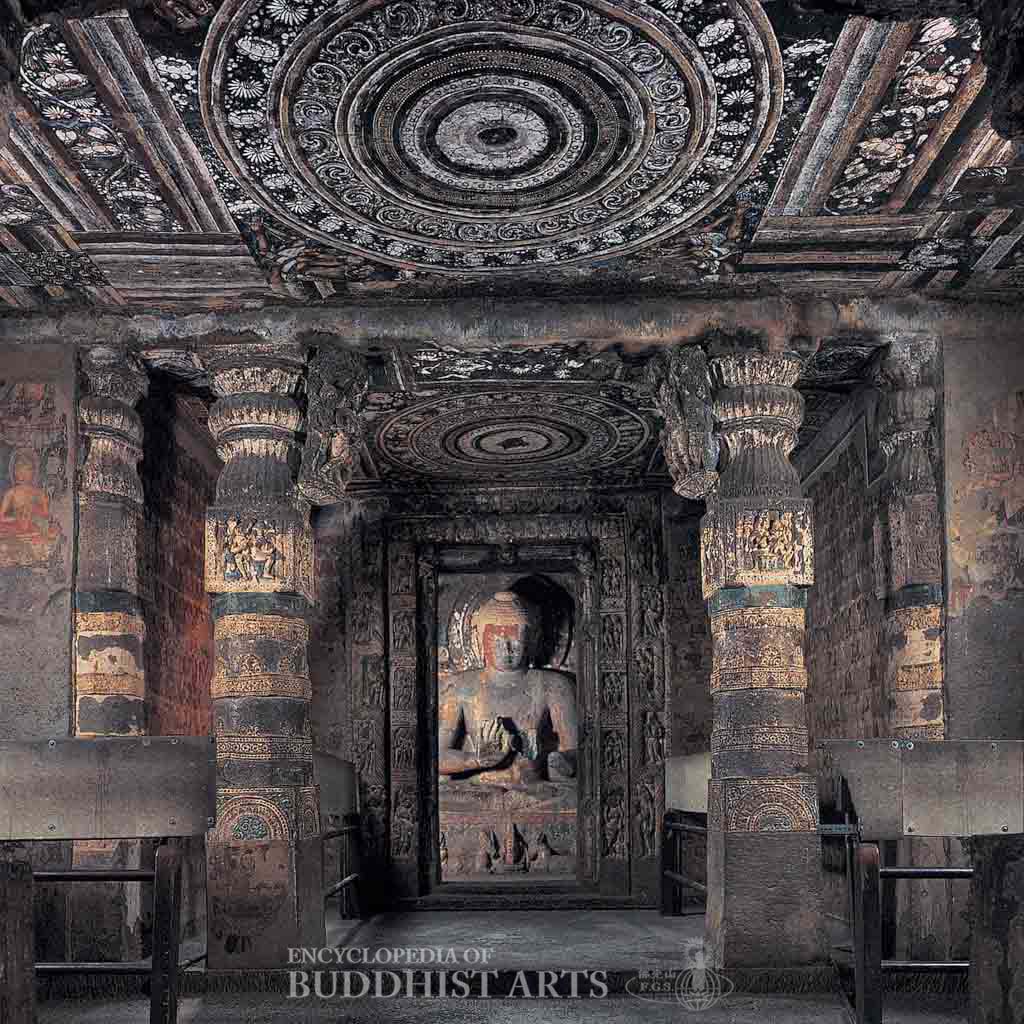
Ajanta Cave 2: Antechamber and Main Shrine
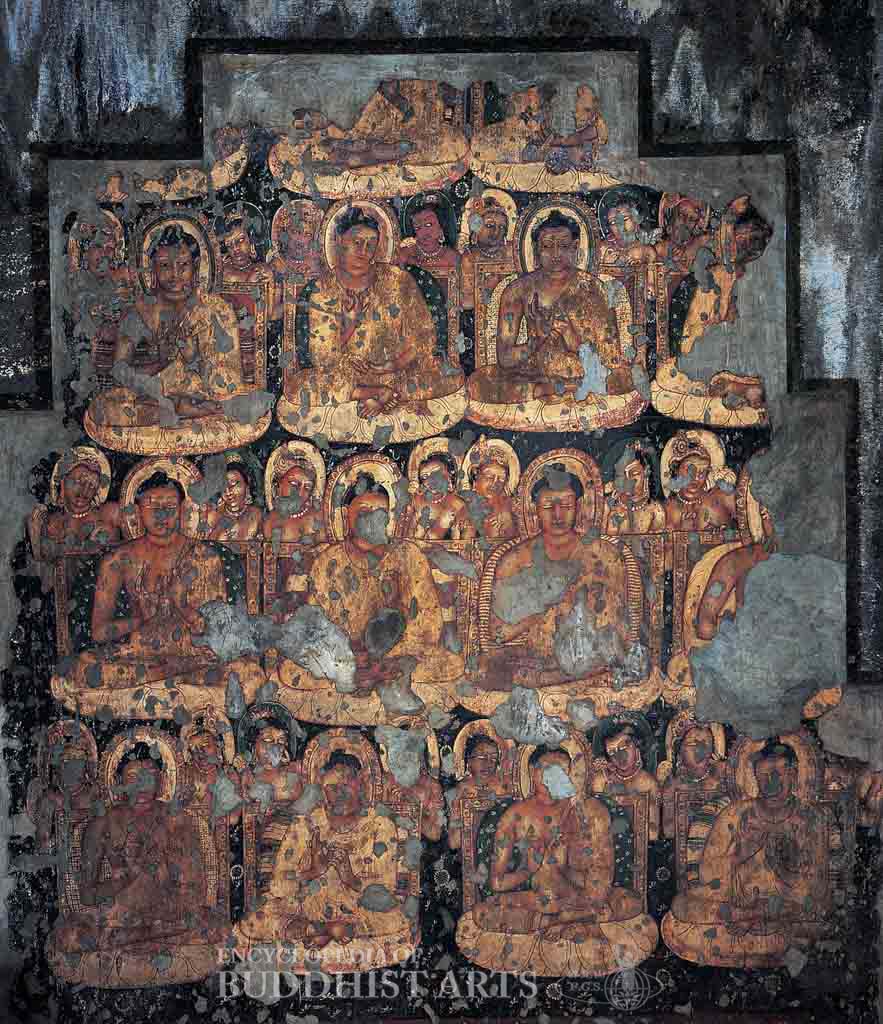
Ajanta Cave 2: Main Shrine - Seated Buddhas (left wall)
Ajanta Cave 2
INDIA, Maharashtra, Aurangabad
This cave is located in the east of the site and was built around mid-to-late 5th century. The layout is similar to that of Cave 1, though slightly smaller. It consists of a portico, main hall, protector shrines, antechamber, and main shrine, as well as numerous cells.
The portico is 14 m wide and 2.4 m deep; cells enshrined with Buddha images are found at either end. The main hall is 14.7 m wide and 14.5 m deep. There are 12 large pillars in the main hall and five cells along both the left and right walls of the hall. On the right and left of the back wall are protector shrines containing reliefs of Pancika and Hariti, and a pair of yaksas, respectively. A doorway at the center of the back wall leads to the antechamber and the main shrine. The main shrine is 4.3 m wide, 3.4 m deep, and contains a seated Buddha with attendant Bodhisattvas. All the sculptures within the shrines show traces of color.
In addition to the sculptural works, there are numerous colorful murals covering the interior walls of the cave. Large illustrations of Jatakas and the Life of the Buddha include such works as Vidhurapandita Jataka, Hamsa Jataka, the Inner Court of Tusita Heaven, the Interpretation of Queen Maya’s Dream, the Birth of Prince Siddhartha, and Thousand Buddhas. Buddhas, Bodhisattvas and other figures are found throughout the cave, and the ceilings are embellished with images of lotuses, floral patterns, apsaras, geese, and other mythical figures.
For more details, go to the Encyclopedia of Buddhist Arts: Caves A-E, page 19.
Cite this article:
author = Hsingyun and Youheng and Johnson, Peter and Mankuang and Huntington, Susan and Edson, Gary and Neather, Robert,
booktitle = {Encyclopedia of Buddhist Arts: Caves A-E},
pages = 19,
title = {{Ajanta Cave 2}},
volume = 5,
year = {2016}}