

Ajanta Cave 1: Courtyard and Portico
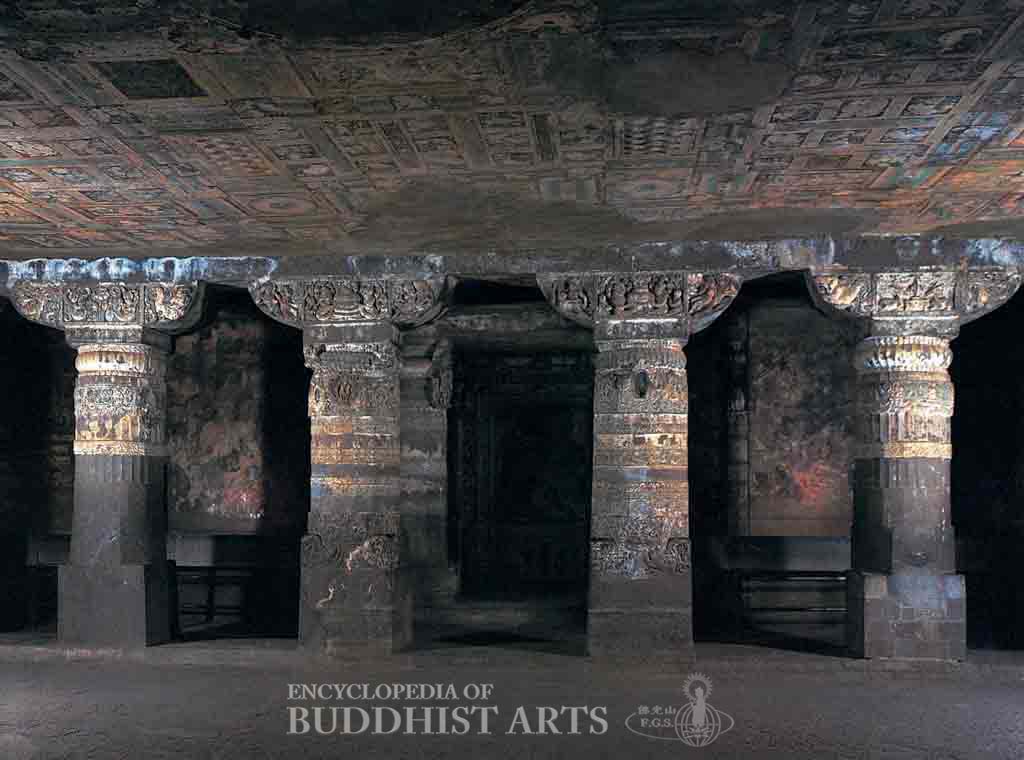
Ajanta Cave 1: Main Hall
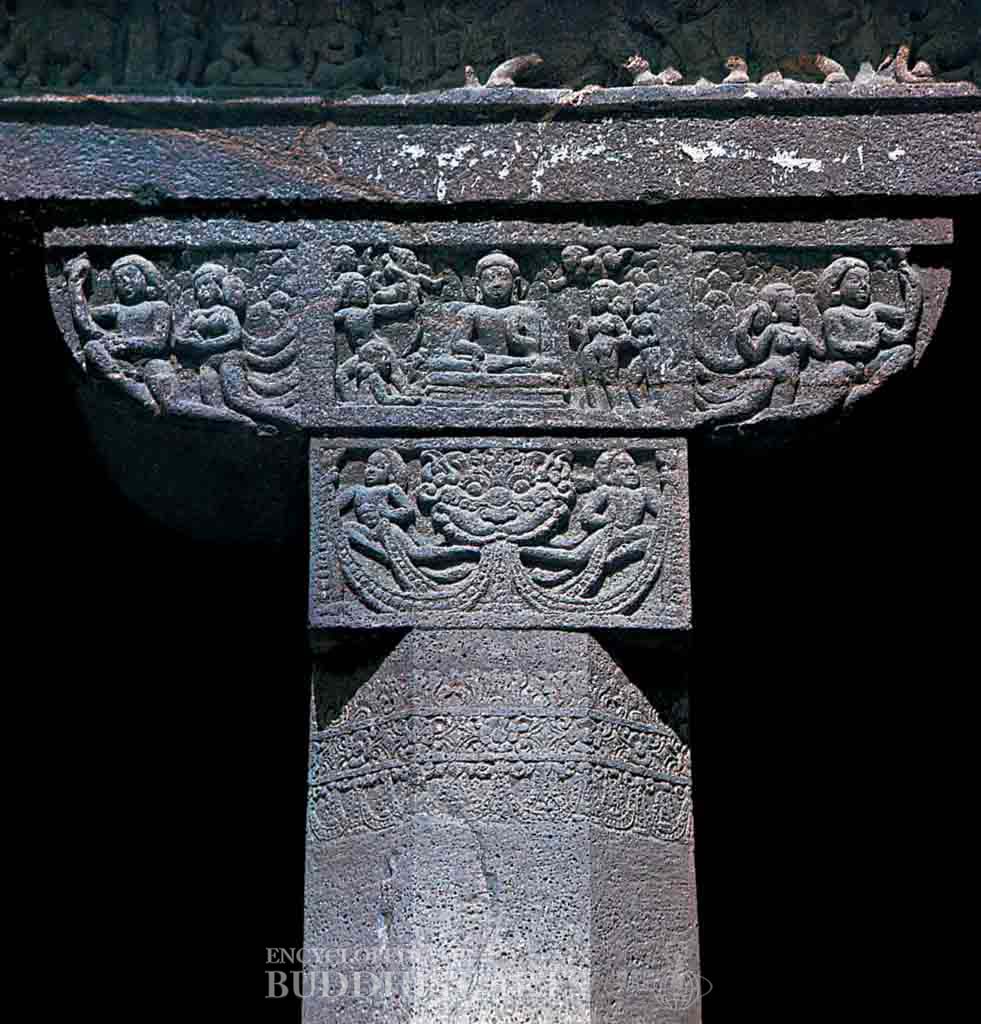
Ajanta Cave 1: Column Capital
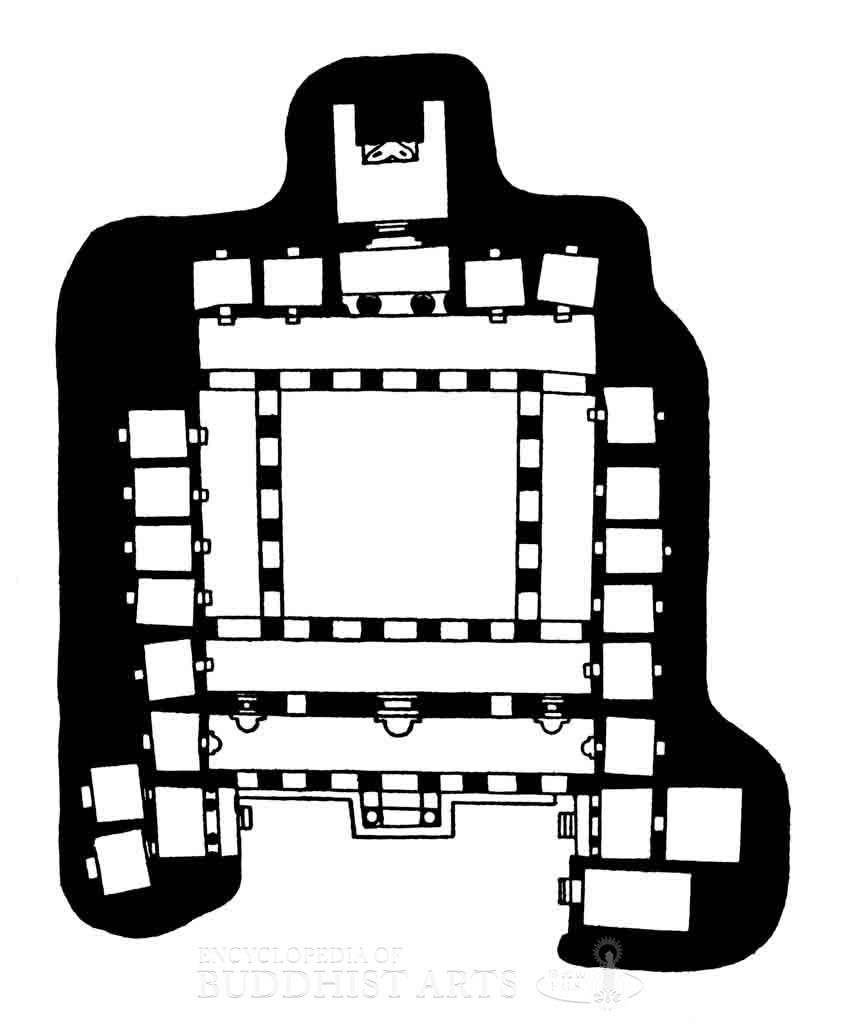
Ajanta Cave 1 (plan)
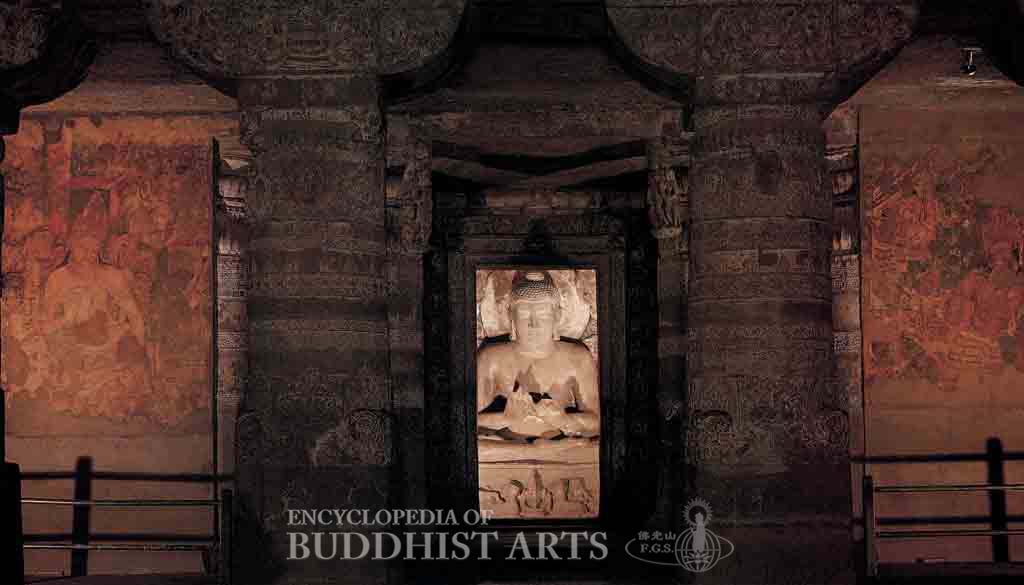
Ajanta Cave 1: Main Hall and Main Shrine
Ajanta Cave 1
INDIA, Maharashtra, Aurangabad
This vihara cave is located on the southeast side of the site and was created around mid-to-late 5th century. The cave consists of a courtyard, portico, main hall, antechamber, and main shrine, as well as a series of cells. The portico is supported by a row of columns and is 19.5 m wide, 2.8 m deep, and 4.1 m high. There are doorways at either end leading to small cells. The main hall is square, at 19.5 m in width and depth, and contains a colonnade of 20 columns that form outer aisles 2.9 m wide on all four sides. Fourteen small cells are cut into the three walls. At the rear is an antechamber and beyond this is the main shrine room, also square at 6 m wide and 6 m deep. Within the main shrine is a seated Buddha statue that forms the Dharmacakra (Dharma wheel) mudra.
The cave contains numerous exquisitely crafted murals. Murals on the walls of the antechamber and main hall primarily depict the Life of the Buddha and Jataka tales, including Campeya Jataka, Sibi Jataka, Mahajanaka Jataka, and the Buddha’s Defeat of Mara. Additionally, there are well preserved Bodhisattva images, including the famous images of Padmapani and Vajrapani Bodhisattvas. Finally, the ceiling is embellished with images of flora and fauna, fruits, and mythical creatures.
For more details, go to the Encyclopedia of Buddhist Arts: Caves A-E, page 9.
Cite this article:
author = Hsingyun and Youheng and Johnson, Peter and Mankuang and Huntington, Susan and Edson, Gary and Neather, Robert,
booktitle = {Encyclopedia of Buddhist Arts: Caves A-E},
pages = 9,
title = {{Ajanta Cave 1}},
volume = 5,
year = {2016}}