
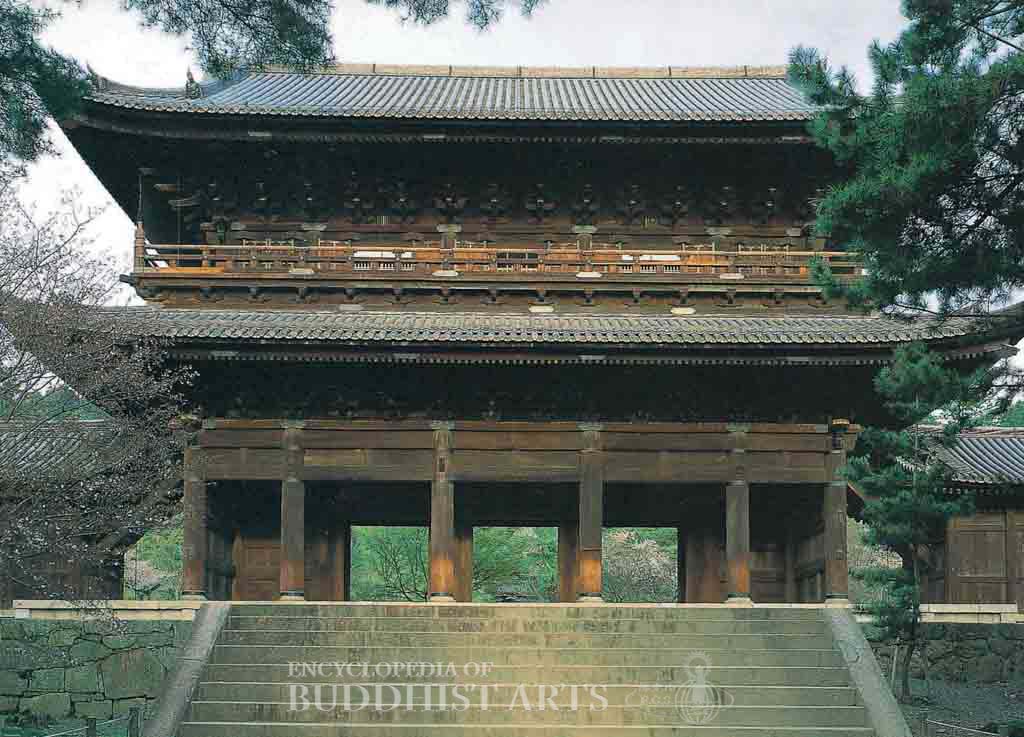
Nanzenji Temple: Imperial Messenger Gate
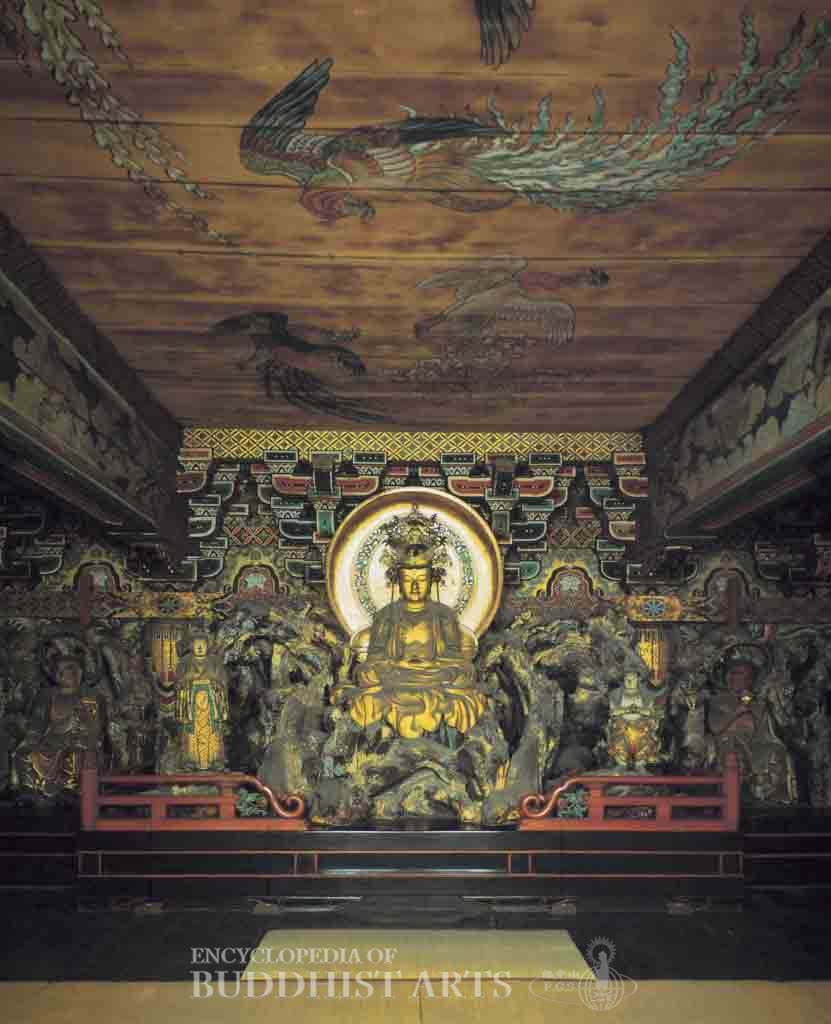
Nanzenji Temple: Imperial Messenger Gate (interior)
Nanzenji Temple
JAPAN, Kyoto
The temple is the head temple of the Nanzenji branch of the Rinzai school of Zen Buddhism. It is the earliest Zen temple built by the Japanese imperial family. When Emperor Kameyama abdicated and renounced in 1291 during the Kamakura period, he donated his palace to form the new Zen temple and invited National Master Daimin to be its first abbot. The second abbot, Master Kian Soen, expanded the temple until 1313, when most of the temple’s buildings had been completed. In 1334 Emperor Go-Daigo (reigned 1318–1339) declared the temple as the foremost among the Five Major Zen Temples of Kyoto. The temple was burned down three times and was completely leveled during the Onin War (1467–1477). The temple was reconstructed during the early Edo period (1615–1868).
The temple structures include the Imperial Messenger Gate, temple gate, Dharma Hall, abbot’s quarters, monastic quarters, and kitchen. The Imperial Messenger Gate, relocated from the Kyoto Imperial Palace in 1641, is a four-legged gate with a hip-and-gable roof covered in cypress bark. The five-by-two bay, two-story temple gate was built during the Edo period as the main temple gate. The gate stands on a stone base and has a hip-and-gable roof covered in cylindrical tiles. Statues of Sakyamuni Buddha and the Sixteen Arhats are enshrined on the second story. The Dharma Hall, which was rebuilt in 1909 during the Meiji period, also serves as a Buddha Hall. The five-by-four bay structure has a double-eave hip-and-gable roof covered in cylindrical tiles. The small and large abbot’s quarters have been combined. The temple houses a Chinese Southern Song painting entitled Meeting Between Yaoshan and Li Ao by Ma Gongxian, as well as paintings and examples of calligraphy from various periods.
For more details, go to the Encyclopedia of Buddhist Arts: Architecture M-S, page 787.
Cite this article:
author = Hsingyun and Youheng and Johnson, Peter and Mankuang and Lancaster, Lewis,
booktitle = {Encyclopedia of Buddhist Arts: Architecture M-S},
pages = 787,
title = {{Nanzenji Temple}},
volume = 3,
year = {2016}}