
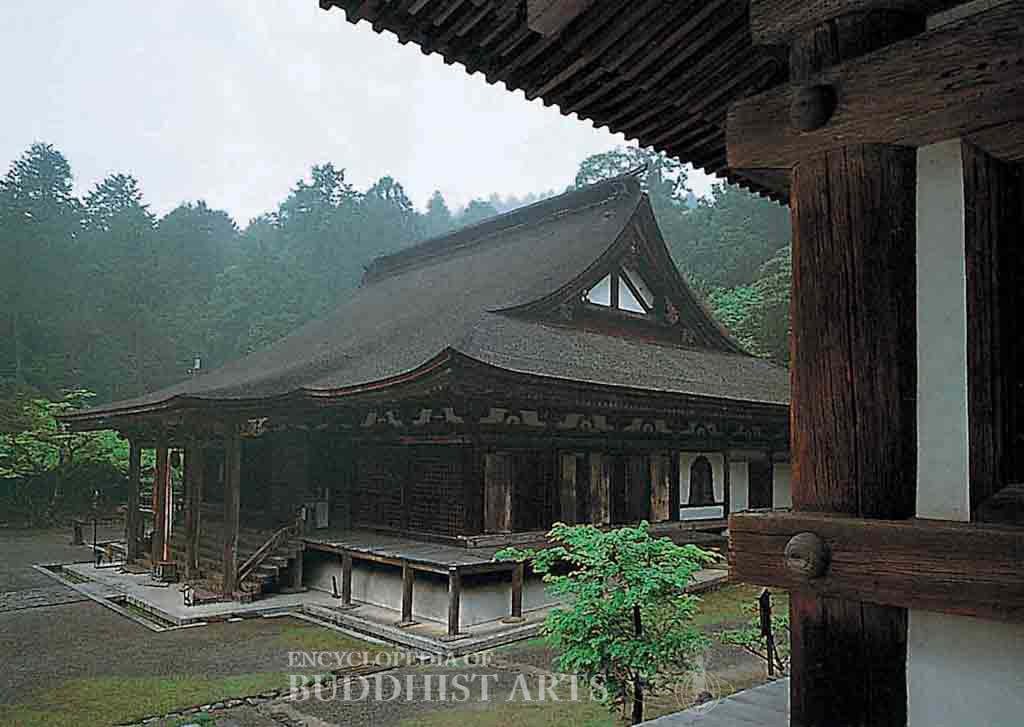
Saimyoji Temple: Main Hall
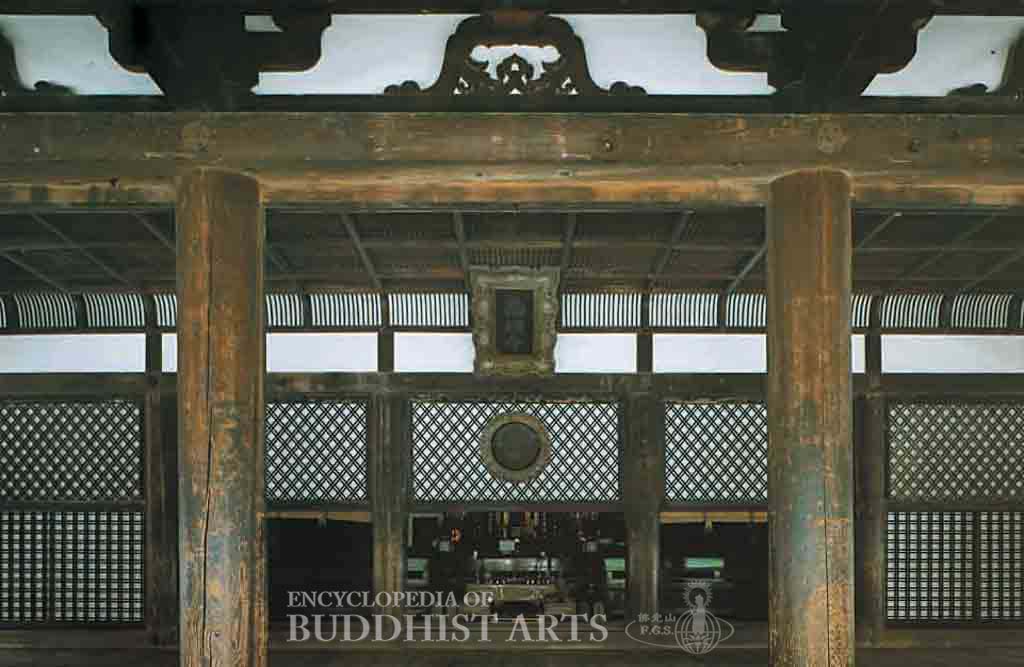
Saimyoji Temple: Main Hall (interior)
Saimyoji Temple
JAPAN, Shiga, Inukami
Saimyoji Temple, also known as Ikeji Temple, belongs to the Tendai school of Japanese Buddhism. It is the 32nd of the 49 Medicine Buddha temples of the Yakushi Pilgrimage of southern-central Japan. The temple is known as one of the Koto Sanzan Temple Trio, along with Hyakusaiji Temple and Kongorinji Temple. Construction of the temple began in the Heian period (794–1185) under monk Sansyu. The temple flourished during the Heian and Kamakura (1185–1333) periods, as well as during the Muromachi period (1392–1573). The temple layout originally consisted of 17 halls and 300 monastic quarters. However, most of the structures were destroyed by Oda Nobunaga in 1571.
The extant structures include the main hall, three-story pagoda, and Gate of Two Heavenly Kings, which serve as examples of Kamakura architecture. The seven-by-seven bay main hall has a single-eave hip-and-gable roof covered in cypress bark. A seated statue of Medicine Buddha in the Vajrayana tradition from the late Heian period is enshrined within the hall. The important architectural features are the circular columns, panel doors, grid sash windows, and ogee-arch windows. The hall was listed as a National Treasure in 1952. The temple contains sculptures from the Heian and Kamakura periods, including a seated statue of Vairocana Buddha, statues of Acala and his two attendants, and standing statues of two Heavenly Kings.
For more details, go to the Encyclopedia of Buddhist Arts: Architecture M-S, page 913.
Cite this article:
author = Hsingyun and Youheng and Johnson, Peter and Mankuang and Lancaster, Lewis,
booktitle = {Encyclopedia of Buddhist Arts: Architecture M-S},
pages = 913,
title = {{Saimyoji Temple}},
volume = 3,
year = {2016}}