
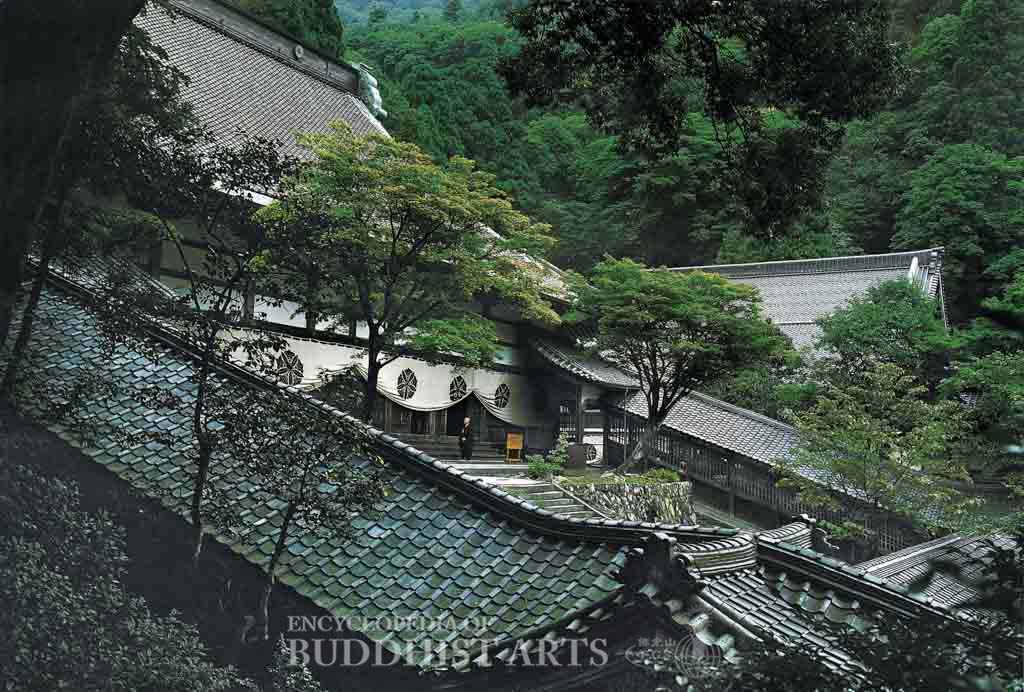
Eiheiji Temple: Dharma Hall
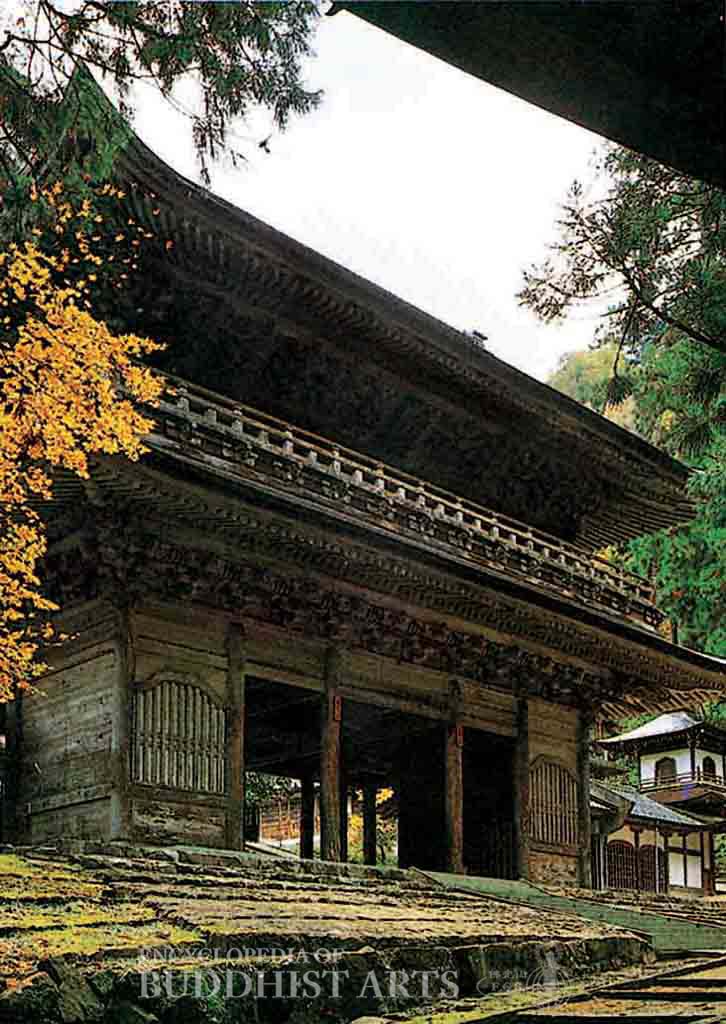
Eiheiji Temple: Main Temple Gate
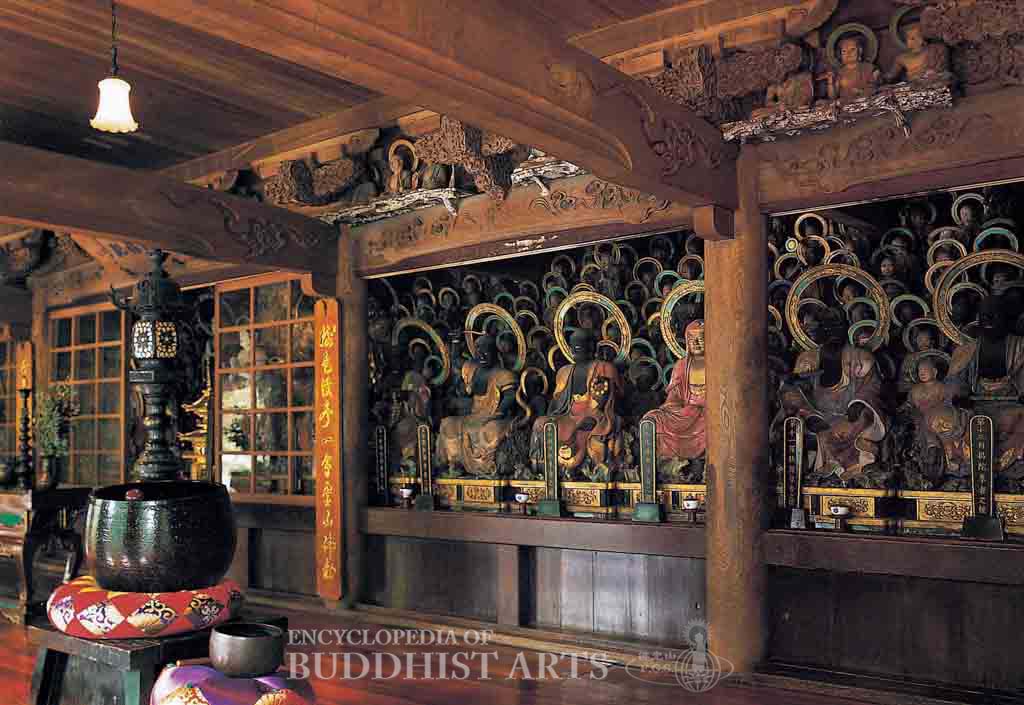
Eiheiji Temple: Main Temple Gate - Arhat Hall (interior)
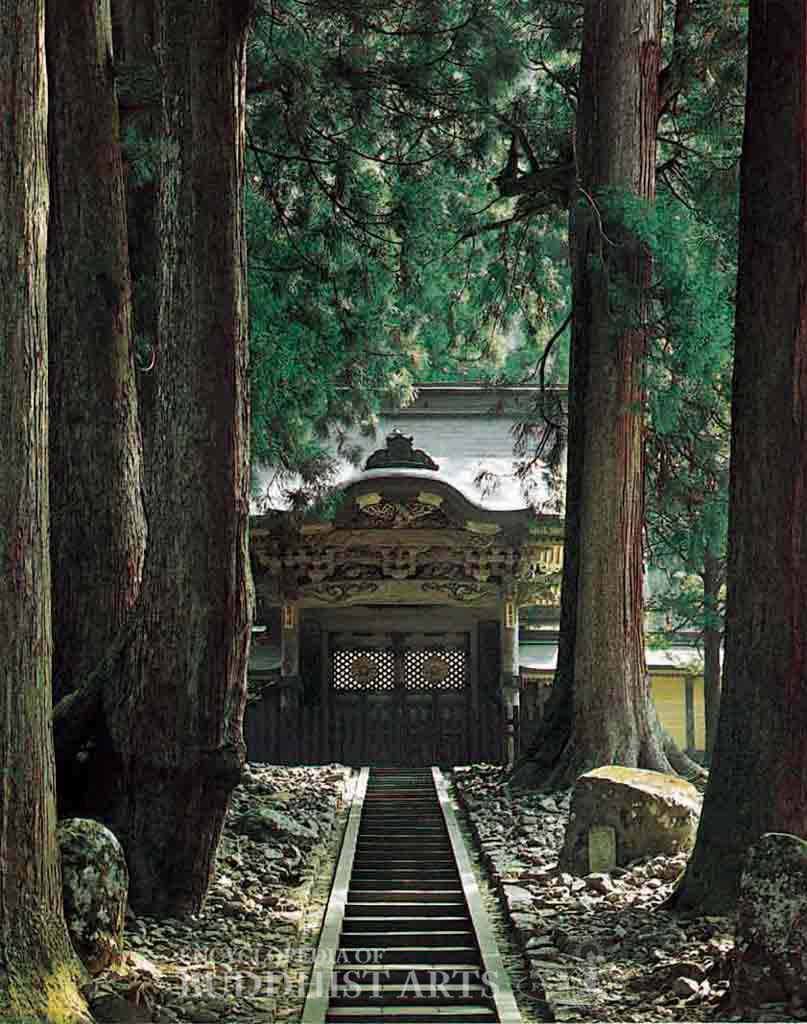
Eiheiji Temple: Chinese Gate
Eiheiji Temple
JAPAN, Fukui, Yoshida
Eiheiji, or Temple of Eternal Peace, is one of the main temples of the Soto school of Zen Buddhism. Its founder, Zen Master Dogen, traveled to Tiantongshan (Heavenly Child Mountain) in China to seek the Dharma, and was approved by Chan Master Rujing. After he returned to Japan, he propagated Shikantaza, a particular approach to Zen meditation which is sometimes referred to as “just sitting” or “silent illumination.” In 1243 during the Kamakura period, the temple was relocated to Fukui and was given its present name. The 5th generation master then relocated the temple to its current site. Most of the present halls were reconstructed between the late Edo and Meiji (1868–1912) periods.
The buildings along the north-south axis are the main temple gate, Middle Sparrow Gate, the Buddha Hall, and the Dharma Hall. The halls are connected by walkways and steps up the hillside. Other buildings include the Chinese Gate, Relic Hall, Auspicious Pavilion, and Lonely Cloud Pavilion.
The nine-by-five bay, two-story main temple gate, built in 1749 during the Edo period, is the oldest structure in the temple. The first level houses statues of the Four Heavenly Kings, while the second level is the Arhat Hall which contains statues of Arhats. The ten-by-eight bay Buddha Hall was reconstructed in 1902 during the Meiji period. It has a double-eave roof. The interior is laid out with paving stones and it houses seated statues of the Three Buddhas.
The Dharma Hall, reconstructed in 1843 during the Edo period, is large enough to accommodate more than 1,000 people. The hall is 32.4 m wide by 25.2 m deep and contains a statue of Avalokitesvara Bodhisattva. The Chinese Gate was reconstructed in 1839. The roof is covered with copper tiles. The doors are usually closed but open upon the arrival of a new abbot.
The temple puts emphasis on meditation and all those who wish to stay are subject to examination. The temple is the center for monastic training in the Soto school. It houses the remains of Master Dogen together with his work entitled Rules for Sitting Meditation written in his own hand.
For more details, go to the Encyclopedia of Buddhist Arts: Architecture A-F, page 261.
Cite this article:
author = Hsingyun and Youheng and Johnson, Peter and Mankuang and Lancaster, Lewis,
booktitle = {Encyclopedia of Buddhist Arts: Architecture A-F},
pages = 261,
title = {{Eiheiji Temple}},
volume = 1,
year = {2016}}