
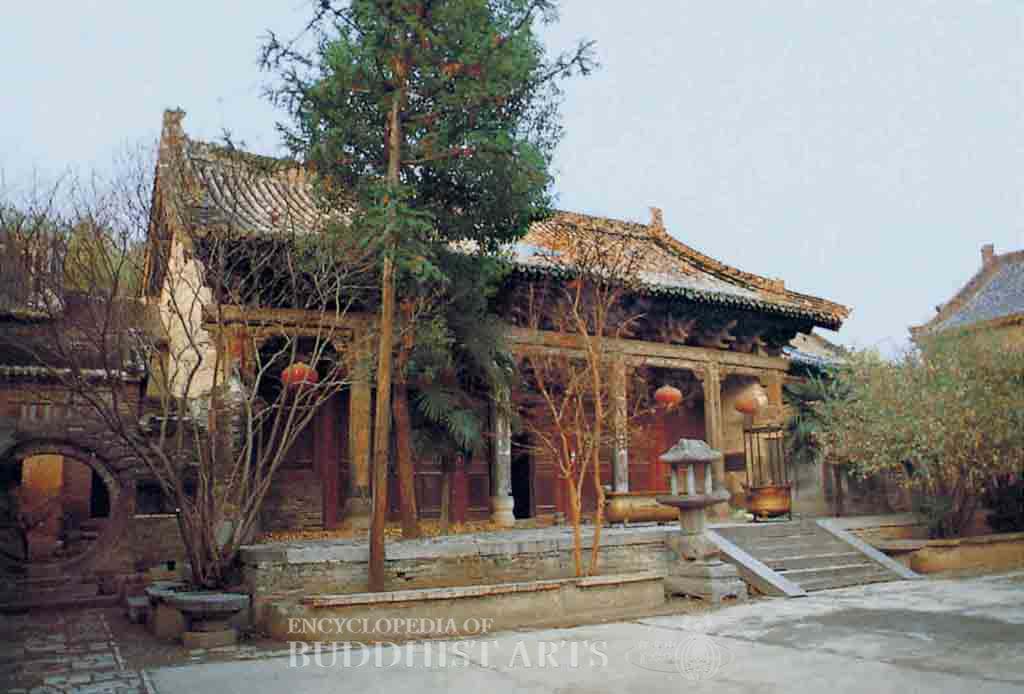
Baiyun Temple: Great Hero Hall
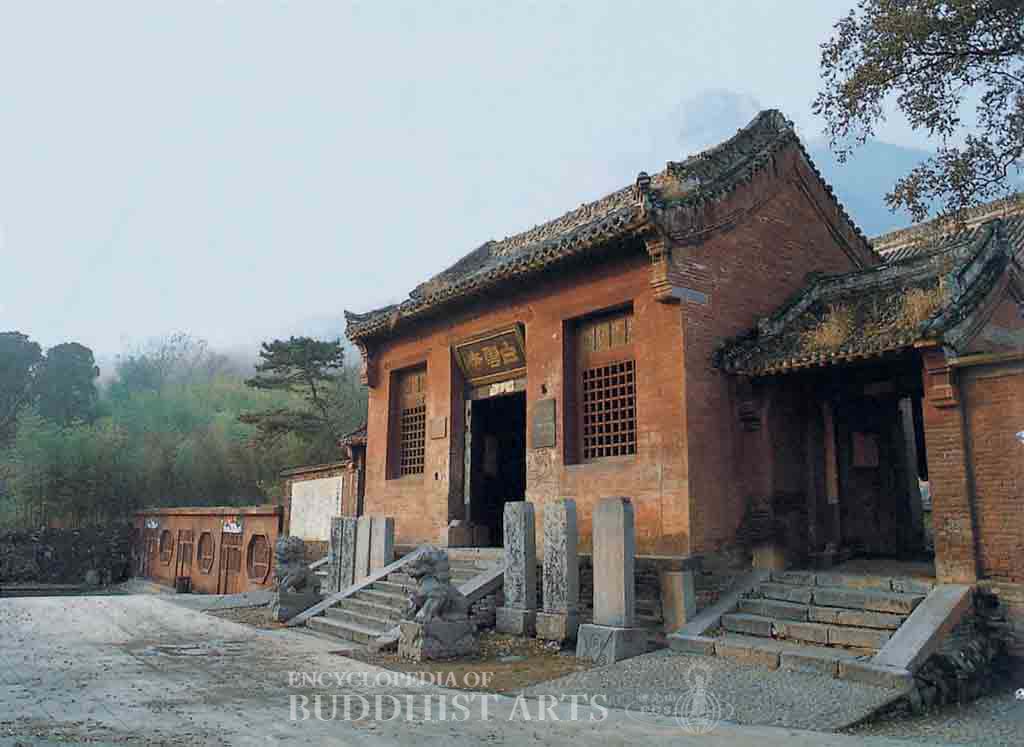
Baiyun Temple: Main Temple Gate
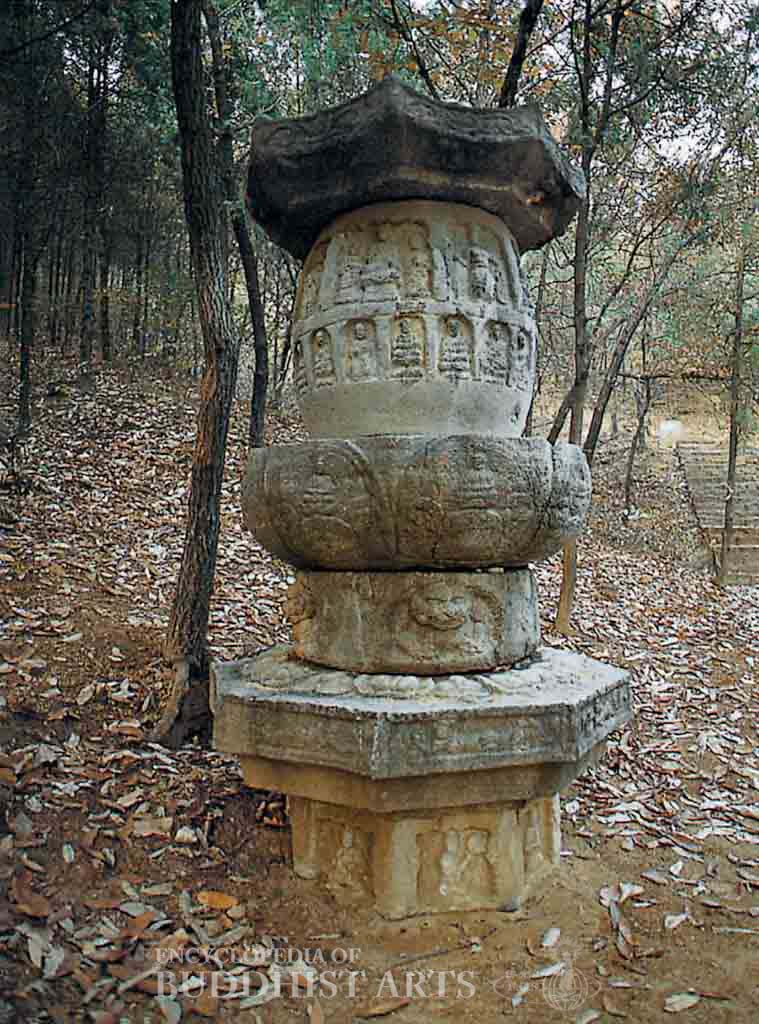
Baiyun Temple: Stupa of Chan Master Puzhao
Baiyun Temple
CHINA, Henan, Xinxiang
Baiyun means White Cloud. It is located at the southern foot of Taihangshan. The temple was built during the rule of Emperor Gaozong (reigned 649–683) of the Tang dynasty and originally stood to the northwest of the current temple. It was moved to its current location in 1283 during the Yuan dynasty. Reconstruction of the temple took place in 1391 during the Ming dynasty and during the Qing dynasty (1644–1911). Apart from the Great Hero Hall, which is a Ming (1368–1644) structure, the rest of the buildings were built in the Qing dynasty. The temple was listed as a National Cultural Heritage Site in 2006.
Facing south, the temple buildings include the main temple gate, Heavenly King Hall, Great Hero Hall, subsidiary buildings on the east and west, a Southern Song dynasty (1127–1279) brick pagoda, two Yuan dynasty (1271–1368) stone pagodas, and three Ming dynasty brick pagodas. There are also steles from the Song dynasty (960–1279), including a stele of Five Hundred Arhats located to the east of the temple.
The three-bay wide main temple gate is built on a stone platform and has a flush gable roof. The three-bay wide Heavenly King Hall also has a flush gable roof with painted bracket sets. The five-by-three bay Great Hero Hall has an overhanging gable roof. The structural features beneath the eaves are decorated with paintings, while floral patterns are carved into the architraves and bracket sets. On either side of the Great Hero Hall, there are walls with flush gable roofs covered in gray tiles. In front of the hall, on either side, there are ten subsidiary buildings. Behind the Great Hero Hall there are side halls with single-eave flush gable roofs.
The stupa of Chan Master Puzhao was built in 1292 during the Yuan dynasty. The double-layer Sumeru base is covered in carvings of Buddhas, apsaras, lions, and lotuses. The stupa body is shaped like a drum and has two rows of niches depicting Buddhas, Bodhisattvas, Heavenly Kings, and warriors.
For more details, go to the Encyclopedia of Buddhist Arts: Architecture A-F, page 41.
Cite this article:
author = Hsingyun and Youheng and Johnson, Peter and Mankuang and Lancaster, Lewis,
booktitle = {Encyclopedia of Buddhist Arts: Architecture A-F},
pages = 41,
title = {{Baiyun Temple}},
volume = 1,
year = {2016}}