
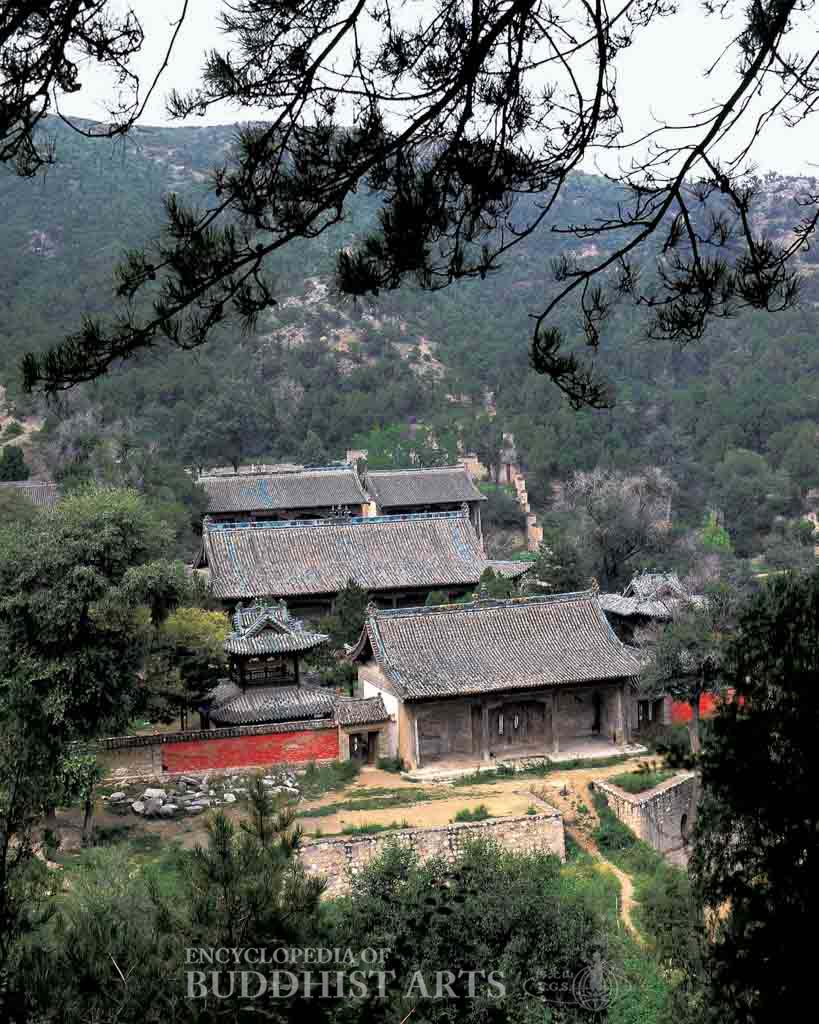
Duofu Temple
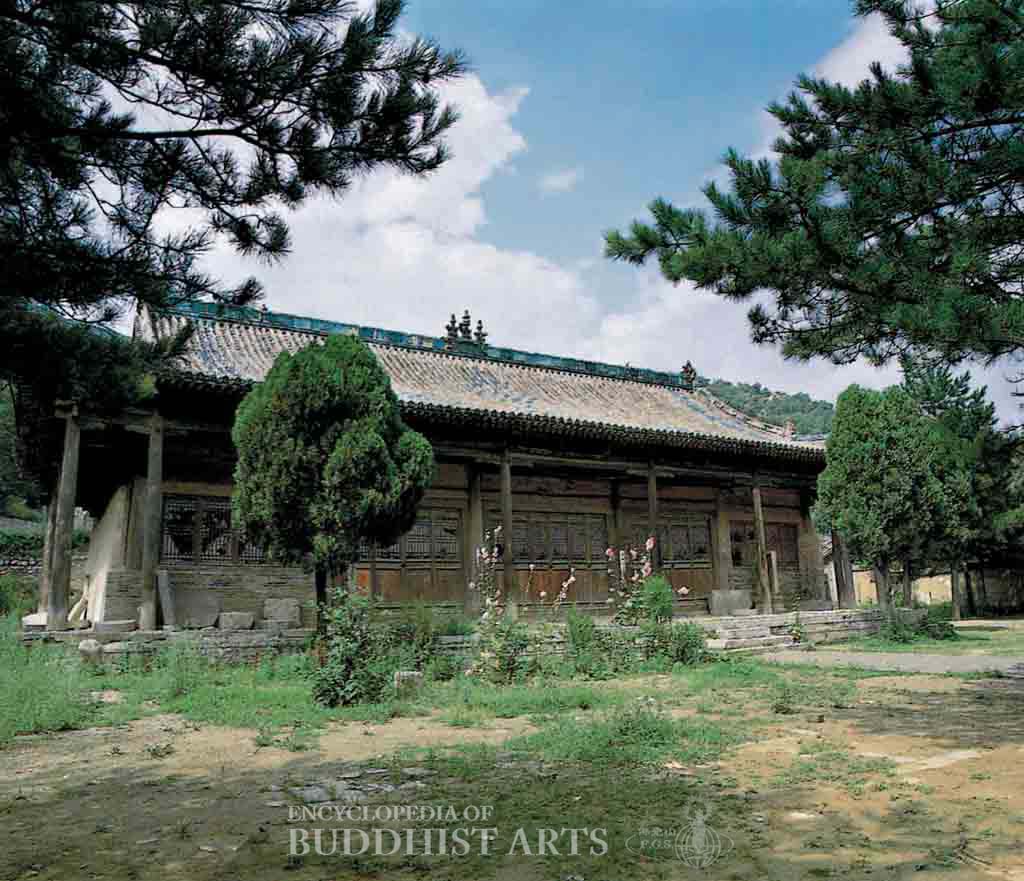
Duofu Temple: Great Hero Hall
Duofu Temple
CHINA, Shanxi, Taiyuan
Duofu means Abundant Good Fortune. The temple was built in 786 during the Tang dynasty. At the end of the Song dynasty (960–1279) it was destroyed in wartime but was rebuilt during the rule of Emperor Taizu (reigned 1368–1398) of the Ming dynasty. It was listed as a National Cultural Heritage Site in 2006.
The temple faces south and the main buildings include the Heavenly King Hall, Great Hero Hall, sutra repository, and Manjusri Pavilion. The five-by-three bay Great Hero Hall has a single-eave hip-and-gable roof. There are 14 statues in the hall, including three Buddhas, Avalokitesvara, four Bodhisattvas, and Dharma protectors. The north, east, and west walls are filled with murals telling 84 different stories relating to the Life of the Buddha. According to the inscriptions accompanying the murals, the Great Hero Hall was built in 1456 during the Ming dynasty, while the murals were created in 1458.
For more details, go to the Encyclopedia of Buddhist Arts: Architecture A-F, page 260.
Cite this article:
author = Hsingyun and Youheng and Johnson, Peter and Mankuang and Lancaster, Lewis,
booktitle = {Encyclopedia of Buddhist Arts: Architecture A-F},
pages = 260,
title = {{Duofu Temple}},
volume = 1,
year = {2016}}