
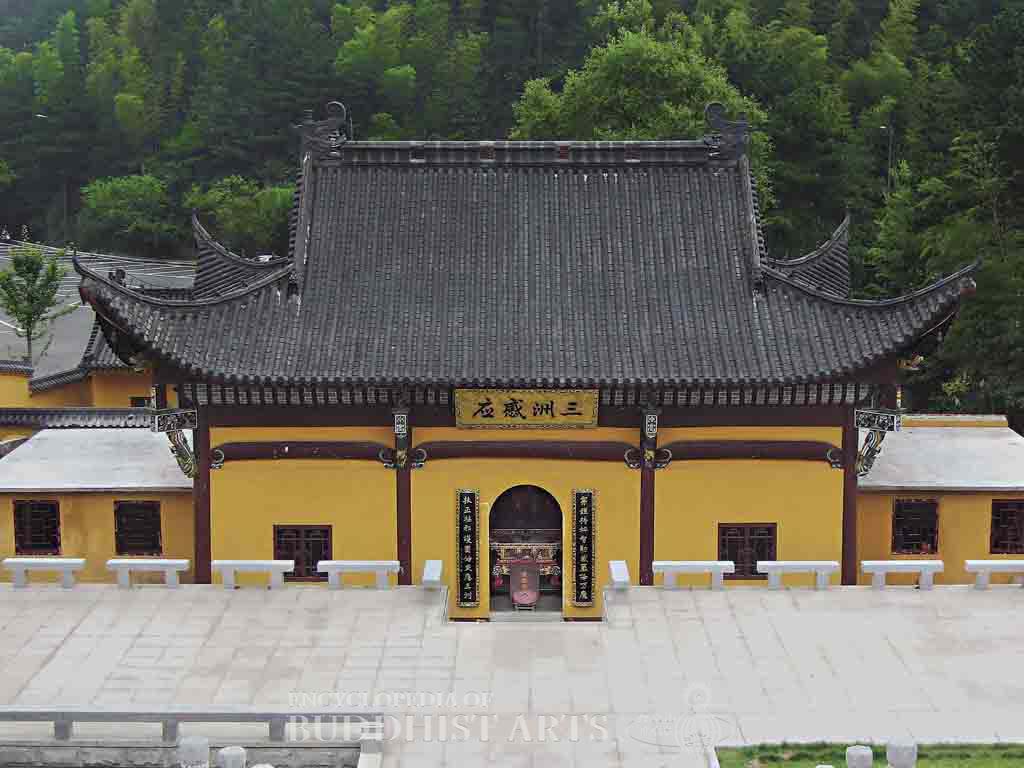
Foguang Temple: Heavenly King Hall
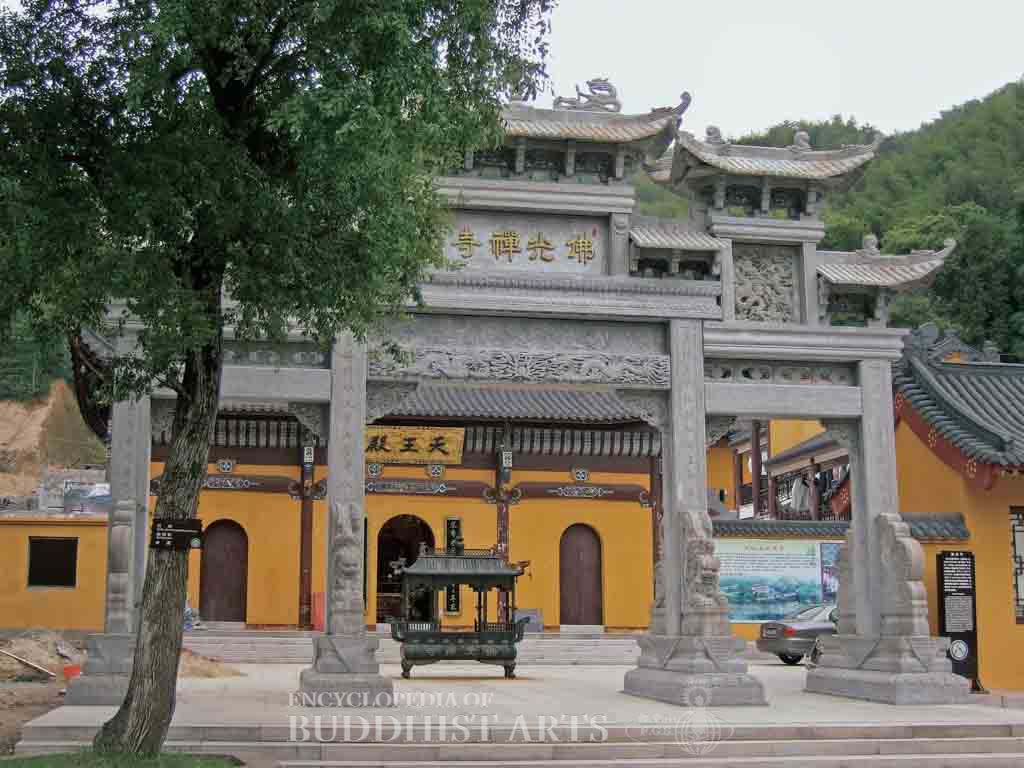
Foguang Temple: Gateway
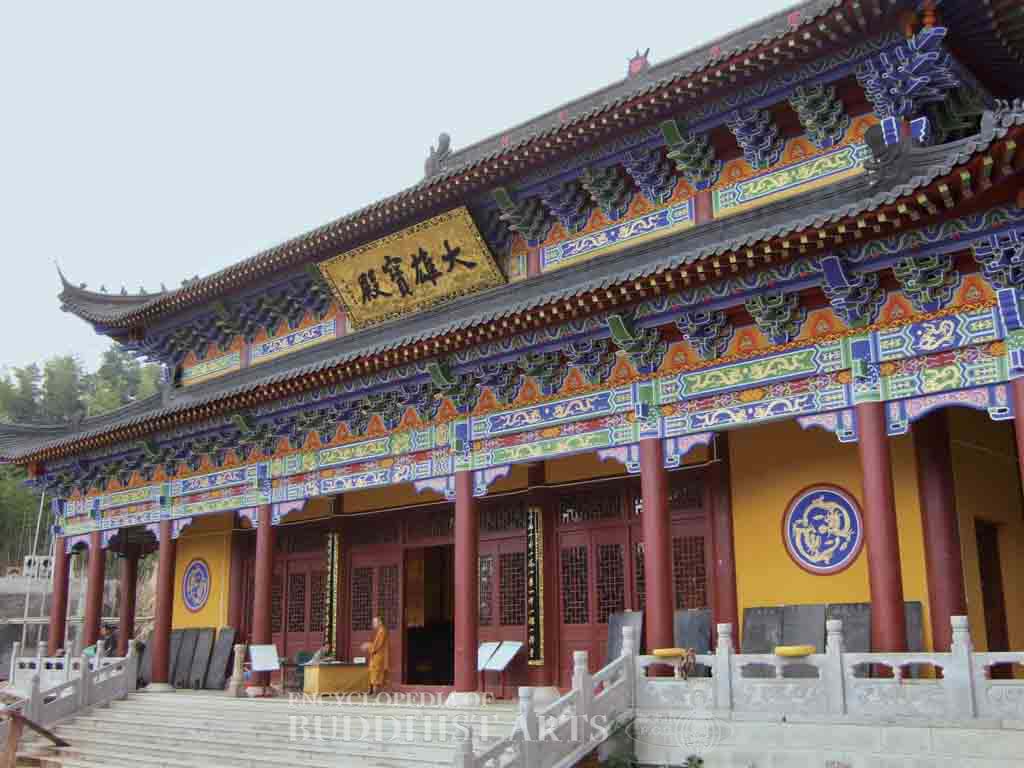
Foguang Temple: Great Hero Hall
Foguang Temple
CHINA, Anhui, Anqing
Foguang means Buddha’s Light. Chan Master Mazu Daoyi wandered to this place and settled down in a cave to meditate during the Tang dynasty (618–907). Local people built a small temple near the cave to commemorate him and called it Mazu Temple during the Five Dynasties period (907–960). Emperor Wanli (reigned 1573–1620) of the Ming dynasty renamed it Foguang Temple in 1599. It flourished and declined a number of times. The temple was reconstructed in 2004.
The present structures include the gateway, Heavenly King Hall, Great Hero Hall, and Patriarch Hall. The gateway is three bays wide with a series of small roofs on different levels. The Heavenly King Hall has a single-eave hip-and-gable roof. The Great Hero Hall has a double-eave hip-and-gable roof. The meditation cave of Master Mazu is well-preserved.
For more details, go to the Encyclopedia of Buddhist Arts: Architecture A-F, page 342.
Cite this article:
author = Hsingyun and Youheng and Johnson, Peter and Mankuang and Lancaster, Lewis,
booktitle = {Encyclopedia of Buddhist Arts: Architecture A-F},
pages = 342,
title = {{Foguang Temple}},
volume = 1,
year = {2016}}