
Guge Mandala Hall Murals
Guge Mandala Hall Murals: Draperies
Guge Mandala Hall Murals: Mahasiddhas (second row, west wall)
Guge Mandala Hall Murals: Seated Buddha (third row, west wall, left side)
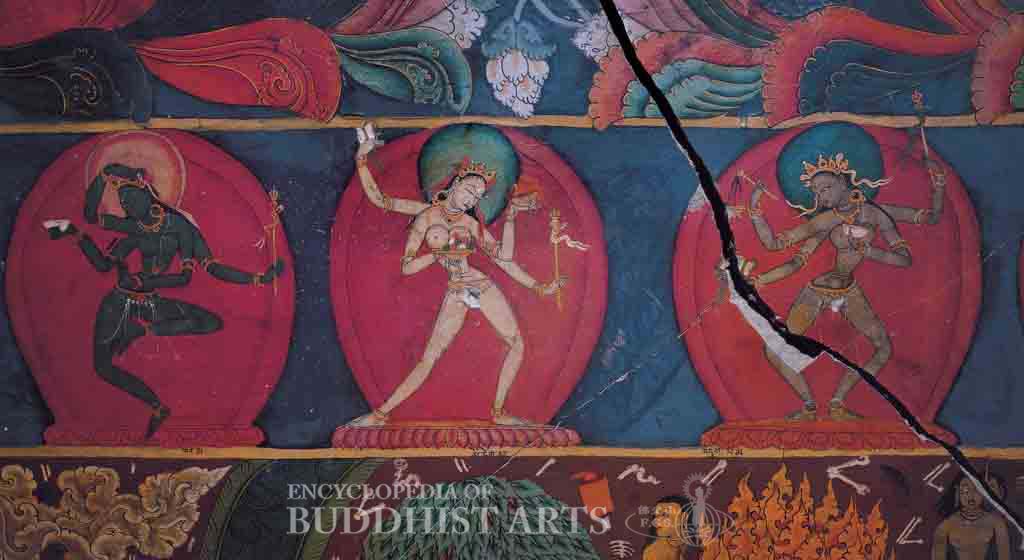
Guge Mandala Hall Murals: Heavenly Beings (fourth row)
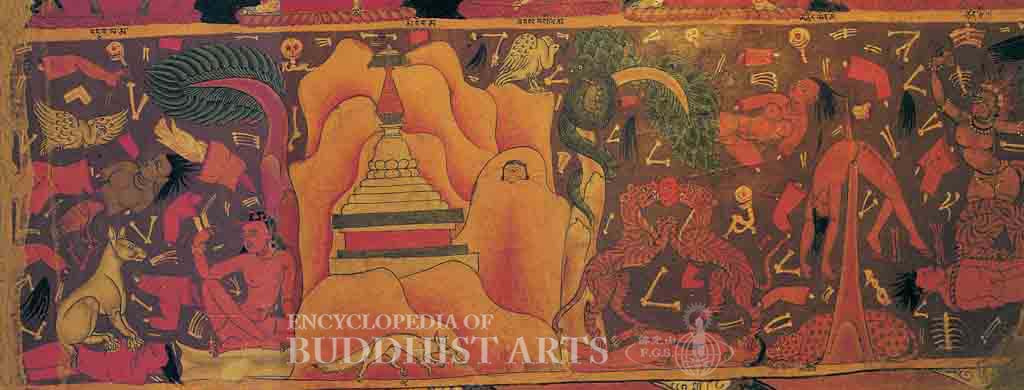
Guge Mandala Hall Murals: Hells (fifth row)

Guge Mandala Hall Murals: Hells (detail) (fifth row)
Guge Mandala Hall Murals
CHINA, Tibet, Ngari
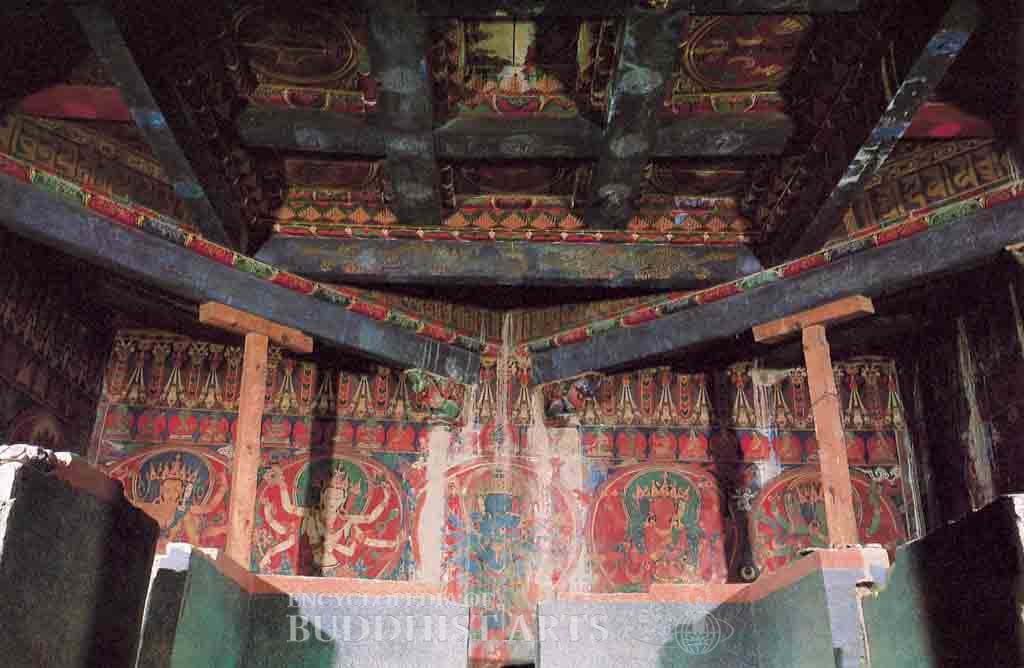
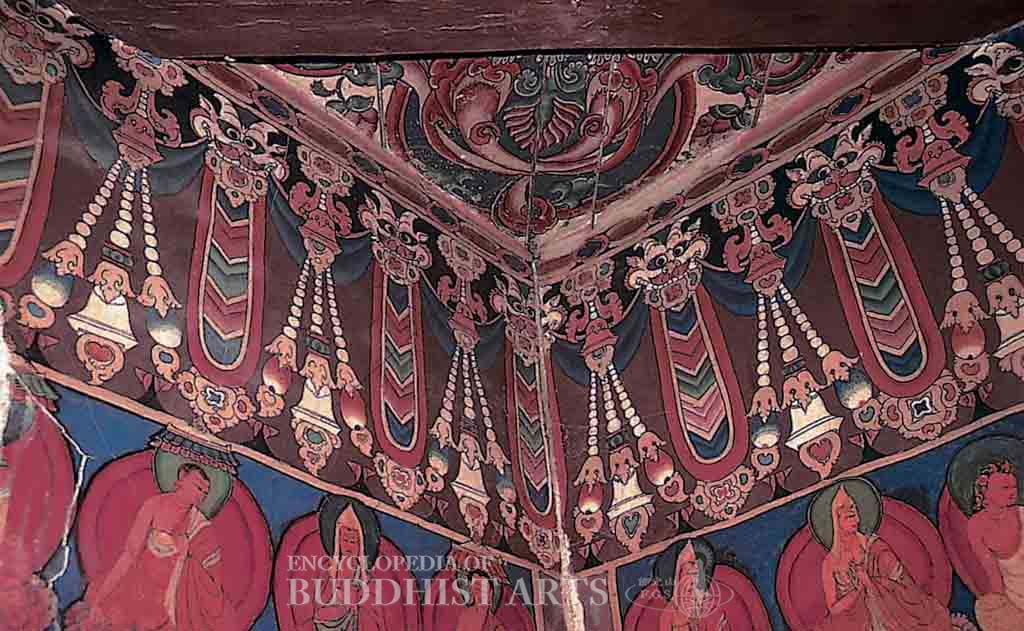
The Mandala Hall is located 5 km north of the Protector Hall. Rectangular in shape, the hall is thought to have been built in the mid-16th century. It has a truncated pyramidal ceiling with four caissons covered with images of creatures such as kalavinkas, elephants, peacocks, lions, and phoenixes, as well as treasures and vajras. The murals on the walls are divided into six rows, the top of which shows draperies and strings of beads with decorative bells hanging from the mouths of beasts.
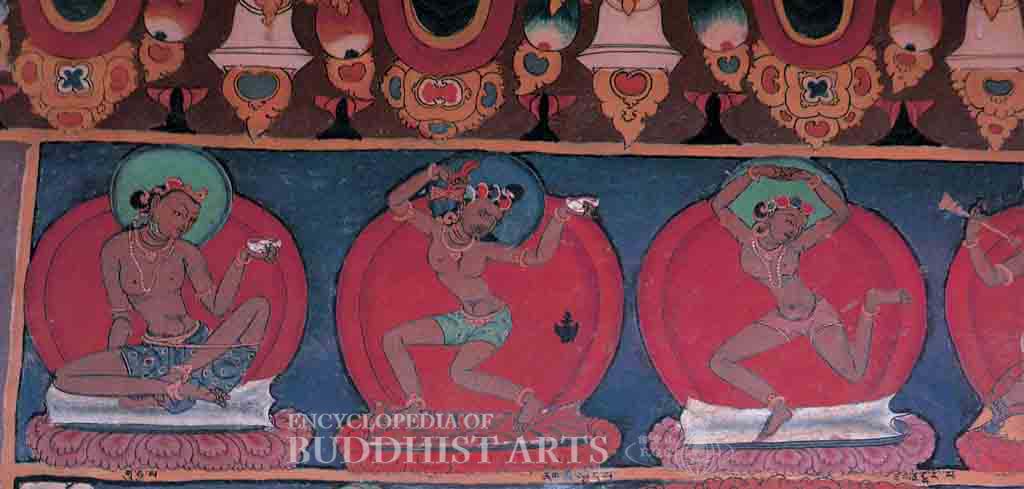
The second row is painted with 92 figures including eminent monks, translators, and wisdom kings, all identified by accompanying Tibetan inscriptions. Eighty-three of the figures are thought to be images of the mahasiddhas in India. They stand or sit in dynamic poses, wearing only fitted shorts and ornaments.
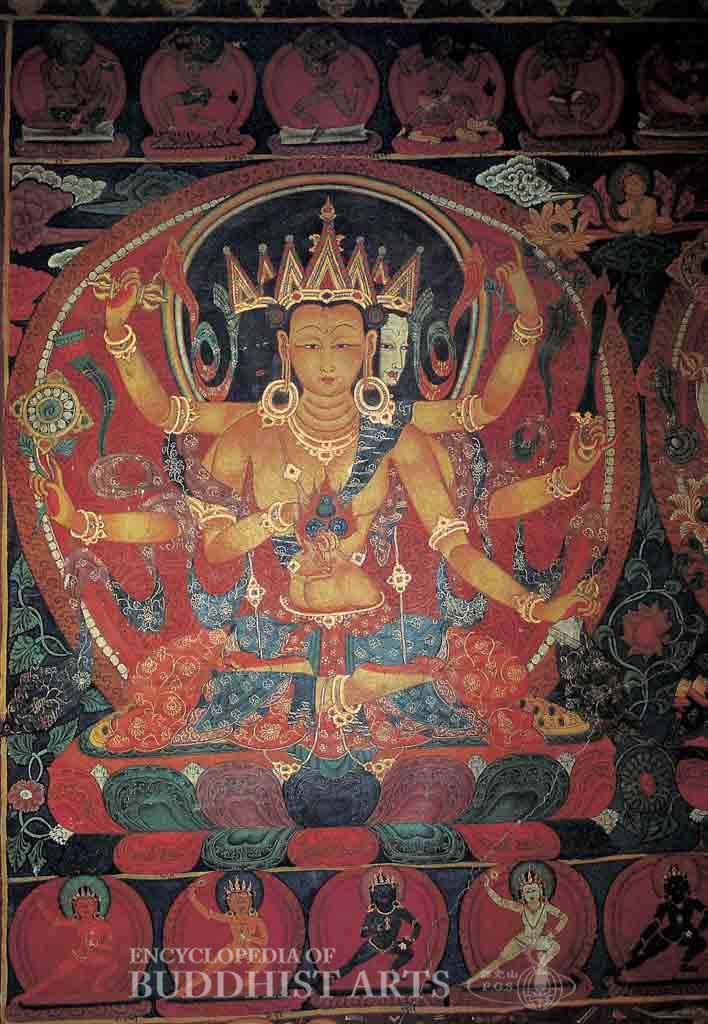
In the third row there are large images of Buddhas, Bodhisattvas, Dharma protectors, and the Ten Dakinis. The yellow Bodhisattva on the left side of the west wall has six arms and three heads that are topped with golden crowns. The ears of the central head are pierced with large golden rings. The Bodhisattva holds a vajra, a Dharma wheel, and a wish-fulfilling jewel in the three right hands, while the three left hands hold a lotus, a sword, and a bell. Seated in full lotus position on a lotus throne, the Bodhisattva wears a dhoti, a necklace, armlets, and bracelets. The blue nimbus is outlined with rings of color, and the outside of the mandorla is adorned with pearls and scrolling vine patterns.
The fourth row contains smaller images of Bodhisattvas, Taras, and female heavenly beings. The figures are identified by Tibetan inscriptions. The 21 four-armed heavenly beings dance, scatter flowers, or hold incense. Standing in elegant poses, they wear only floral headdresses and jewelry, displaying their full chests and slim figures. Illustrations of the hells, with images of beasts, bones, severed body parts, and sinners receiving punishment, are painted in the fifth row. The bottom row is filled with diamond patterns and conch shells. These brightly colored murals featuring detailed, creatively posed figures are a powerful visual representation of Vajrayana teachings.
For more details, go to the Encyclopedia of Buddhist Arts: Painting A-H, page 302.
Cite this article:
author = Hsingyun and Youheng and Youlu and Wilson, Graham and Manho and Mankuang and Huntington, Susan,
booktitle = {Encyclopedia of Buddhist Arts: Painting A-H},
pages = 302,
title = {{Guge Mandala Hall Murals}},
volume = 14,
year = {2016}}