
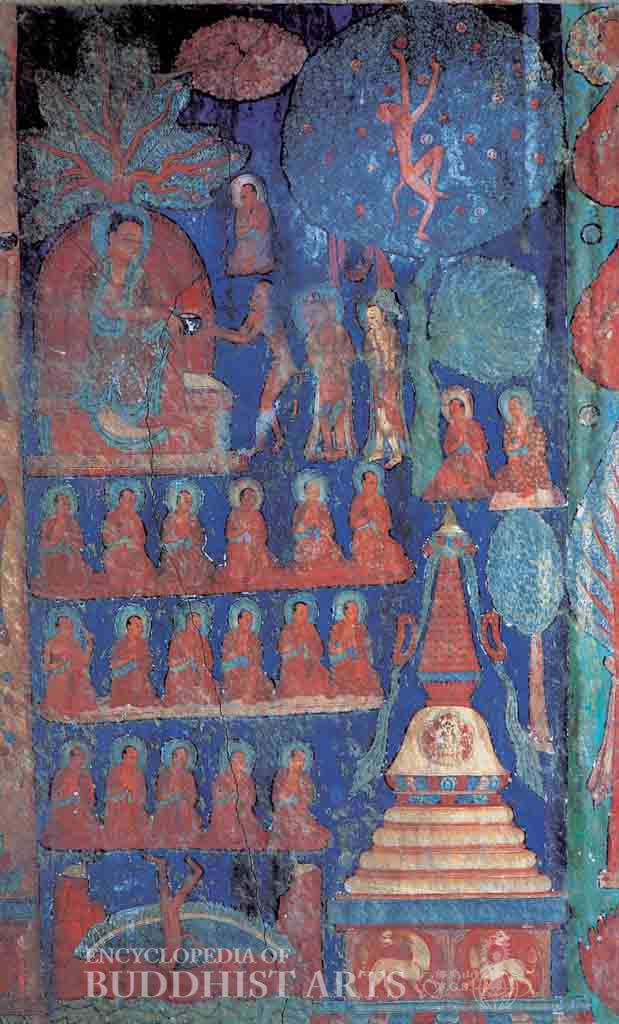
Guge White Temple: Life of the Buddha - Monkey Offering Honey
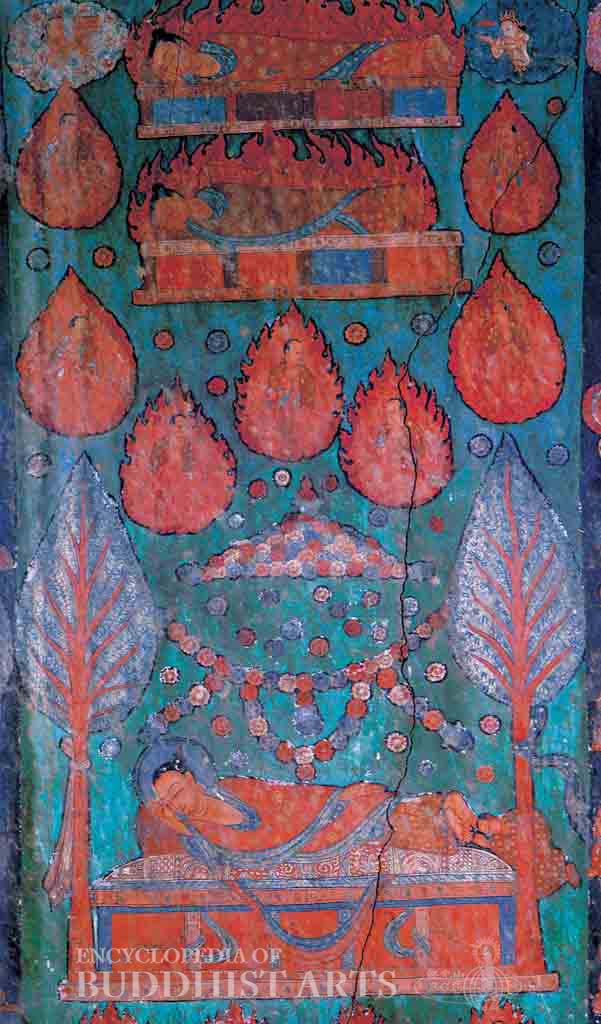
Guge White Temple: Life of the Buddha - Parinirvana
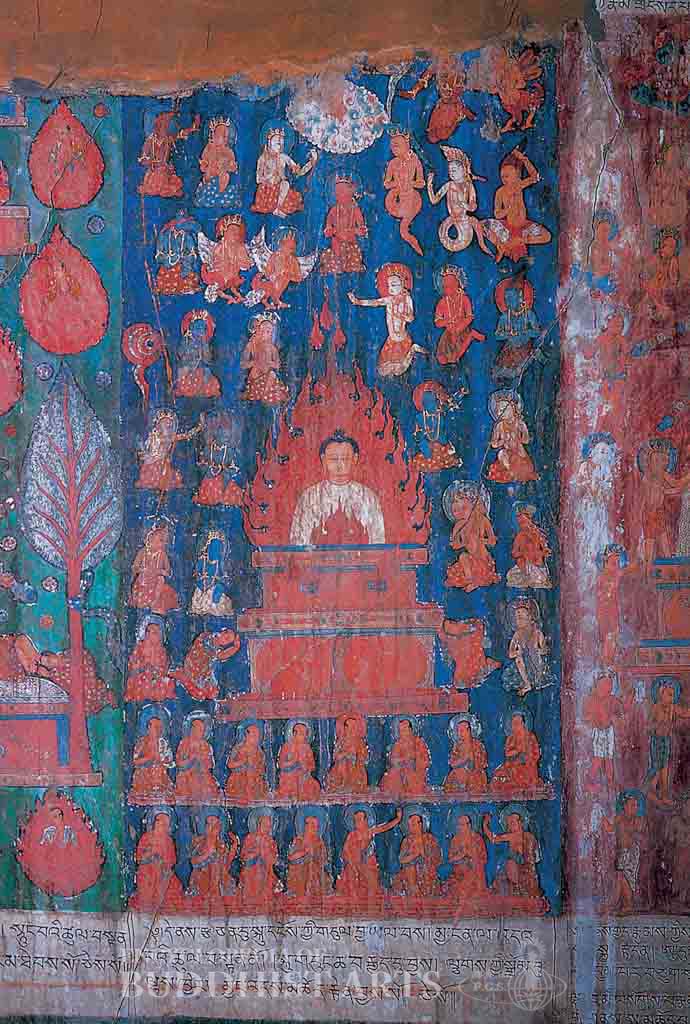
Guge White Temple: Life of the Buddha - Cremation
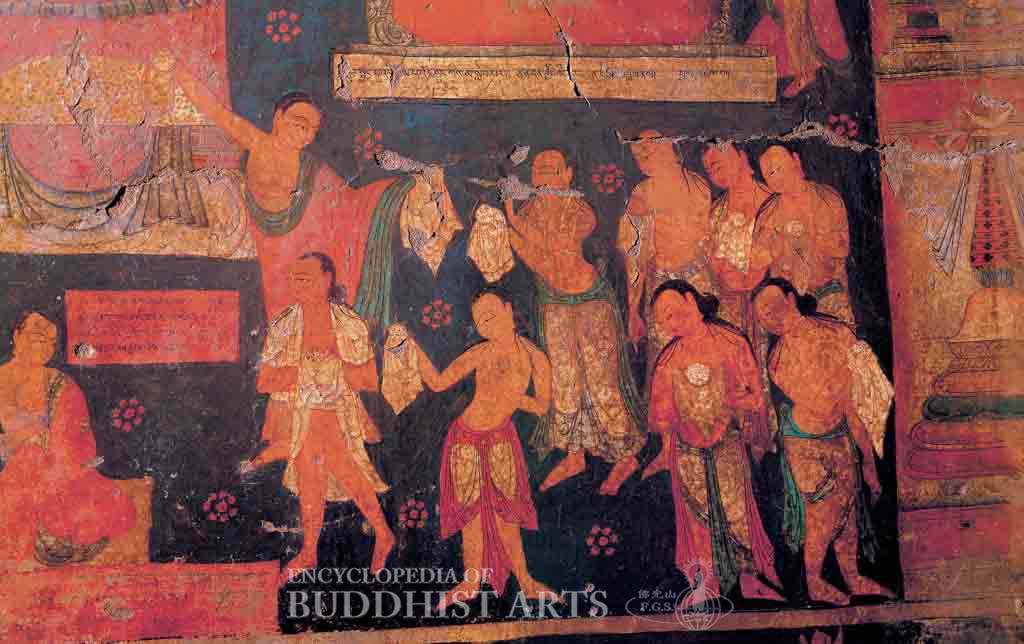
Guge White Temple: Life of the Buddha - Distribution of Relics Among the Eight Kings
Guge White Temple: Life of the Buddha
CHINA, Tibet, Ngari
Located on the side walls of the inner shrine in the White Temple, these works from the mid-15th century illustrate the important events in the Life of the Buddha. The images start in the center of the west wall with the Birth of Prince Siddhartha, Skills Contest, Reflections on the Farming Process, and the Great Departure. On the east wall, there are images of Renunciation, Ascetic Practice, Defeat of Mara and Enlightenment, Protection by the Naga King, First Turning of the Dharma Wheel, Calming the Drunken Elephant, Defeat of the Non-Buddhists, Monkey Offering Honey, Parinirvana, Cremation, Distribution of Relics Among the Eight Kings, and Construction of Stupas.
Reflections on the Farming Process features a farmer whipping two yaks. In the Monkey Offering Honey, a monkey is shown climbing up a tree and harvesting honey before offering it to the Buddha seated below. After the Buddha accepted the offering, the monkey lost its footing, fell into the water and drowned. After death, it ascended to the heavens due to the merit of the offering. In this mural, three rows of monks sit side by side, joining their palms together in praise of the monkey’s glorious deed.
The illustration of Parinirvana shows the Buddha reclining on his right side on a bunk between two sala trees with the tips of his feet uniquely pointing downwards. Above the canopy composed of flower garlands, the Buddha and his disciples are depicted in the midst of balls of fire. In Cremation, the upper half of the Buddha’s body is illustrated atop a Sumeru throne engulfed by bright flames. He is surrounded by disciples, Bodhisattvas, and Dharma protectors arranged in a symmetrical manner. In the Distribution of Relics Among the Eight Kings, each of the kings holds a relic in a linen cloth and appears mournful and reflective.
The murals succeed in retaining unity while depicting scenes with numerous characters. The application of color is harmonious yet varied. The disciples of the Buddha are portrayed as Guge monks, providing an important historical reference for understanding monastic life in the Guge Kingdom (circa 10th–17th century).
For more details, go to the Encyclopedia of Buddhist Arts: Painting A-H, page 310.
Cite this article:
author = Hsingyun and Youheng and Youlu and Wilson, Graham and Manho and Mankuang and Huntington, Susan,
booktitle = {Encyclopedia of Buddhist Arts: Painting A-H},
pages = 310,
title = {{Guge White Temple: Life of the Buddha}},
volume = 14,
year = {2016}}