
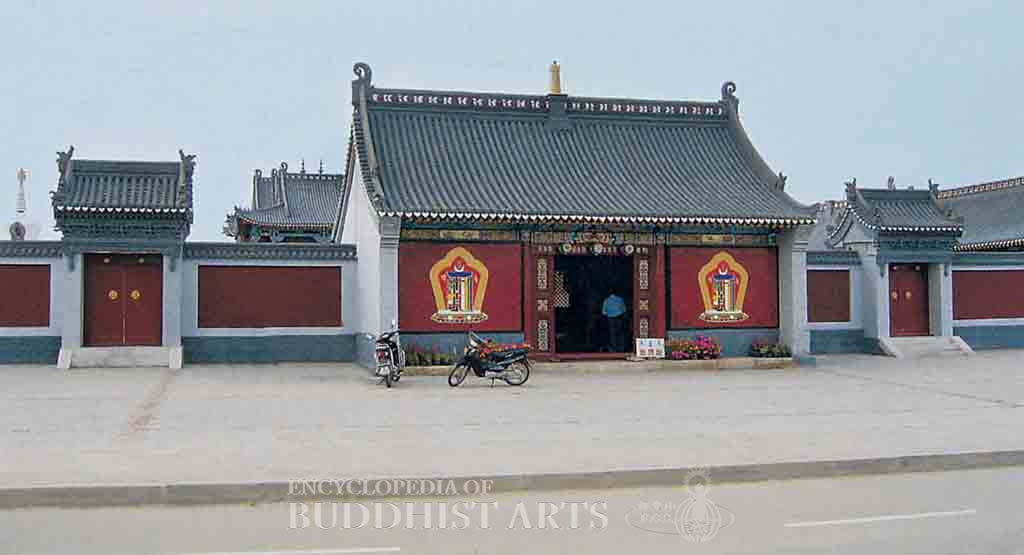
Bat Khaalga Monastery: Heavenly King Hall
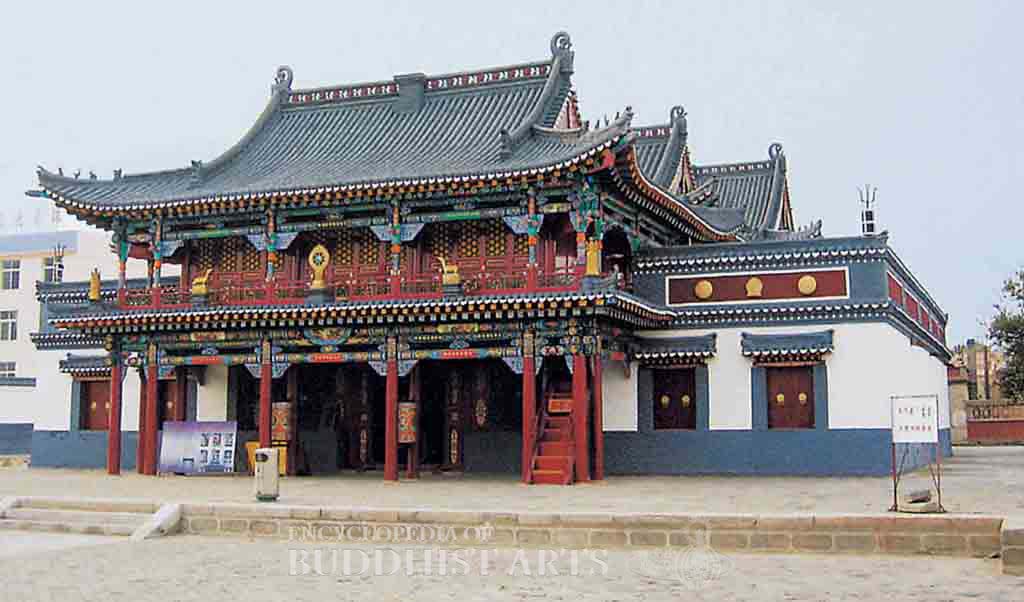
Bat Khaalga Monastery: Central Hall
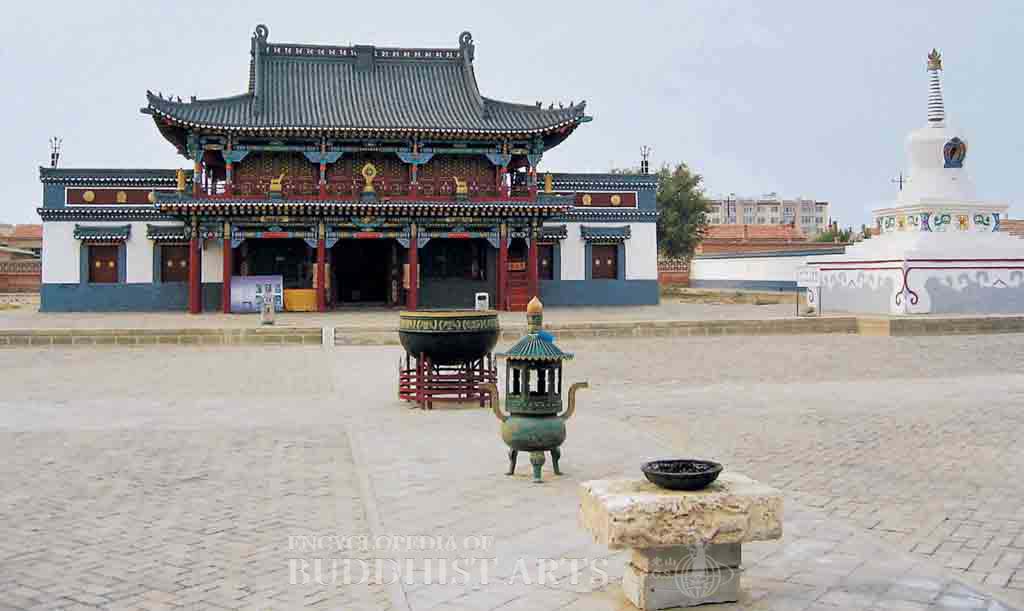
Bat Khaalga Monastery: Central Hall and Tibetan Stupa
Bat Khaalga Monastery
CHINA, Inner Mongolia, Baotou
The monastery is a Qing dynasty temple built in 1702. The Qing dynasty (1644–1911) imperial family came here for prayer. It was burnt down in 1914 but was rebuilt ten years later.
The temple complex consists of the Heavenly King Hall, the central hall, the Kangyur Hall, the Tengyur Hall, and stupas. The central hall, the largest building in the temple complex, is divided into three sections with three parallel Chinese-style hip-and-gable roofs. On either side of the middle section there are Tibetan-style wings with a flat roof. The rear section has lofty columns that rise through to the ceiling. A large Buddha statue is enshrined inside the central hall with a two-story viewing gallery. The internal beams and rafters are delicately carved and the interior walls are painted with illustrations of Buddhist stories. In front of the central hall there are two Tibetan stupas and behind them there are more than ten small white stupas. In addition to the Chinese-style architecture, there are also small Tibetan-style, flat-roofed buildings and Mongolian yurts within the temple.
For more details, go to the Encyclopedia of Buddhist Arts: Architecture A-F, page 61.
Cite this article:
author = Hsingyun and Youheng and Johnson, Peter and Mankuang and Lancaster, Lewis,
booktitle = {Encyclopedia of Buddhist Arts: Architecture A-F},
pages = 61,
title = {{Bat Khaalga Monastery}},
volume = 1,
year = {2016}}