
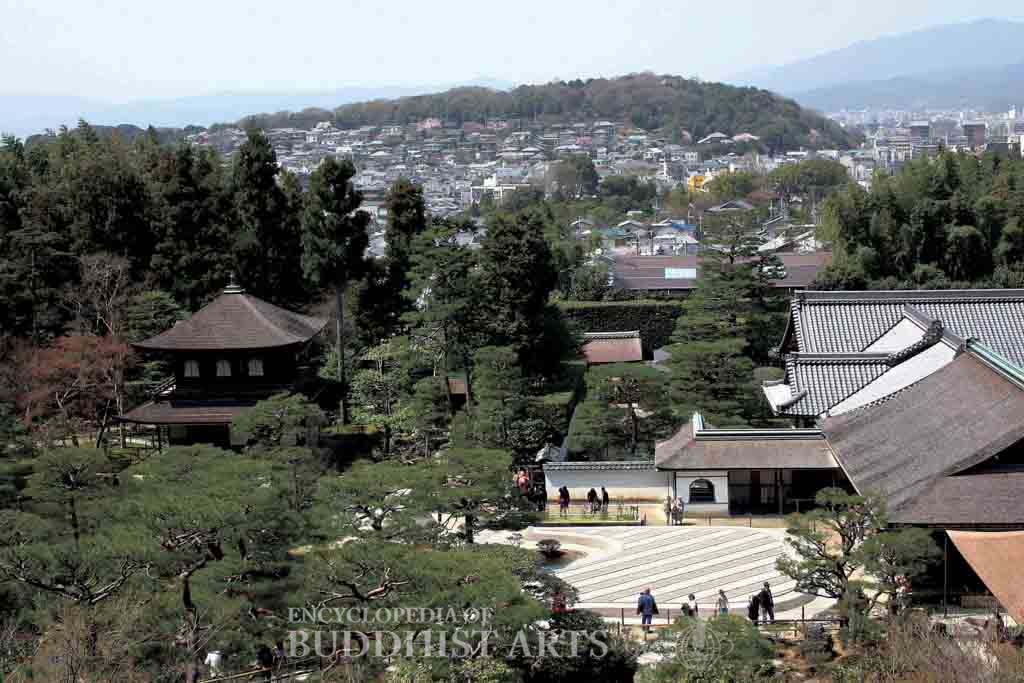
Jishoji Temple
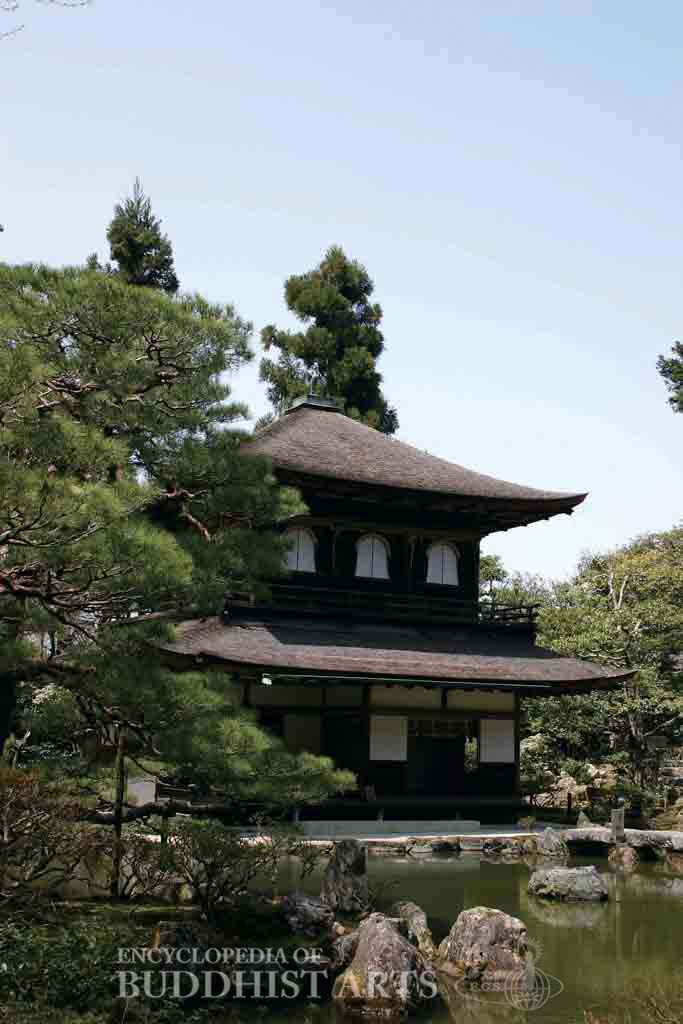
Jishoji Temple: Silver Pavilion
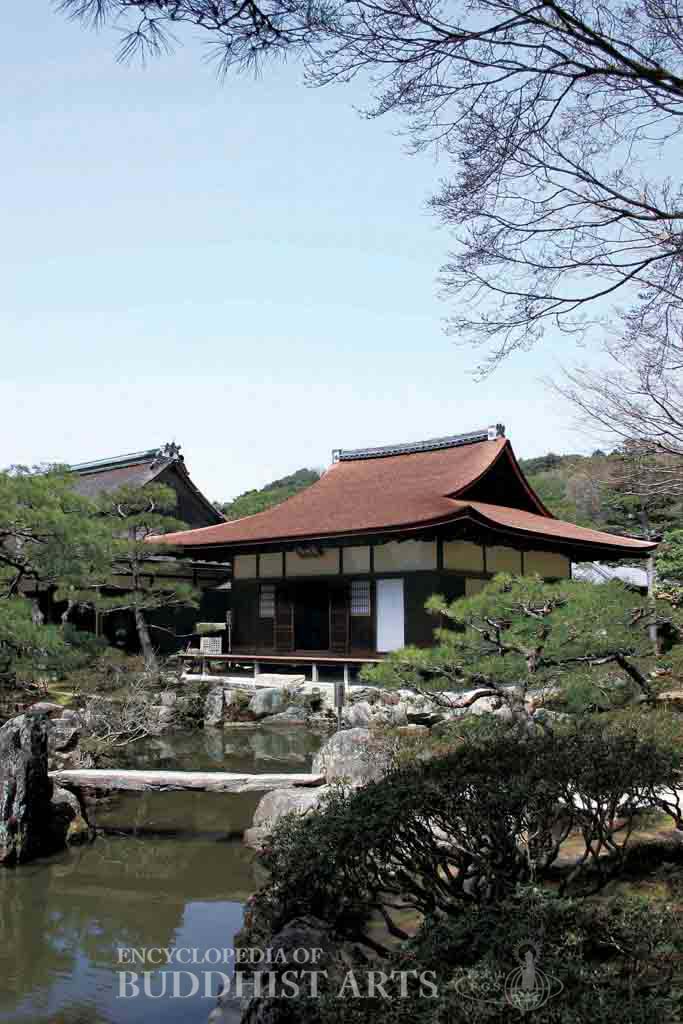
Jishoji Temple: Hall of the Eastern Quest
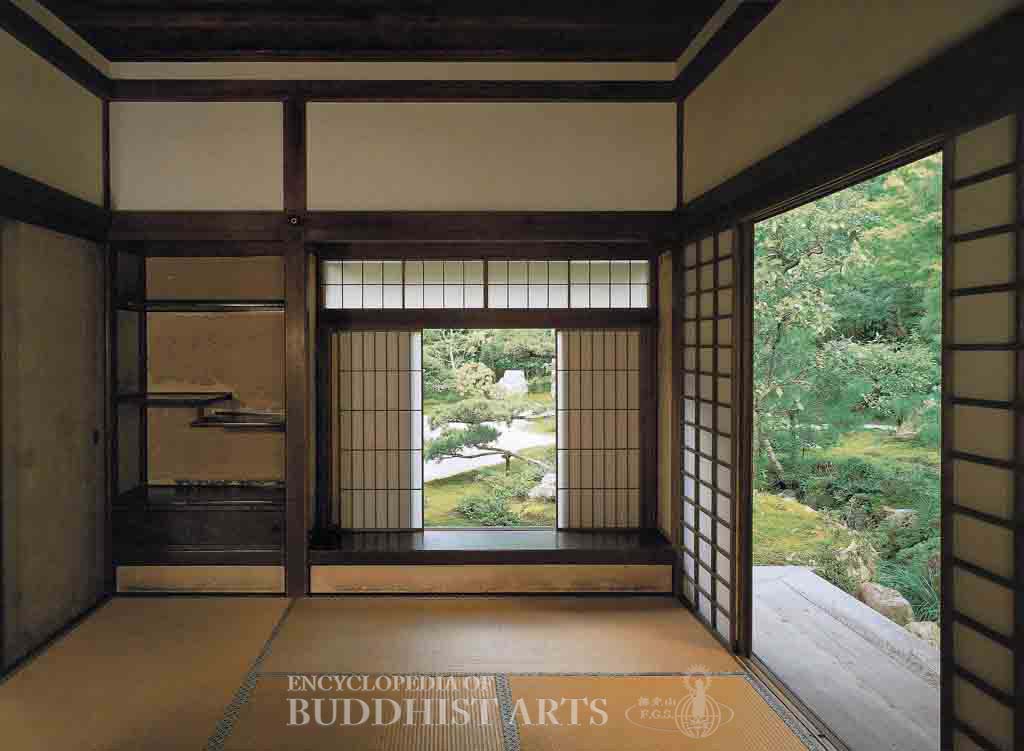
Jishoji Temple: Hall of the Eastern Quest - Study Room (interior)
Jishoji Temple
JAPAN, Kyoto
The temple belongs to the Shokokuji branch of the Rinzai school of Zen Buddhism. It was built by Shogun Ashikaga Yoshimasa in 1490, during the Muromachi period (1392–1573), and the monk Muso Soseko was invited to be its founder. The temple was named Jishoji after Ashikaga Yoshimasa’s Dharma name. The temple is commonly known as Ginkakuji, or the Silver Pavilion Temple, although it is no longer silver. The temple was destroyed several times during the warfare of the Muromachi period (1392–1573). As part of the Historic Monuments of Ancient Kyoto, it was listed as a UNESCO World Heritage Site in 1994.
The existing temple buildings include the main gate, middle gate, study room, kitchen, abbot’s quarters, as well as the Silver Pavilion and Hall of the Eastern Quest, which were listed as National Treasures in 1951. The Silver Pavilion, built in 1489 during the Muromachi period and officially known as the Avalokitesvara Shrine, is a two-story building with a pyramidal roof covered with cypress bark. The first story, known as the Hall of Empty Mind, is rectangular in layout and is divided by sliding doors. The second story, known as the Hall of Roaring Waves, is a Zen-style shrine. The three-by-three bay structure has ogee arch windows, lattice doors, and low balustrades. The interior has a wooden floor and a caisson ceiling. A seated statue of Avalokitesvara Bodhisattva is enshrined on a Sumeru throne.
The Hall of the Eastern Quest was built in 1486, during the Muromachi period. It has a single-eave hip-and-gable roof covered with cypress bark. It is square and measures 6.9 m along each side. The interior is divided by sliding doors to form the Buddha Hall and study room. The latter originally belonged to Yoshimasa. The popular four-and-a-half mat tea room originated here.
For more details, go to the Encyclopedia of Buddhist Arts: Architecture G-L, page 536.
Cite this article:
author = Hsingyun and Youheng and Johnson, Peter and Mankuang and Lancaster, Lewis,
booktitle = {Encyclopedia of Buddhist Arts: Architecture G-L},
pages = 536,
title = {{Jishoji Temple}},
volume = 2,
year = {2016}}