
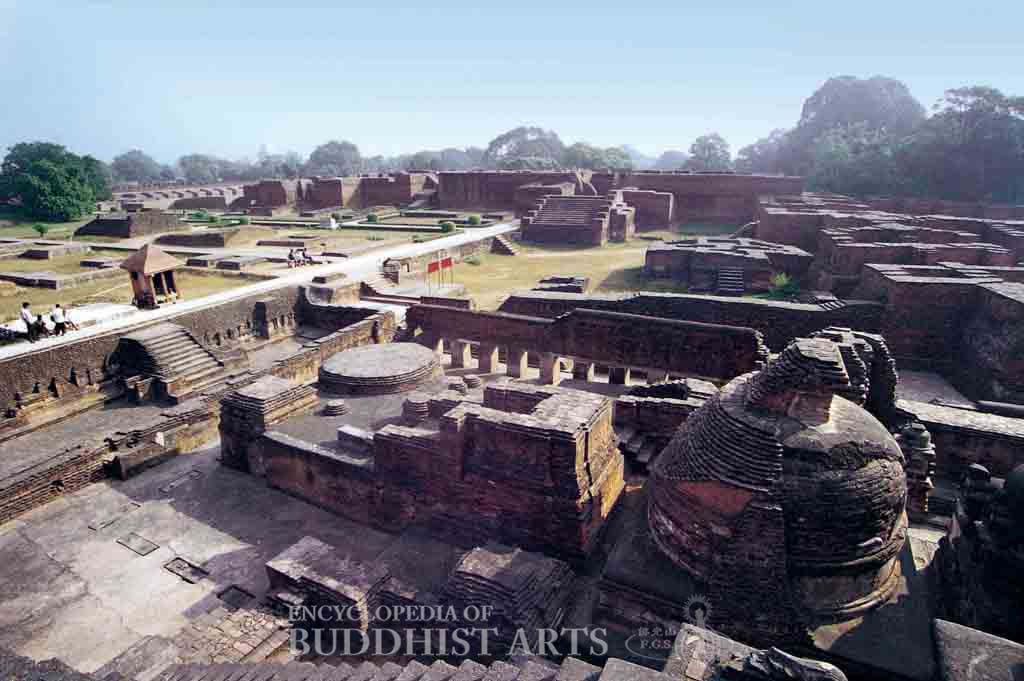
Sarnath
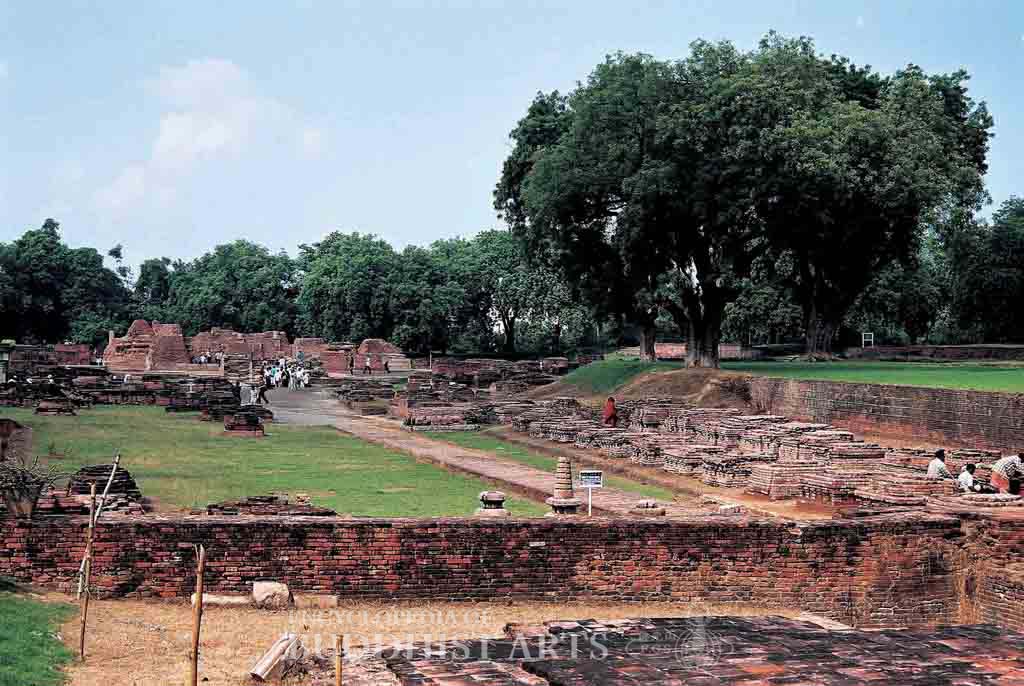
Sarnath
Sarnath
INDIA, Uttar Pradesh
The name Sarnath comes from the word Saranganatha, which means Protector of the Deer. Its name in Sanskrit was Mrigadava, from which it derives its popular name of Deer Park. It has also previously been known as Isipatana (Place where Holy Men Landed) and is one of the Four Major Buddhist Sites. It was the place where Sakyamuni Buddha delivered his first teaching and the place where he first established the sangha.
Several Buddhist structures were constructed between the 3rd century BCE and the 11th century, including a stupa and a pillar erected by King Asoka (reigned circa 269–232 BCE) around 234 BCE. In his book Great Tang Records on the Western Regions, Chinese pilgrim Master Xuanzang mentions that the temples and stupas at Sarnath numbered a few hundred as of the 7th century. In 1194 Muslims leveled the city. During the 17th and 18th centuries, the remaining bricks and stones at Sarnath were removed to be used as building materials. The ruins of Sarnath remained buried until British archaeologist Alexander Cunningham led a team of archaeologists to excavate the site in 1837. In 1956 the Indian government restored the structures at Sarnath to their original state.
The ruins were made into a historical park and a brick wall has been built to protect the extant structures. The site includes Deer Park, where the Buddha gave his first teaching, as well as ruins of monasteries, and the remains of the Asoka Pillar that had a capital with four lions. There are also a number of stupas, including Dhamekh Stupa, Chaukhandi Stupa, and the remains of Dharmarajika Stupa. The Chinese temple and the Mulgandhakuti Vihara built by the Mahabodhi Society are modern additions. The Sarnath Archaeological Museum was built to exhibit the Buddhist relics found at the site.
For more details, go to the Encyclopedia of Buddhist Arts: Architecture M-S, page 947.
Cite this article:
author = Hsingyun and Youheng and Johnson, Peter and Mankuang and Lancaster, Lewis,
booktitle = {Encyclopedia of Buddhist Arts: Architecture M-S},
pages = 947,
title = {{Sarnath}},
volume = 3,
year = {2016}}