
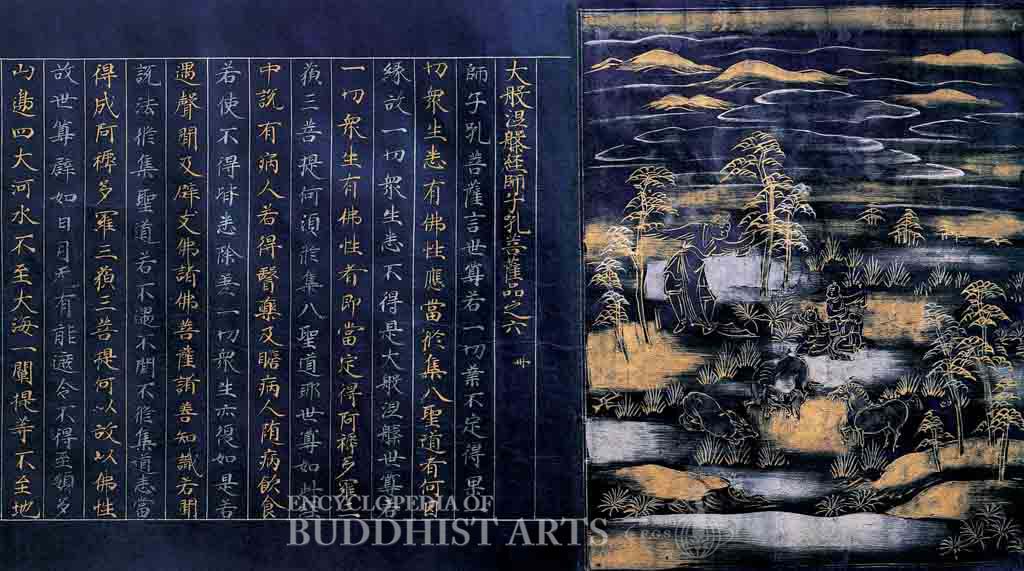
Frontispieces of the Tripitaka - Mahaparinirvana Sutra - Fascicle 30
Gold and silver on indigo paper
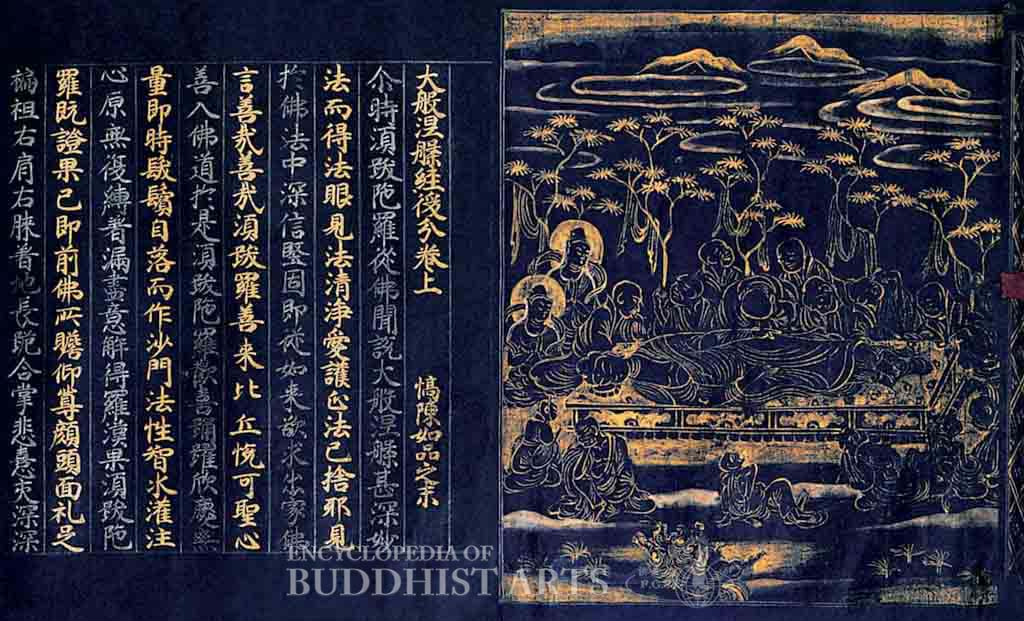
Frontispieces of the Tripitaka - Mahaparinirvana Sutra - Epilogue
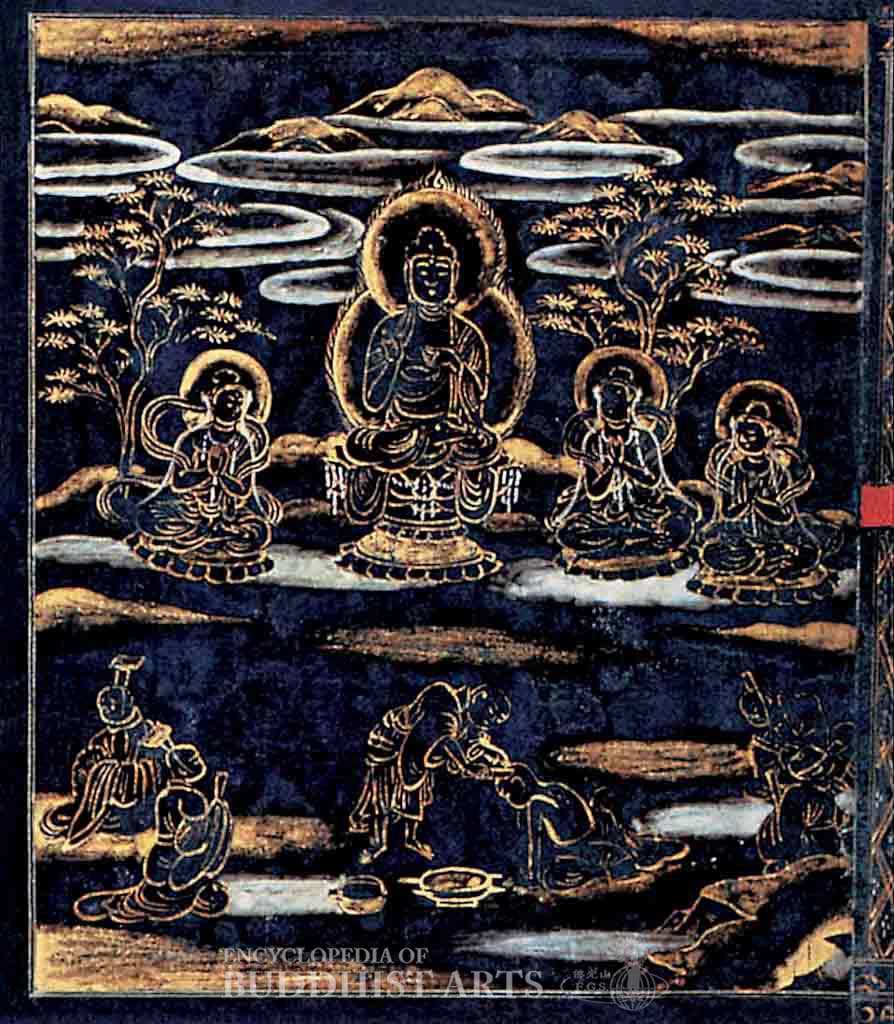
Frontispieces of the Tripitaka - Pancavimsatisahasrika Prajnaparamita Sutra - Fascicle 40
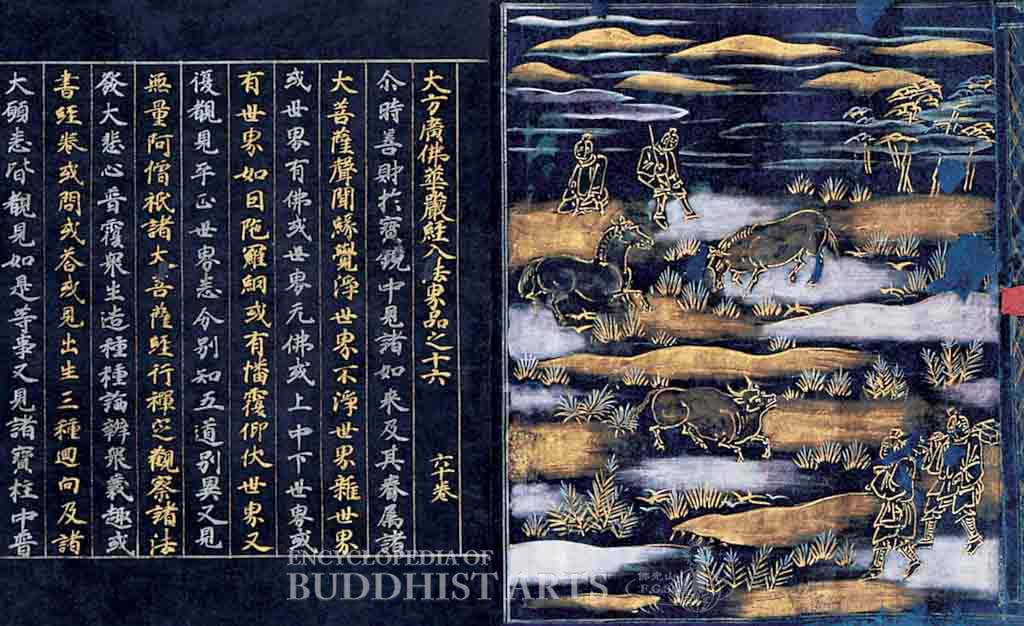
Frontispieces of the Tripitaka - Avatamsaka Sutra - Fascicle 60
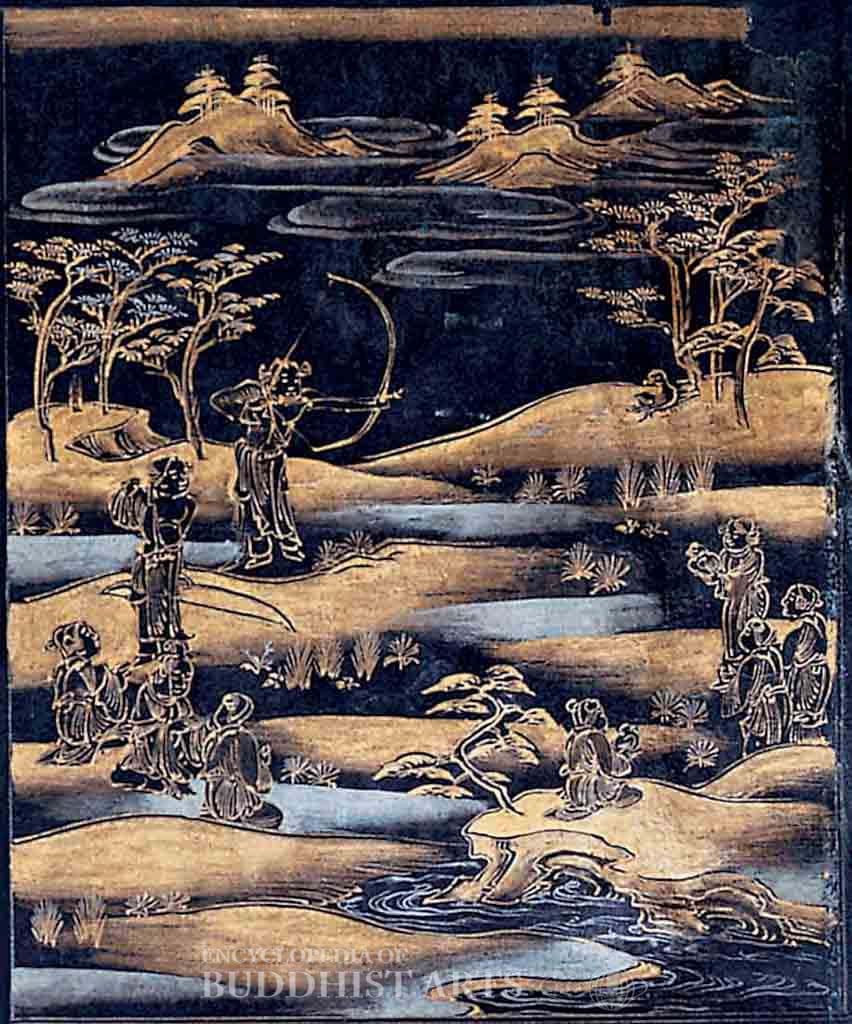
Frontispieces of the Tripitaka - Mahaprajnaparamita Sutra - Fascicle 11
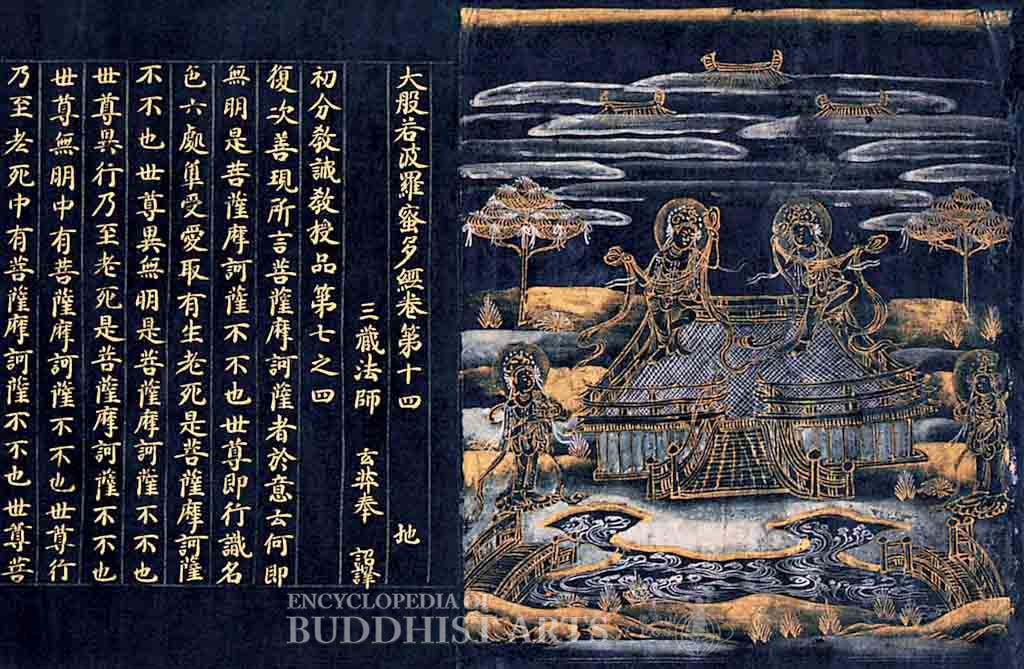
Frontispieces of the Tripitaka - Mahaprajnaparamita Sutra - Fascicle 14
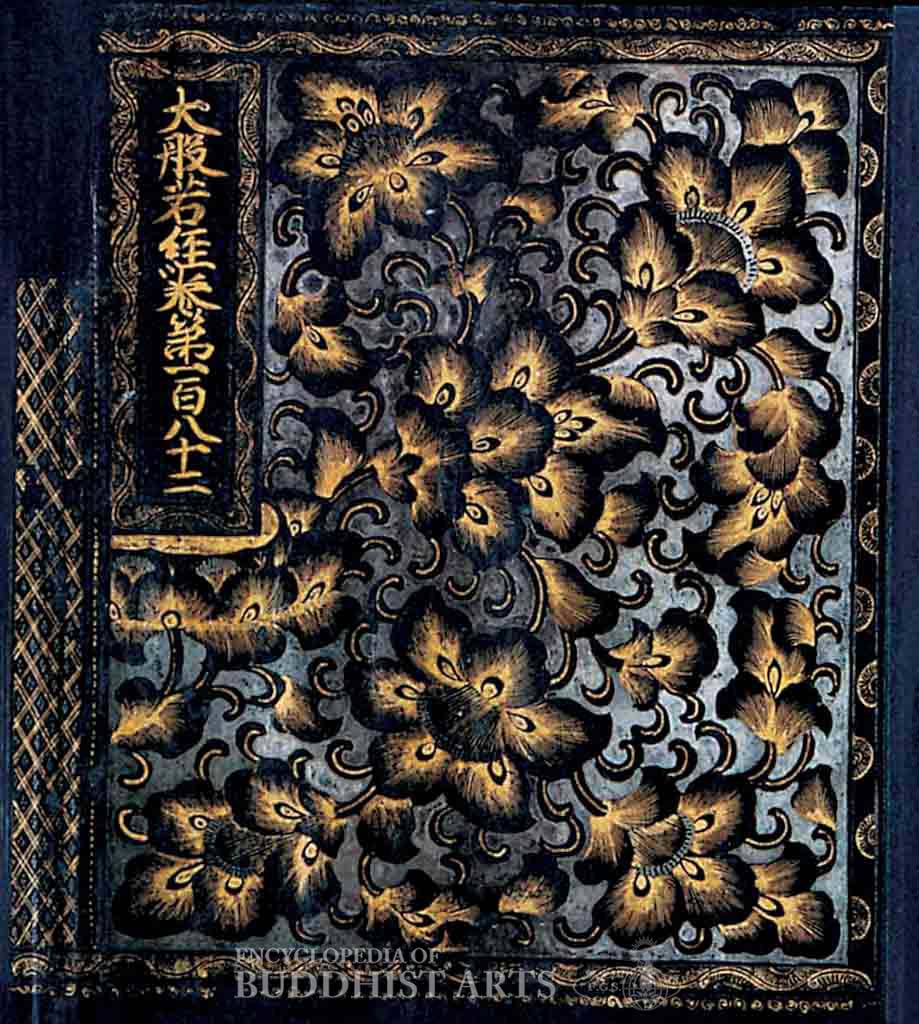
Frontispieces of the Tripitaka - Mahaprajnaparamita Sutra - Fascicle 182
Frontispieces of the Tripitaka
JAPAN; Heian period
This Buddhist canon was transcribed by three generations of the Fujiwara clan who resided in Hiraizumi (present day Iwata), during the 12th century. It is made up of approximately 7,000 fascicles, making it one of the largest collections of sutras in Japan, substantial in terms of cultural heritage and significant in the history of Japanese scriptures. As the project was initiated by Fujiwara no Kiyohira when he built Chusonji Temple, the collection is sometimes called the Chusonji Sutras or Kiyohira Sutras. The sutra transcriptions are based on the Buddhist canon brought into Japan from Song dynasty (960–1279), China during the late 12th century. There are 4,296 fascicles kept at Kongobuji Temple in Wakayama. They were donated from Chusonji Temple by Toyotomi Hidetsugu during the Azuchi-Momoyama period (1573–1615). The remaining 2,754 fascicles are at Chusonji Temple. The two collections were listed as National Treasures in 1951 and 1952.
The manuscripts are classified into three categories. The sutras transcribed by Kiyohira are written on indigo paper in alternating rows of gold and silver ink. The sutras transcribed by Hidehira, who belonged to the third generation, are written on indigo paper entirely in gold ink. The third category is the Lotus Sutra transcribed by both Motohira of the second generation and Hidehira. Written in gold ink on indigo paper, the Lotus Sutra was dedicated to their deceased ancestors.
The manuscript covers are decorated with flowers and scrolling vines illustrated with gold and silver paint. The titles of the sutras are written in cartouches in the upper left corners of the covers. On the frontispieces of the individual chapters, there are illustrations of the content of the sutras. The figures in the artworks are outlined with gold lines against the blue background. Hills and mountains are portrayed with generous amounts of gold paint. The cumulative effect of the bright gold and silver images and characters is dazzling.
For more details, go to the Encyclopedia of Buddhist Arts: Painting A-H, page 272.
Cite this article:
author = Hsingyun and Youheng and Youlu and Wilson, Graham and Manho and Mankuang and Huntington, Susan,
booktitle = {Encyclopedia of Buddhist Arts: Painting A-H},
pages = 272,
title = {{Frontispieces of the Tripitaka}},
volume = 14,
year = {2016}}