
Bujang Valley
Bujang Valley
MALAYSIA, Kedah, Merbok
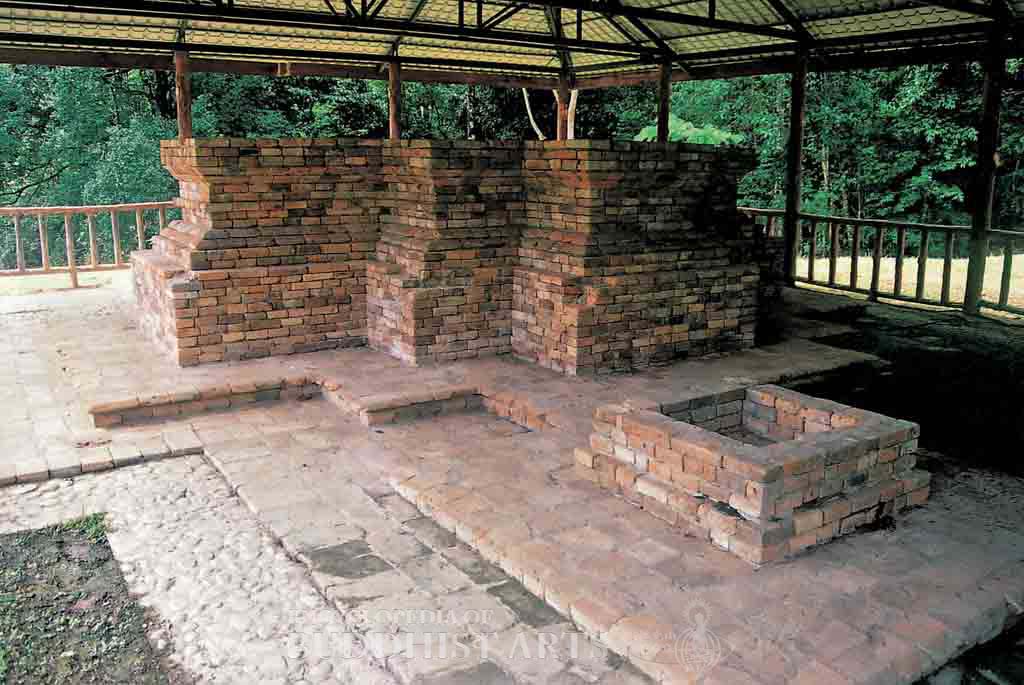
The valley is the site of a Hindu-Buddhist polity which flourished during the 4th century or earlier. It was situated at the mouth of the Muda River on an important trade route but by the 14th century it had begun to decline.
The site covers an area of 224 sq km. It was first excavated in 1845 but a thorough excavation was carried out by British archaeologist Dr Quatrich Wales in 1936. Over 50 archaeological sites were discovered, including Buddhist and Hindu temples and tombs.
Among the ruins, Pengkalan Bujang Temple and Pendiat Temple were verified as Buddhist ruins, but they were constructed without an open area for worship. On the other hand, Batu Pahat Temple, found with an open area for worship, was discovered with stone niches for paying homage. It housed Bodhisattva images holding lotuses, which suggest that the temple belonged to the Tantra School.
The Bujang Valley is the only Buddhist archaeological site in Malaysia. Apart from the stone niches, the artifacts unearthed include statuettes of Bodhisattvas with joined palms, bronze Buddha statues, Buddha head sculptures, and inscribed stone caskets. An archaeological museum has been established to house the artifacts and to act as a center for research.
For more details, go to the Encyclopedia of Buddhist Arts: Architecture A-F, page 103.
Cite this article:
author = Hsingyun and Youheng and Johnson, Peter and Mankuang and Lancaster, Lewis,
booktitle = {Encyclopedia of Buddhist Arts: Architecture A-F},
pages = 103,
title = {{Bujang Valley}},
volume = 1,
year = {2016}}