
Tofukuji Temple: Five Hundred Arhats
Ink and color on silk
Tofukuji Temple: Five Hundred Arhats
Tofukuji Temple: Five Hundred Arhats
Tofukuji Temple: Five Hundred Arhats
Tofukuji Temple: Five Hundred Arhats
Tofukuji Temple: Five Hundred Arhats
Tofukuji Temple: Five Hundred Arhats
JAPAN, Kyoto; Nanbokucho period
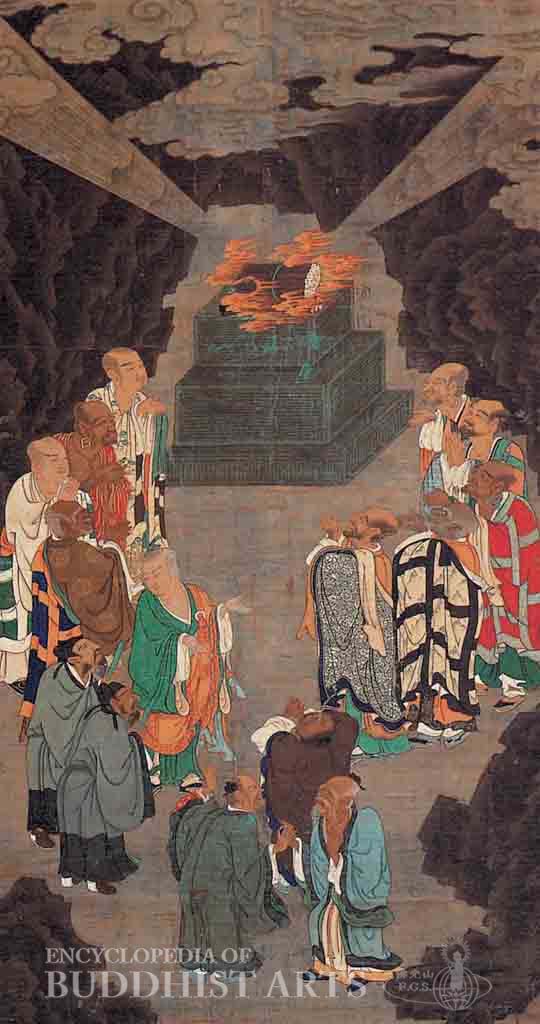
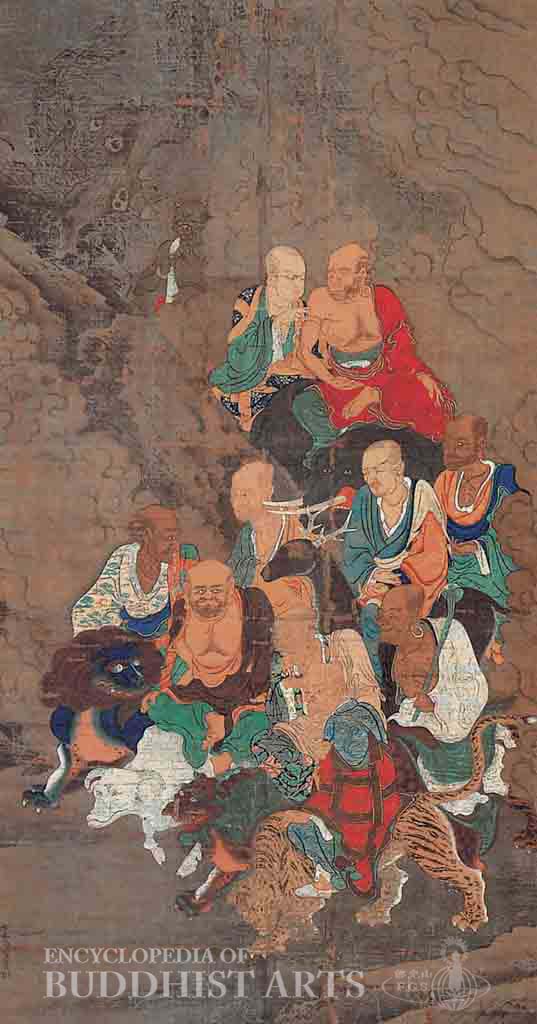
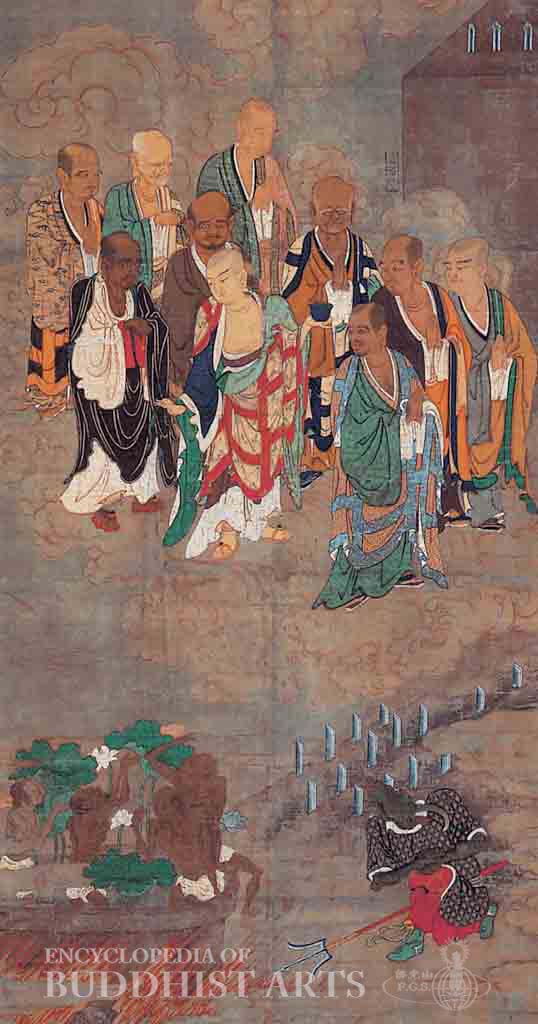
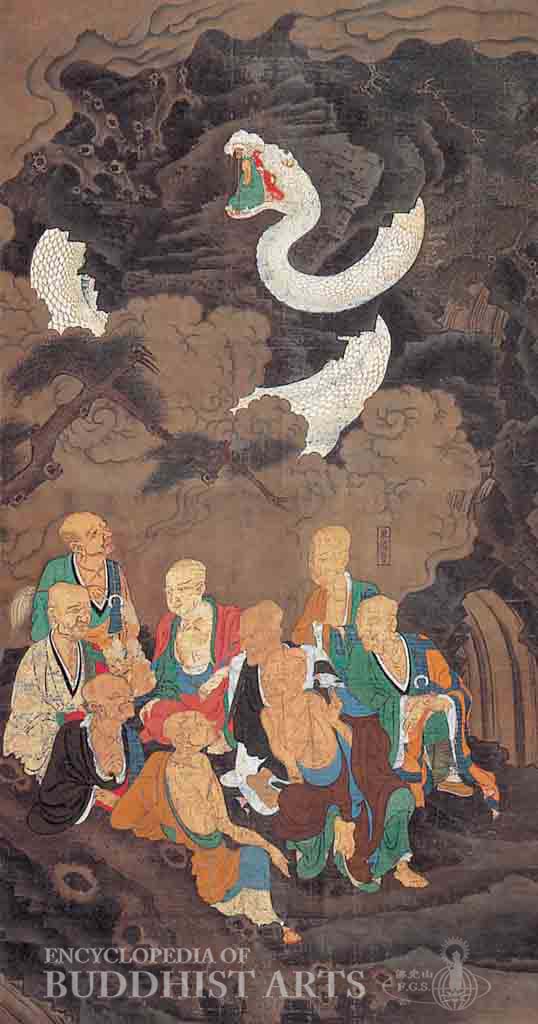
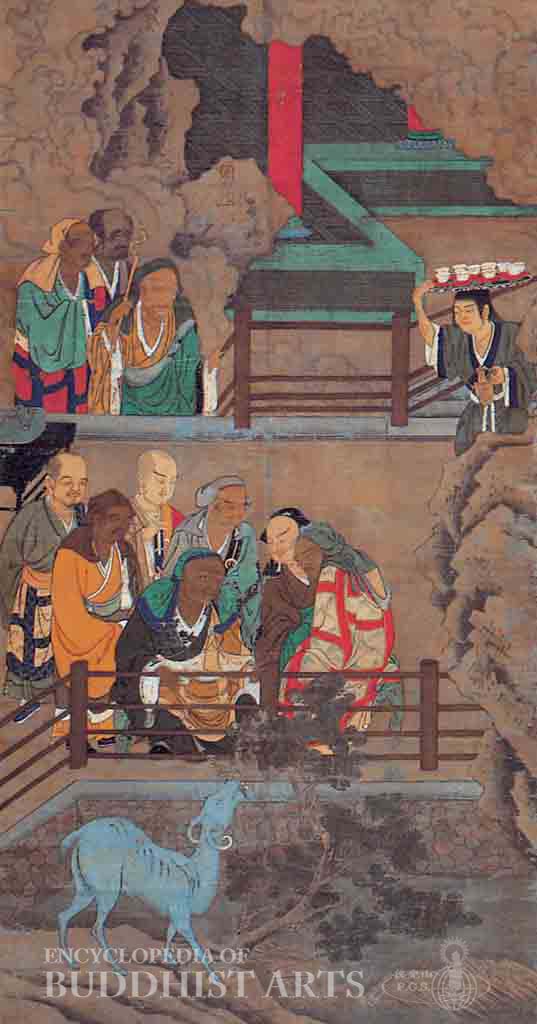
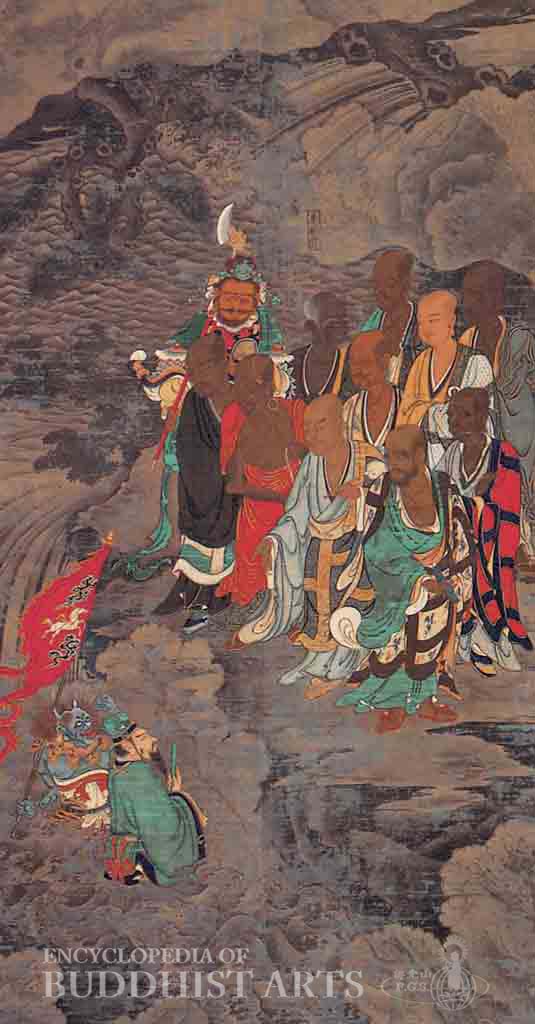
This was originally a set of 50 paintings, each measuring 173.6 cm high and 89.4 cm wide. Ten Arhats were shown in each picture, making the set a complete portrayal of the Five Hundred Arhats. The full set originally belonged to Tofukuji Temple, but later some of the paintings were dispersed to other locations. Today, 45 paintings remain in the temple, two are kept in the Nezu Institute of Fine Arts in Tokyo, and three pictures have been lost. The painter did not sign his name, but judging by the style and according to historical records, the pictures were made by Kichizan Mincho, a monk of Tofukuji Temple. The Worship of Arhats in Tofukuji Temple states that Mincho began painting the Five Hundred Arhats in 1383 and completed his work in 1386, when he was 30. In the same year, the finished paintings were used for worship in the temple. The set is listed as an Important Cultural Property.
The Arhats are portrayed with detailed facial features and vivid expressions. They wear colorful robes and are often arranged in a unified group. Each painting shows the Arhats engaged in a different activity within a distinctive landscape. In one painting, the Arhats each ride on the back of an animal, but still appear calm and serene. In another, they look down compassionately at beings suffering in hell. Billowing clouds often fill the backgrounds. Judging from the appearance of the figures and the distinct scenes portrayed, Kichizan Mincho appears to have used Southern Song (1127–1279) and Yuan (1271–1368) dynasty paintings of the Arhats from Ningbo, China, as a source.
For more details, go to the Encyclopedia of Buddhist Arts: Painting P-Z, page 916.
Cite this article:
author = Hsingyun and Youheng and Youlu and Wilson, Graham and Manho and Mankuang and Huntington, Susan,
booktitle = {Encyclopedia of Buddhist Arts: Painting P-Z},
pages = 916,
title = {{Tofukuji Temple: Five Hundred Arhats}},
volume = 16,
year = {2016}}