
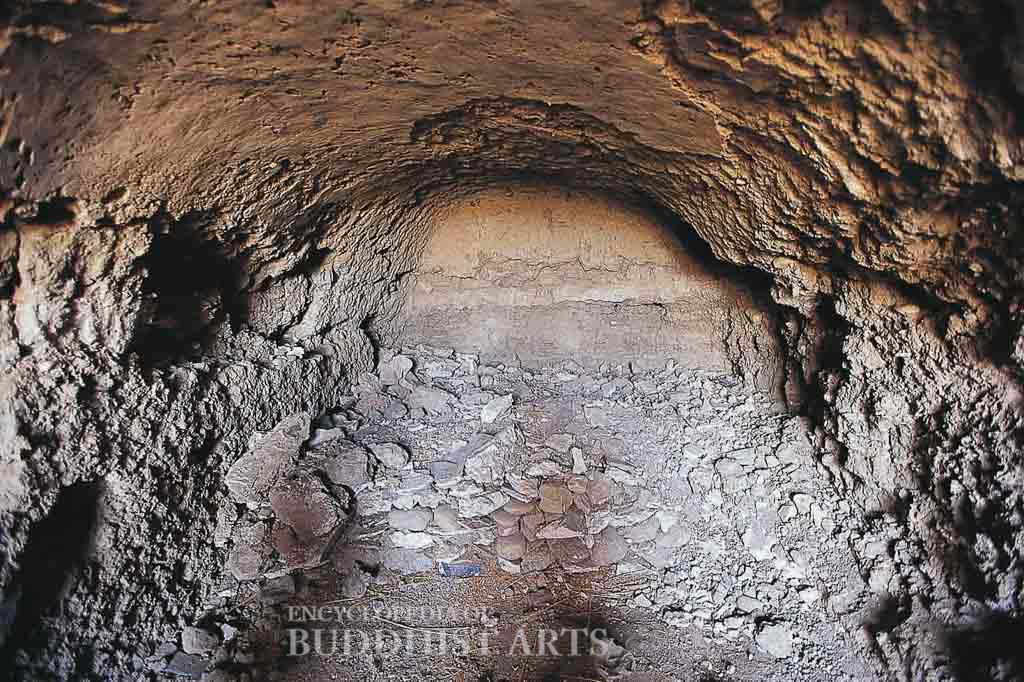
Hadda: Tapa-i-Shotor
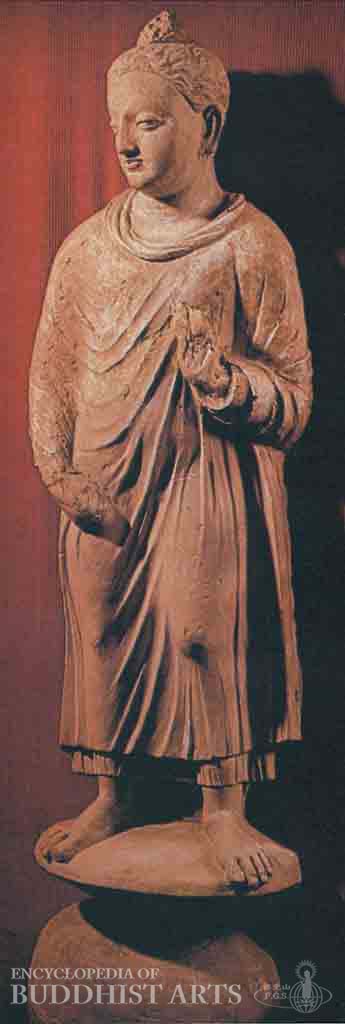
Hadda: Standing Buddha
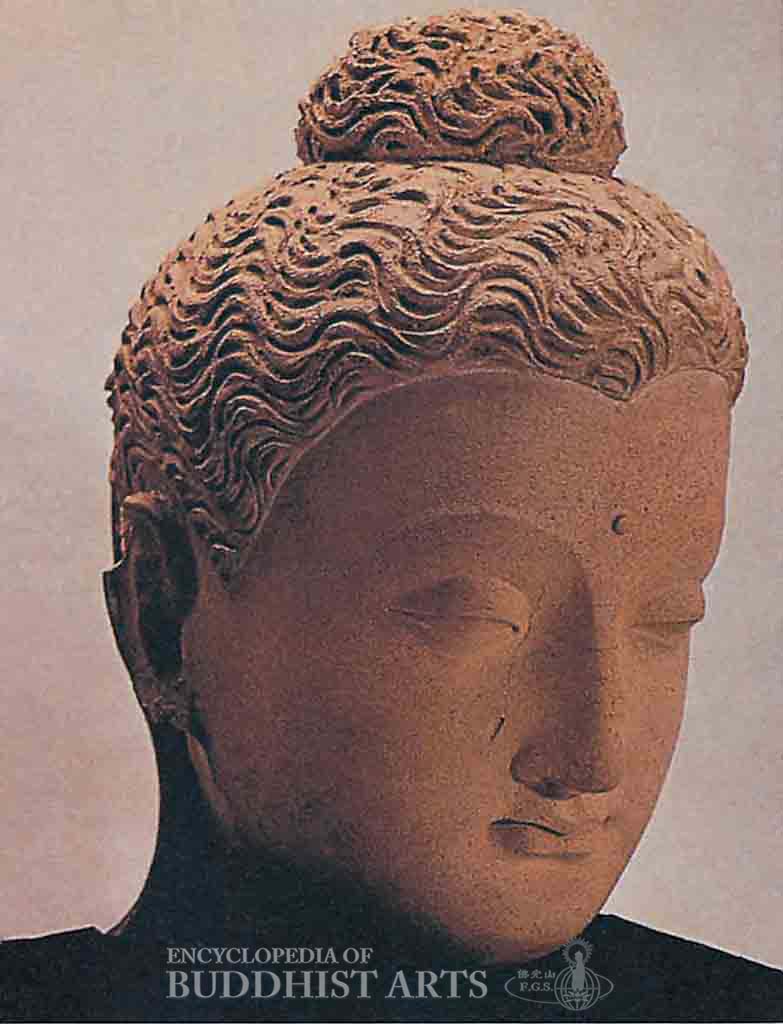
Hadda: Head of a Buddha
Hadda
AFGHANISTAN, Nangarhar, Jalalabad
This temple complex was built between the 2nd and 7th centuries. It was mentioned in Chinese Master Faxian’s Record of Buddhist Kingdoms written in the 5th century. It was also visited by Master Xuanzang during the Tang dynasty (618–907). It was recorded that the temple “has multiple chambers with paintings on the roof beams and red columns.” The Buddha’s bone relic, skull relic, and eye relic, as well as artifacts such as a monastic robe and staff, were enshrined in a seven-jewel stupa. In Sanskrit “Hadda” means bones; and the presence of these relics may explain the place name. The temple was destroyed in 535 by King Mihirakula (reigned 502–542). It was excavated by a French archaeological team from 1926 to 1928. There was a major discovery of additional ruins containing artifacts in 1965.
The sites discovered so far include seven temples and a number of caves, with the most important being Tapa-i-Shotor. The temples consist of mainly stupa compounds, which have a square arrangement similar to other Buddhist temples in Gandhara. The stupa is located in the center of the courtyard, which is surrounded by walkways lined with chambers on the four sides. There are smaller stupas around the main stupa and inside these chambers, there are smaller stupas. The walls are made of a mix of clay, lime mortar, and gravel, and the outer walls are rendered in plaster. The walls are decorated with clay sculptures including Buddhas, Bodhisattvas, donors, monks, lions, and elephants. The caves have murals which are partially damaged. The excavated artifacts include Buddha statues, Buddha heads, a painting of the Renunciation of Nanda, reliquaries, bronzeware, and coins, which are now in the collections of the Taxila Museum in northwest Pakistan and the British Museum in London.
The statues of Buddhas and Bodhisattvas excavated from the site are found to have distinctive Greco-Buddhist facial features. They wear loose-fitting robes with elaborate rippling folds and creases. The statues are sculpted from soft clay producing a finer and more elegant workmanship than the typical Gandharan gray schist carvings.
For more details, go to the Encyclopedia of Buddhist Arts: Architecture G-L, page 417.
Cite this article:
author = Hsingyun and Youheng and Johnson, Peter and Mankuang and Lancaster, Lewis,
booktitle = {Encyclopedia of Buddhist Arts: Architecture G-L},
pages = 417,
title = {{Hadda}},
volume = 2,
year = {2016}}