
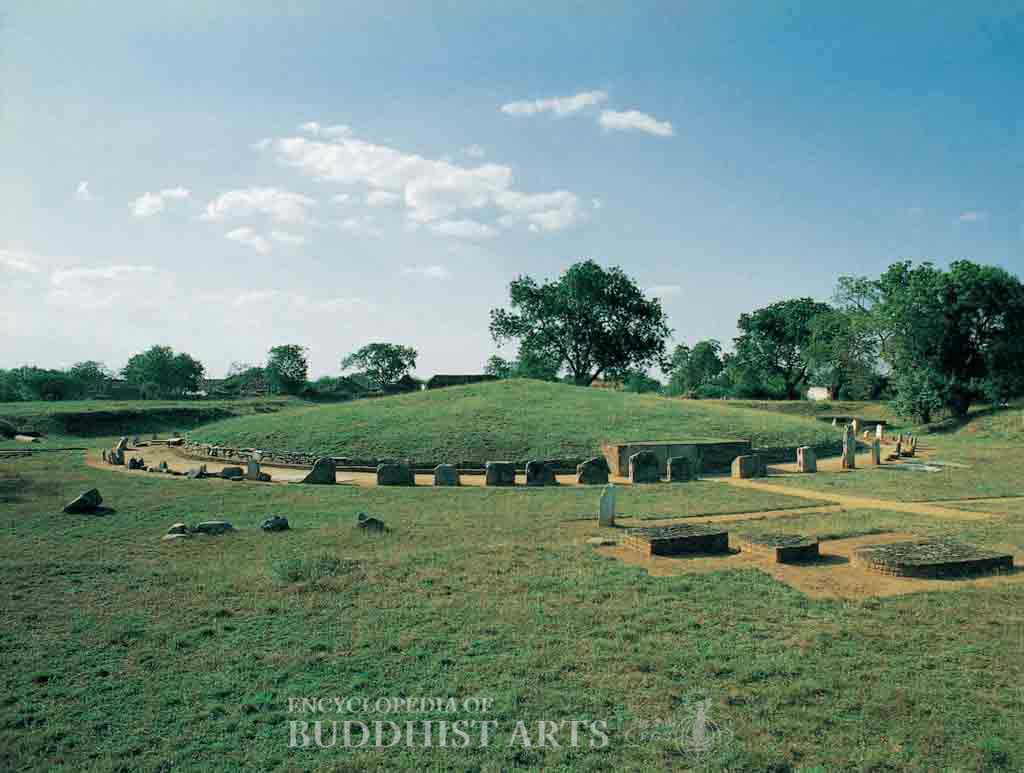
Amaravati Stupa: Base
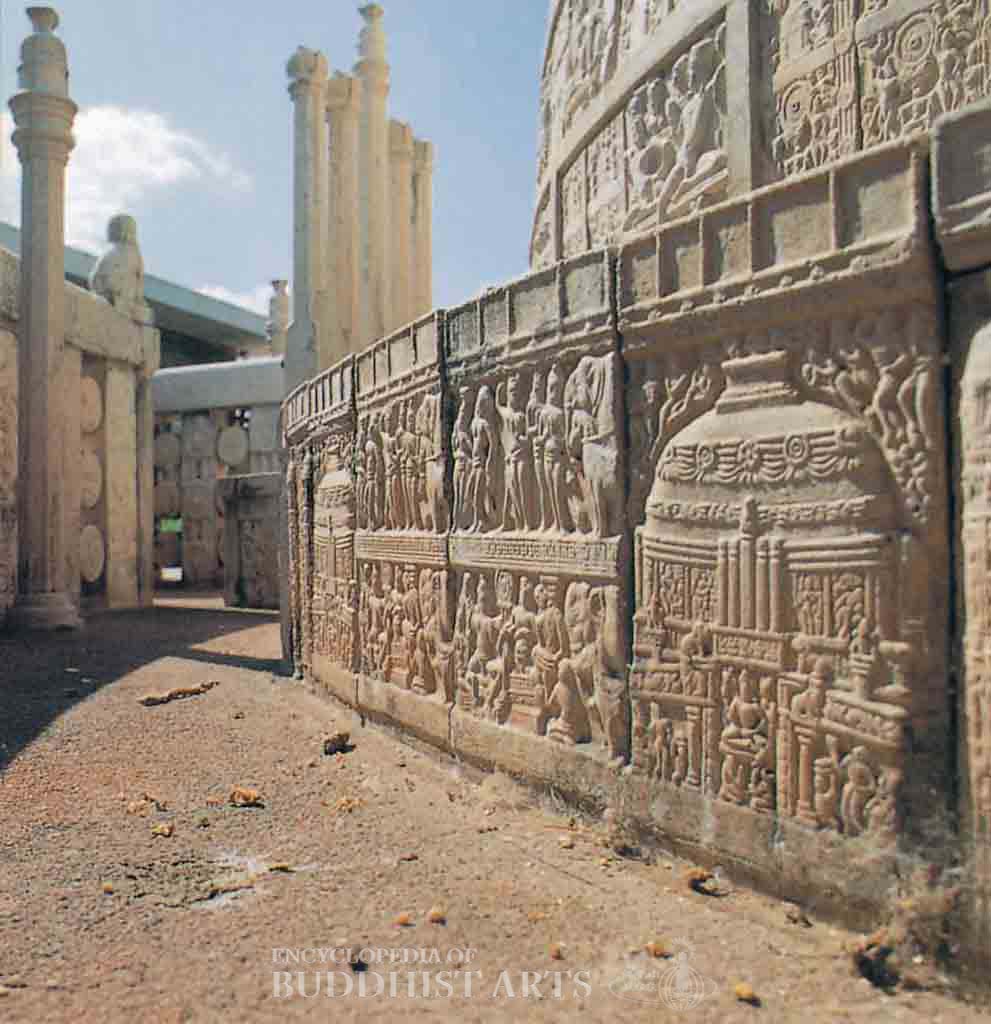
Amaravati Stupa: Model of Railings
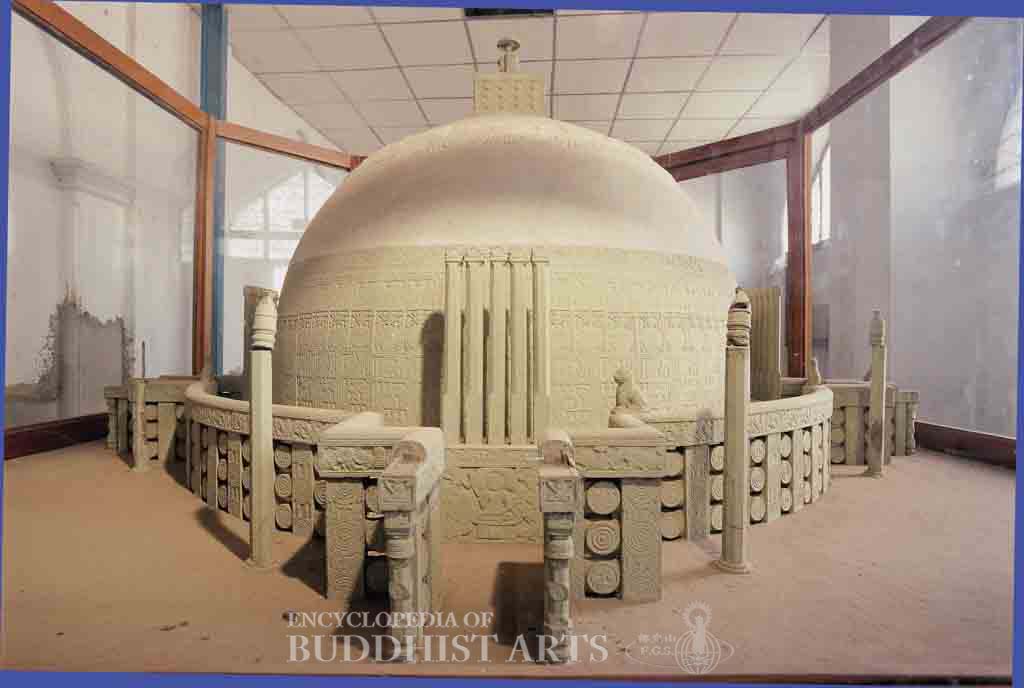
Amaravati Stupa: Model
Amaravati Stupa
INDIA, Andhra Pradesh, Amaravati
Also known as Mahastupa (Great Stupa) and Deepaladinne (Mound of Lamps), the stupa is the largest and most famous stupa in South India. It was said to have been originally built during the reign of King Asoka (reigned circa 269–232 BCE), and was renovated extensively with highly decorated carvings in the Satavahana period (circa 200 BCE–250 CE). After the middle of the 14th century the stupa was neglected and fell into disrepair. It was at this time that Buddhism fell into decline in South India.
In 1797 a British army officer, Colonel Colin Mackenzie, discovered the stupa under a mound of rubble. During his later visit in 1816, he noticed that many pieces of sculpture had been taken away by local people to reuse as building materials. He proceeded to salvage them, with the result that many of the reliefs have survived. During later excavations from the 19th to the early 20th centuries, more than five hundred reliefs and numerous Buddhist scriptures were unearthed from the base of the stupa. They look similar to those found in Sri Lanka, Thailand, and Indonesia. Recently the remains of an Asoka pillar have been excavated, representing the first example of Mauryan art found in South India. Most of the excavated items are kept in the Government Museum in Chennai and the British Museum in London. The Archaeological Museum in Amaravati was built in 1951.
The stupa was made of brick with a body in the shape of an inverted bowl. It is estimated to have been 29 m high with a diameter of 49 m. The height of the railings enclosing it was 3.5 m. The base and parts of the body were decorated with limestone reliefs. There were no entrance gates but platforms protruded in the four cardinal directions. The railings were decorated on their interior and exterior. The double-sided reliefs and freestanding Buddha images portray traces of Greco-Roman influence. The themes of these carvings include the Life of the Buddha and the Jataka tales, as well as images of nagas, trees, and flowers.
Amaravati, also known as Dhanyakataka, was the capital of the Satavahana Empire. At that time it became the center for Buddhism and Buddhist art in South India. The elegant and intricate Amaravati sculptures had a great influence on art in Sri Lanka and Southeast Asia. The art of Amaravati constitutes one of the three major schools of ancient Indian art, along with the Gandhara and Mathura styles.
For more details, go to the Encyclopedia of Buddhist Arts: Architecture A-F, page 9.
Cite this article:
author = Hsingyun and Youheng and Johnson, Peter and Mankuang and Lancaster, Lewis,
booktitle = {Encyclopedia of Buddhist Arts: Architecture A-F},
pages = 9,
title = {{Amaravati Stupa}},
volume = 1,
year = {2016}}