
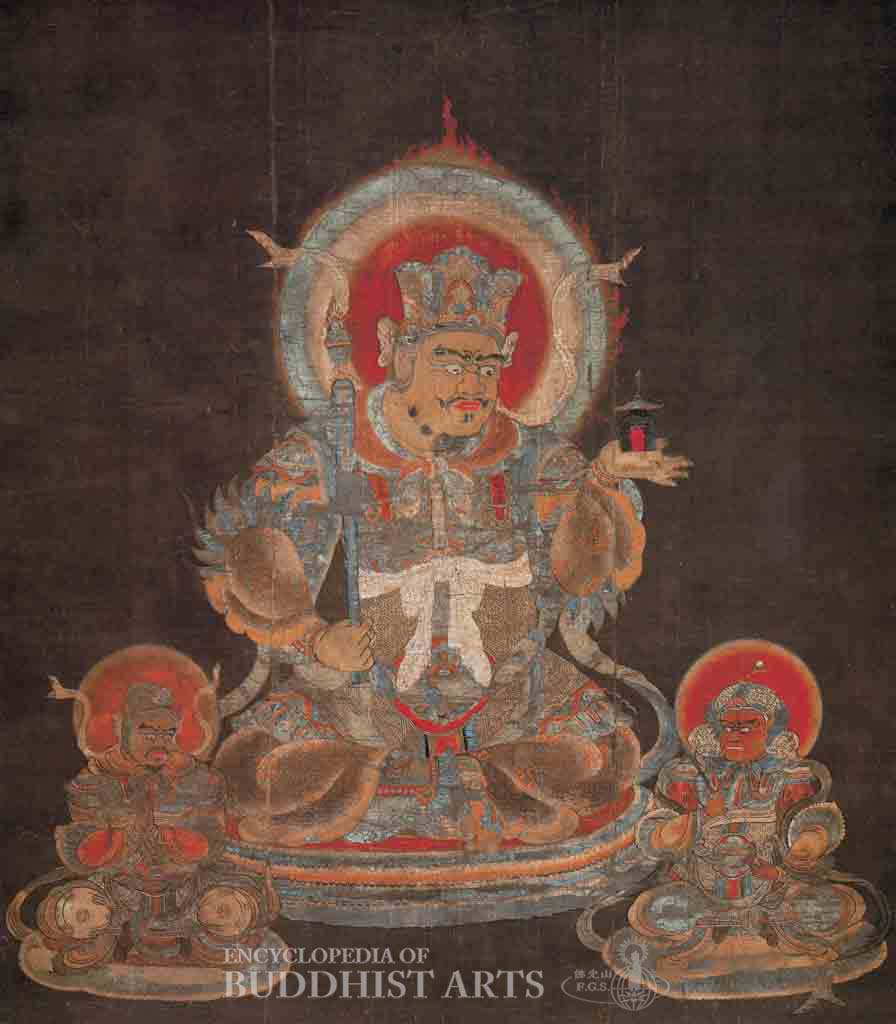
Twelve Heavenly Beings - Vaisravana
Ink and color on silk
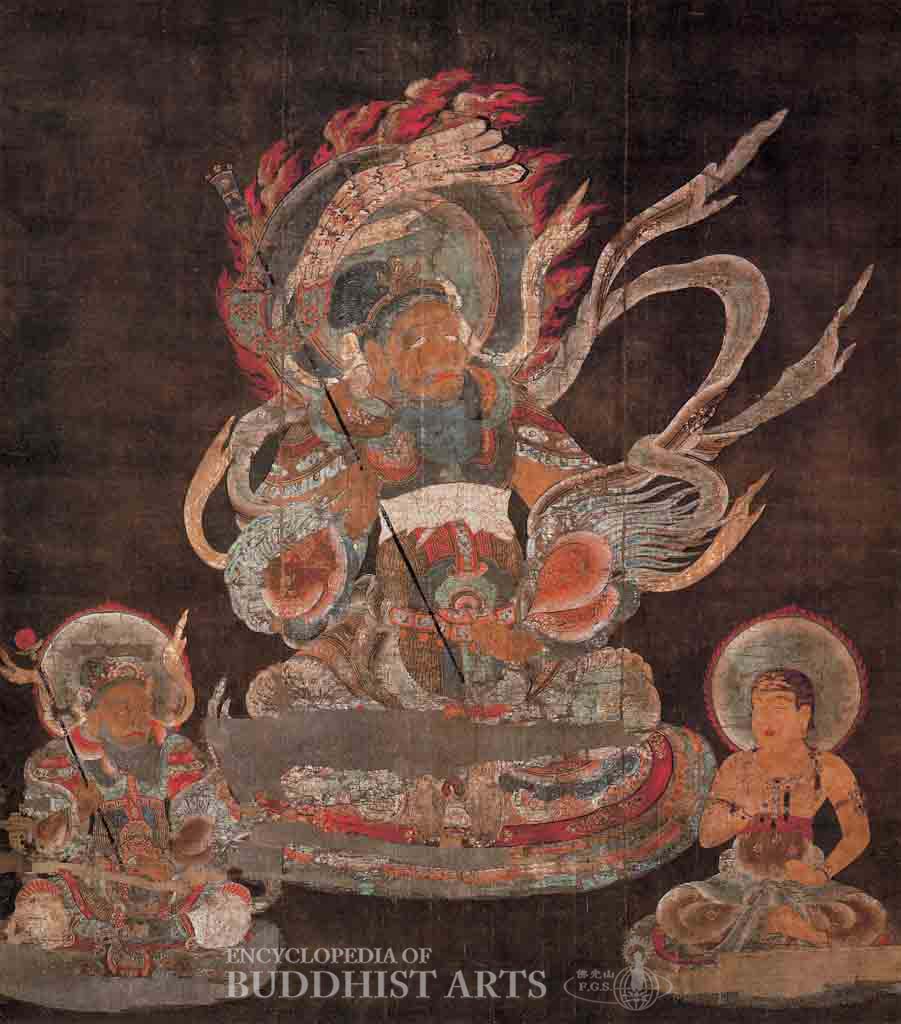
Twelve Heavenly Beings - Vayu
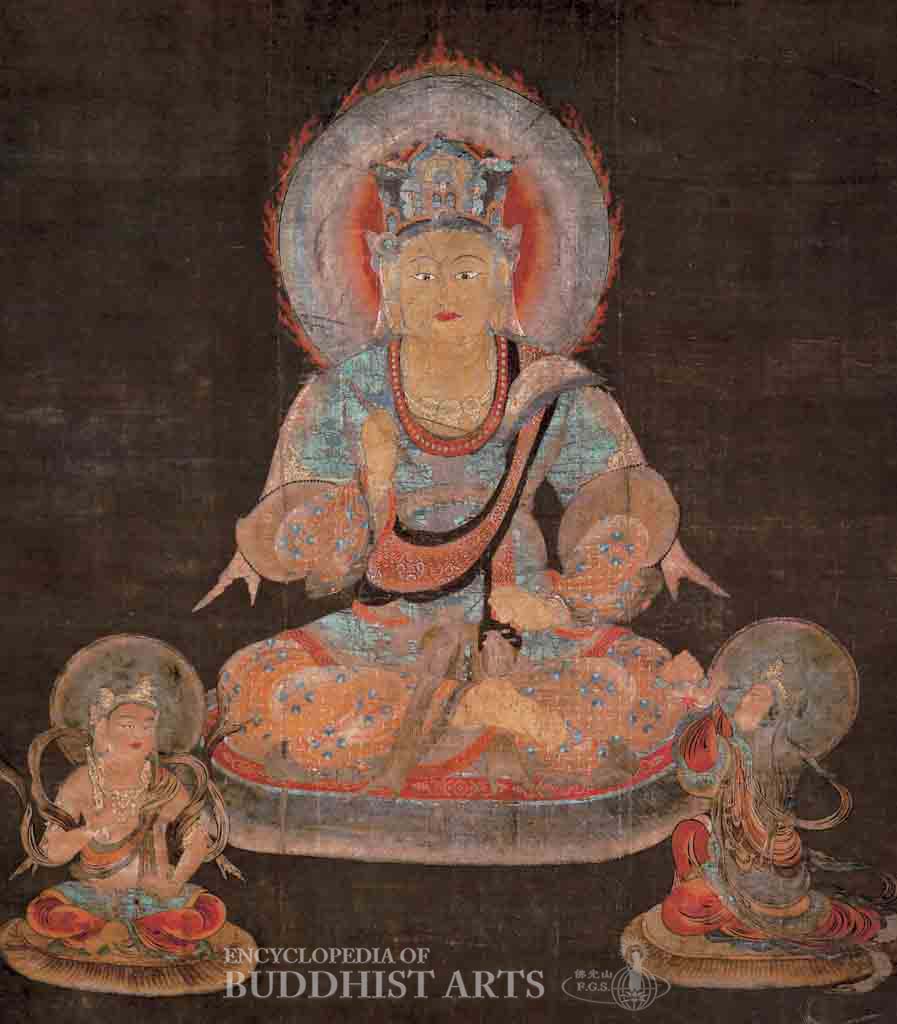
Twelve Heavenly Beings - Sakra
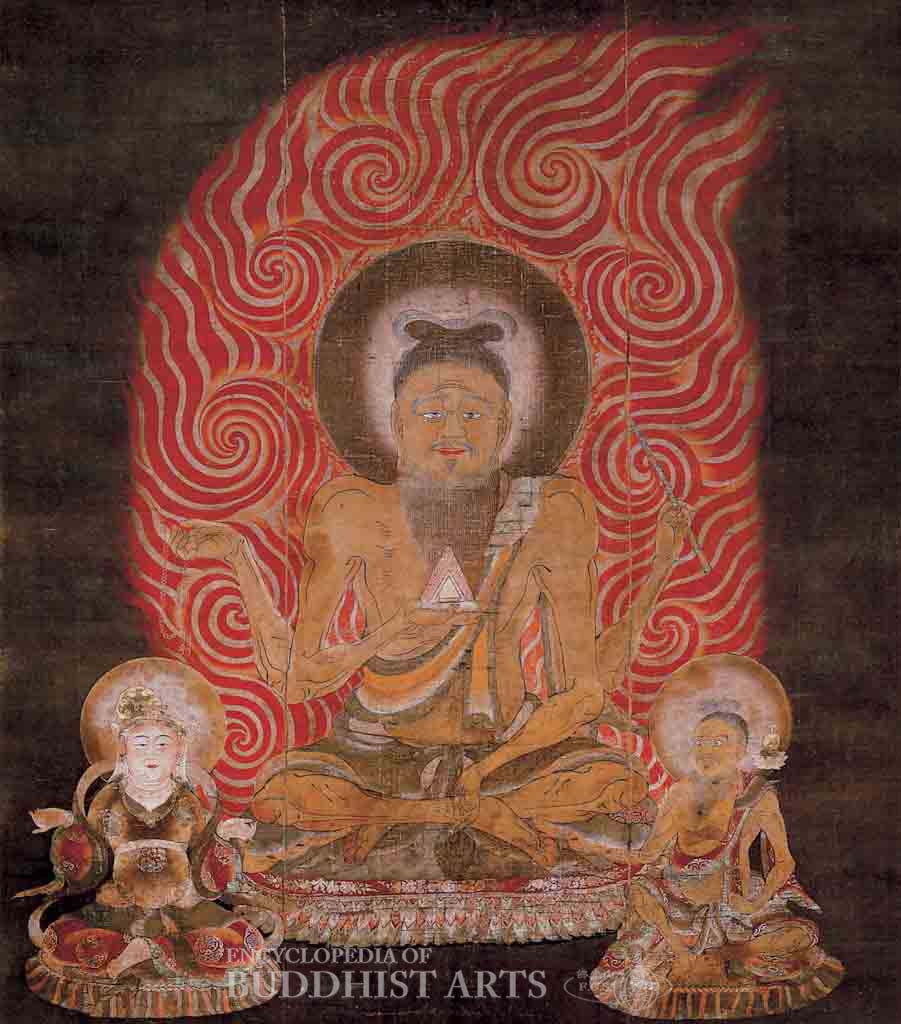
Twelve Heavenly Beings - Agni
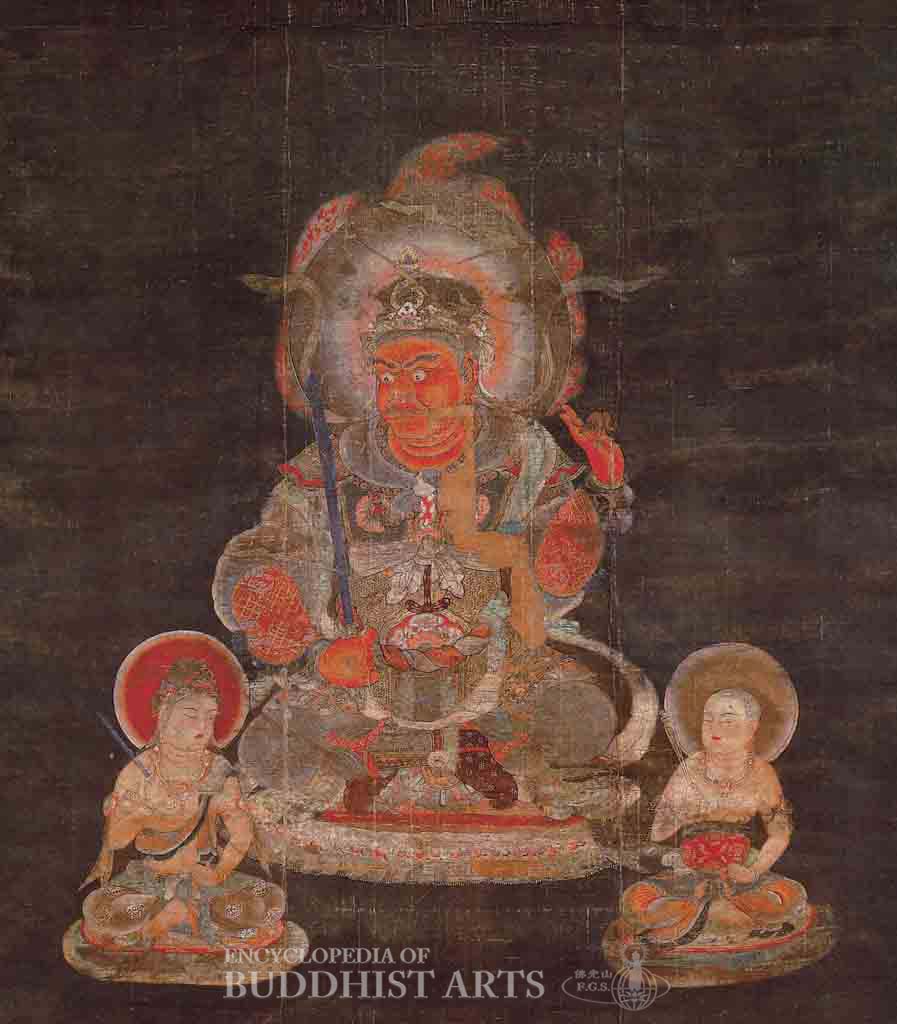
Twelve Heavenly Beings - Raksasa
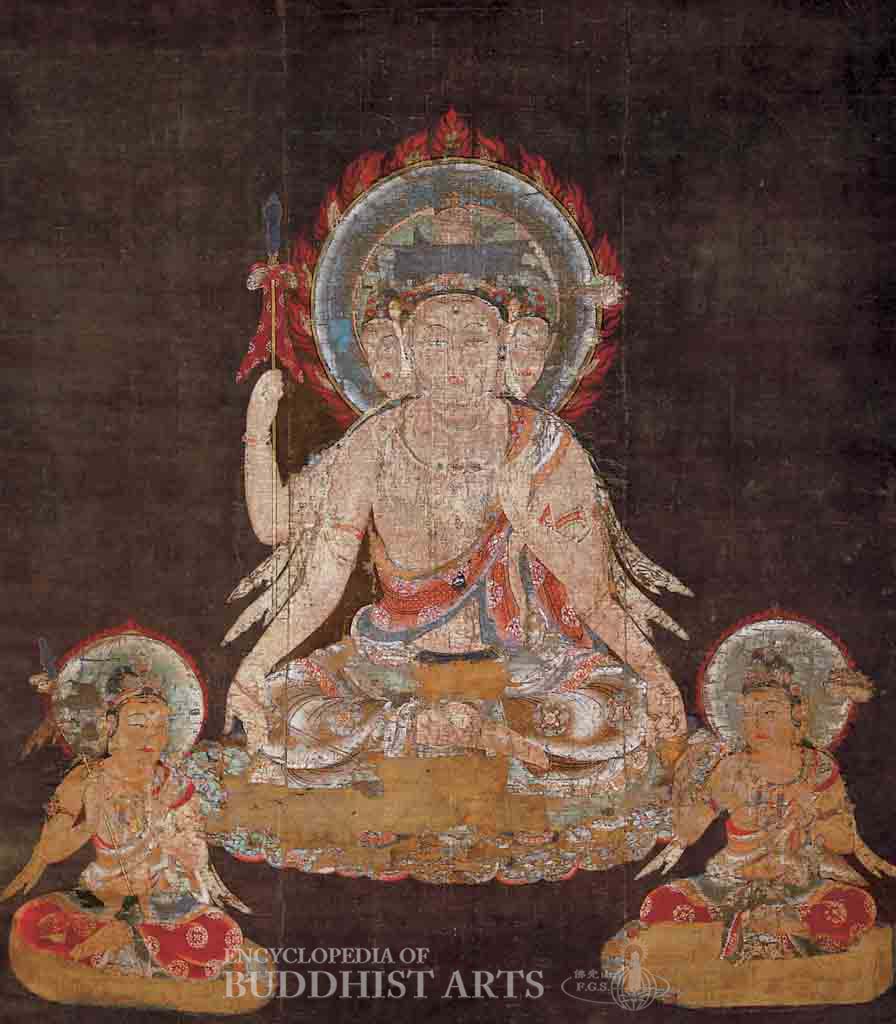
Twelve Heavenly Beings - Brahma
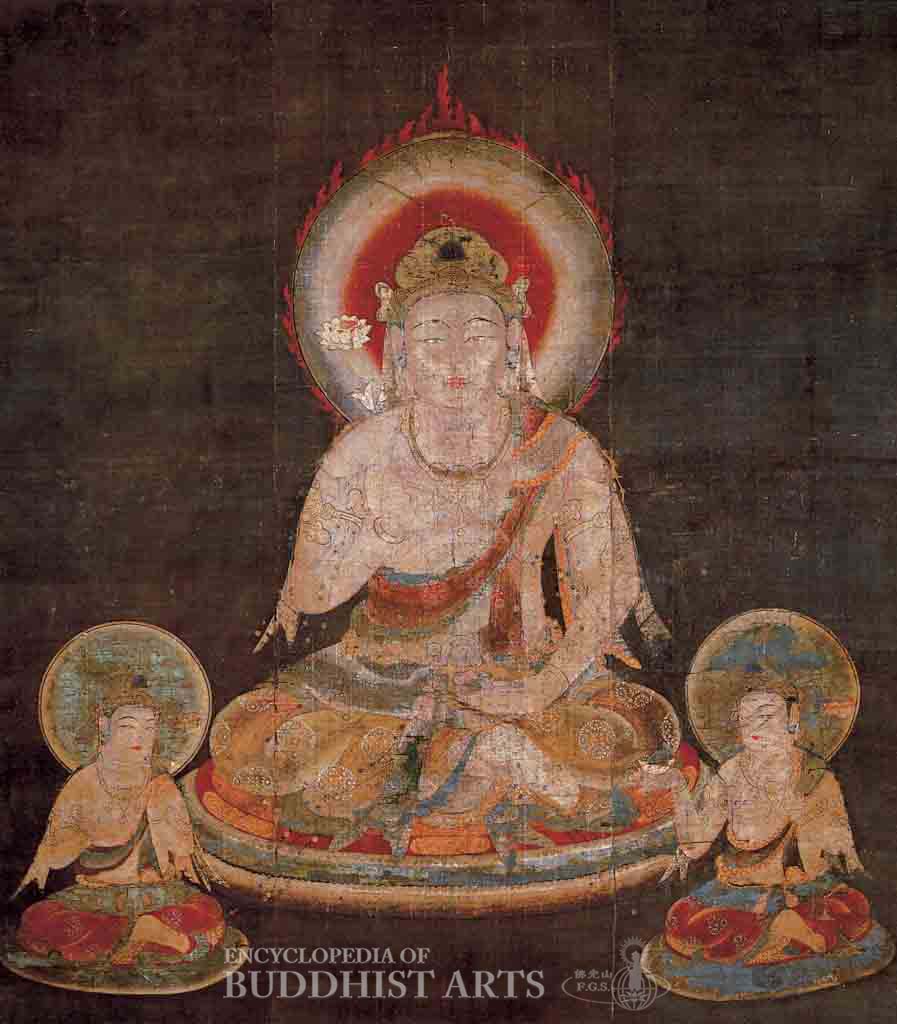
Twelve Heavenly Beings - Candra
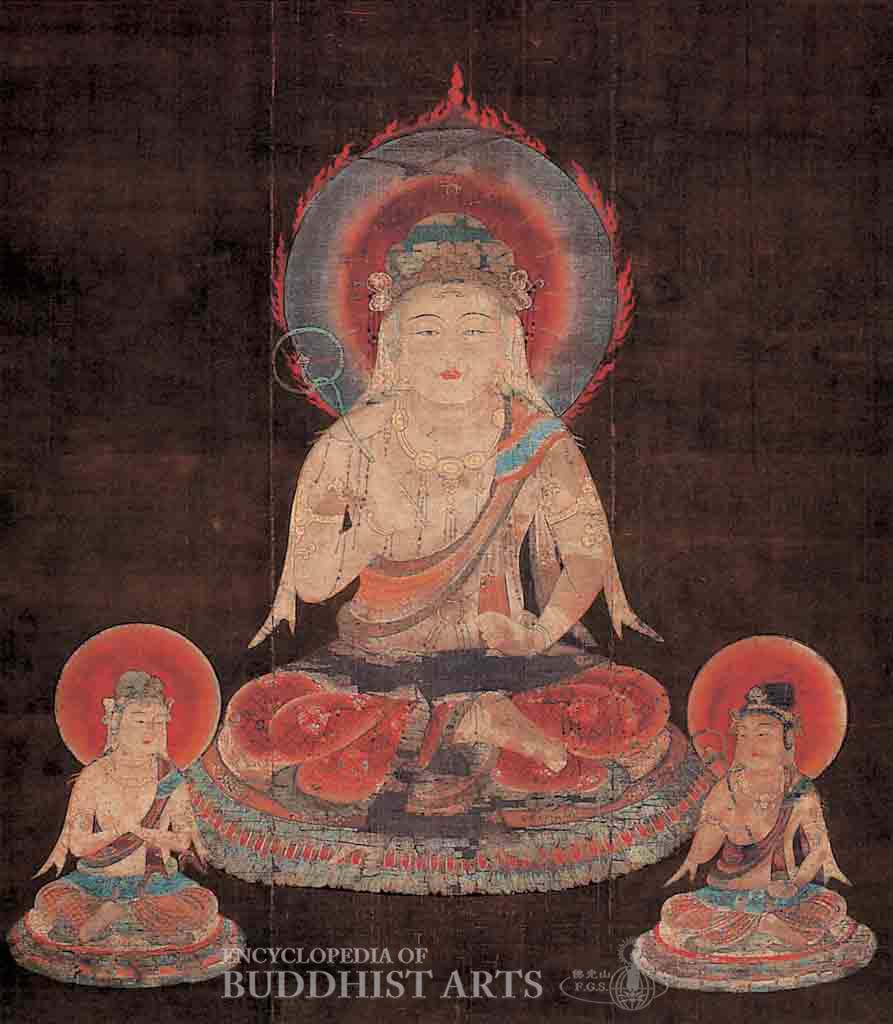
Twelve Heavenly Beings - Varuna
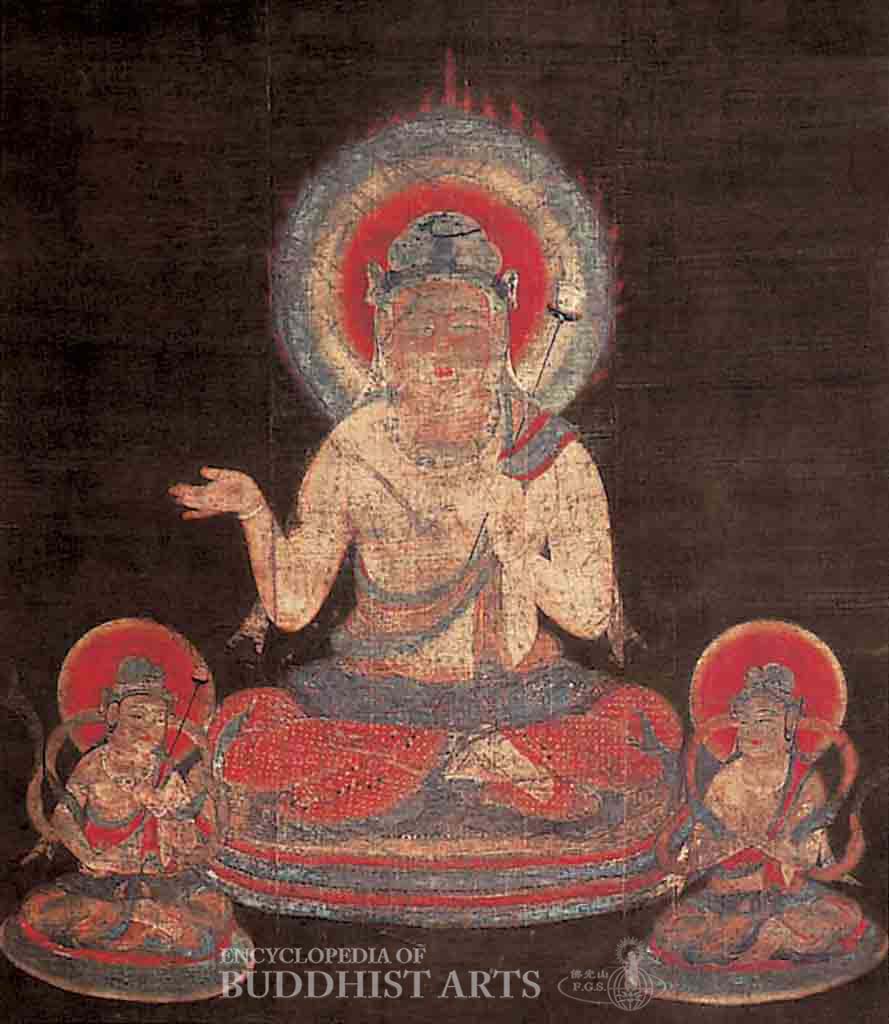
Twelve Heavenly Beings - Yama
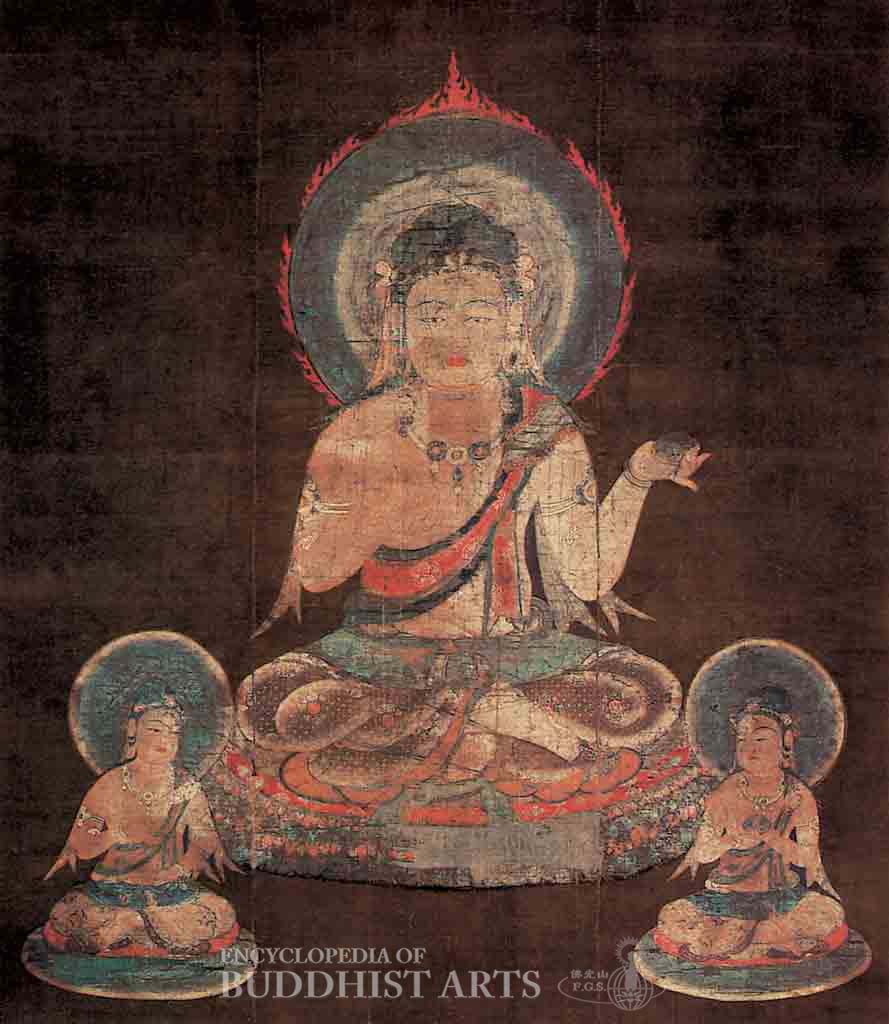
Twelve Heavenly Beings - Prthivi
Twelve Heavenly Beings
JAPAN; Heian period
In Vajrayana Buddhism, the Twelve Heavenly Beings are the guardians of the twelve directions and the protectors of temples. According to the records of Toji Temple, a set of scroll paintings of the Twelve Heavenly Beings was created in 1040, but was destroyed in a fire in 1127. That same year, a new set of paintings was made, based on a scroll kept at Ninnaji Temple in Kyoto. The scrolls, each 144 cm high and 127 cm wide, were kept in Toji Temple and used during annual Dharma services at the imperial palace. They are now kept in the Kyoto National Museum. The set was listed as a National Treasure in 1952.
In each painting, a heavenly being sits on a lotus throne in the center, flanked by two attendants. All of the figures have delicately painted facial features and wear colorful clothing decorated with intricate patterns. Their bright nimbuses are encircled by flames. Each figure has a distinct appearance; some are calm and peaceful, others are intimidating or wrathful. The Bearded Agni is surrounded by a red mandorla filled with striking spiral patterns. Brahma has three heads and four arms. Raksasa has red skin and an angry expression. Stoles billow around the body of Vayu. Vaisravana looks down intently at a stupa he supports with his left hand.
The vivid figures stand out from the dark backgrounds. Washes of pale color and bright gold highlights give the paintings an elegant appearance. There is speculation among scholars that the paintings of Vayu and Brahma may have been part of the original set that was once thought to have been completely destroyed.
For more details, go to the Encyclopedia of Buddhist Arts: Painting P-Z, page 948.
Cite this article:
author = Hsingyun and Youheng and Youlu and Wilson, Graham and Manho and Mankuang and Huntington, Susan,
booktitle = {Encyclopedia of Buddhist Arts: Painting P-Z},
pages = 948,
title = {{Twelve Heavenly Beings}},
volume = 16,
year = {2016}}