
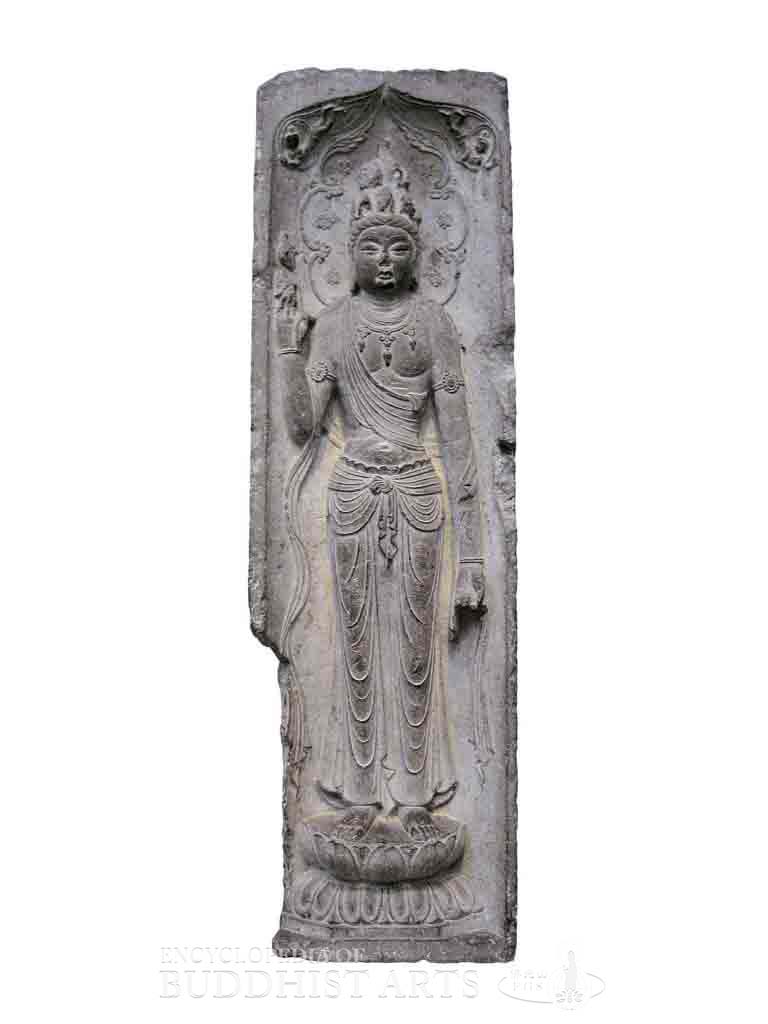
Guangzhai Temple Seven Jewel Tower: Eleven-Headed Avalokitesvara Bodhisattva
Limestone
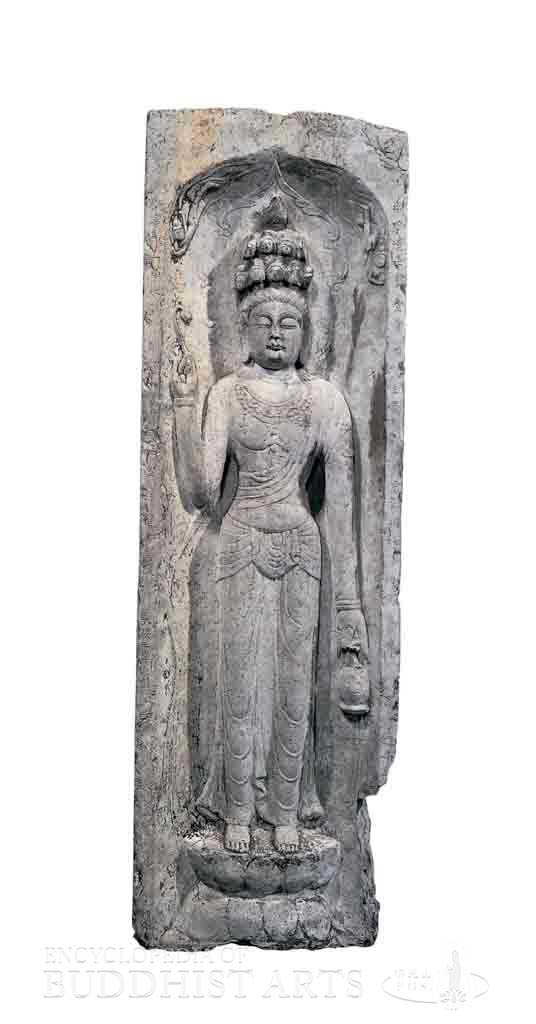
Guangzhai Temple Seven Jewel Tower: Eleven-Headed Avalokitesvara Bodhisattva
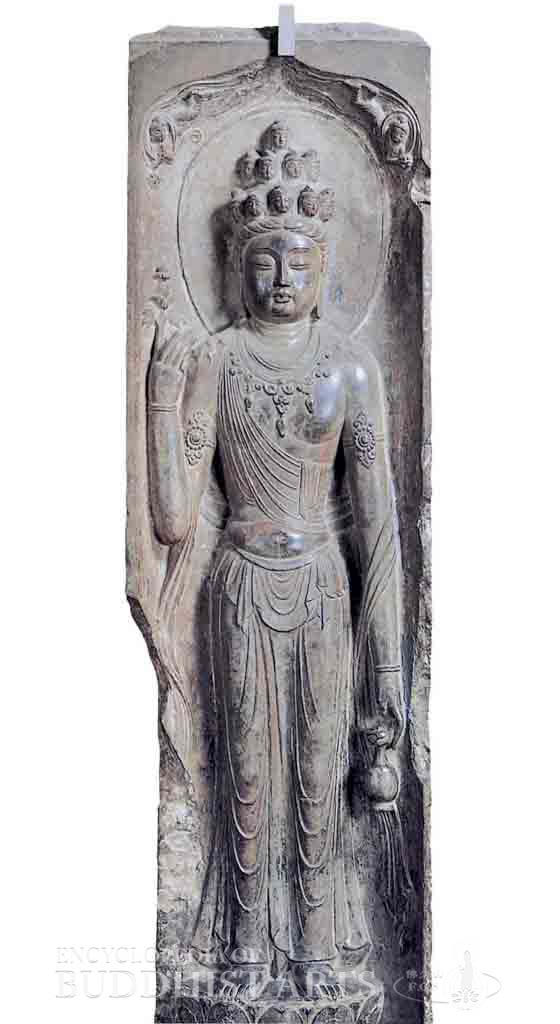
Guangzhai Temple Seven Jewel Tower: Eleven-Headed Avalokitesvara Bodhisattva
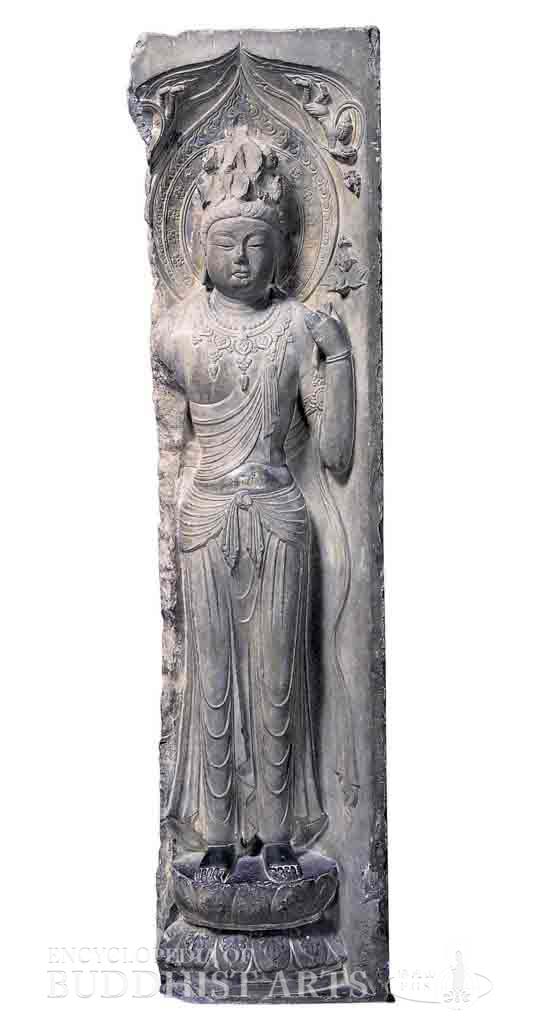
Guangzhai Temple Seven Jewel Tower: Eleven-Headed Avalokitesvara Bodhisattva
Guangzhai Temple Seven Jewel Tower: Eleven-Headed Avalokitesvara Bodhisattvas
CHINA, Shaanxi, Xi’an; Wu Zhou period
These sculptures date from the time of Empress Wu Zetian (reigned 684–705). They were originally housed inside the Seven Jewel Tower in Guangzhai Temple, but were later moved to Baoqing Temple. The panels were once part of a collection of around 30 similar pieces that have since been scattered throughout the world. There were seven similarly sized panels that depict the Eleven-Headed Avalokitesvara, and an inscription on one of them identifies the monk Degan as the person who commissioned it.
The Bodhisattvas are all similarly carved in relief within ogee-arched niches. Ten small heads are stacked in three layers on the figures’ crown, with five at the bottom, four in the middle, and one on the top. The figures stand barefoot on double lotus pedestals. Their upper bodies are adorned with jewelry and wrapped with a stole. Each Bodhisattva raises a lotus in one hand while the other hand is lowered and holds either a vase or the end of a stole. The figures wear thin skirts that are knotted at the waist. The depiction of the outlines and folds are influenced by the style of the Northern Qi dynasty (550–577). Each Bodhisattva has a different nimbus, often ornate, and are accompanied by apsaras.
For more details, go to the Encyclopedia of Buddhist Arts: Sculpture G-M, page 386.
Cite this article:
author = Hsingyun and Youheng and Lovelock, Yann and Chou, Yuan and Huntington, Susan and Edson, Gary and Neather, Robert,
booktitle = {Encyclopedia of Buddhist Arts: Sculpture G-M},
pages = 386,
title = {{Guangzhai Temple Seven Jewel Tower: Eleven-Headed Avalokitesvara Bodhisattvas}},
volume = 11,
year = {2016}}