
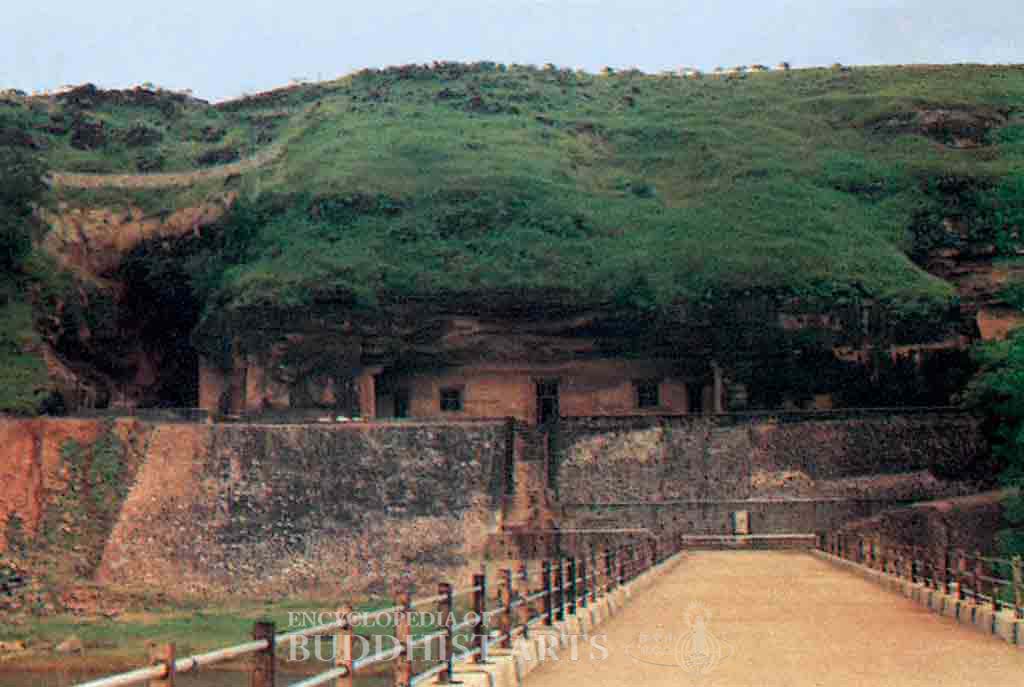
Bagh Caves
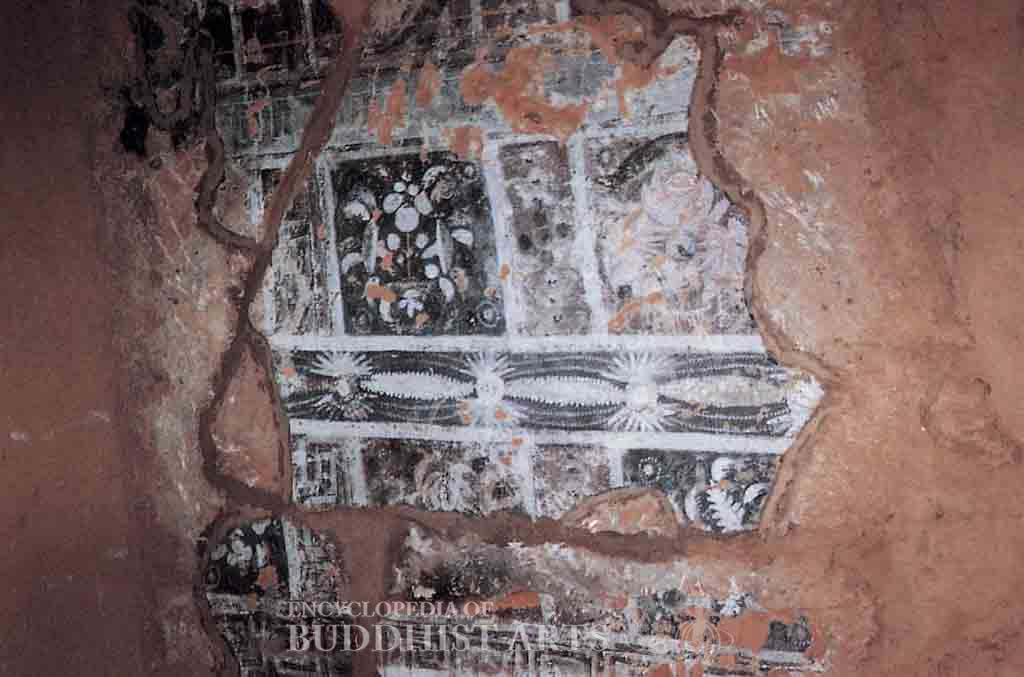
Bagh Caves: Caves 4 and 5 - Portico - Ceiling
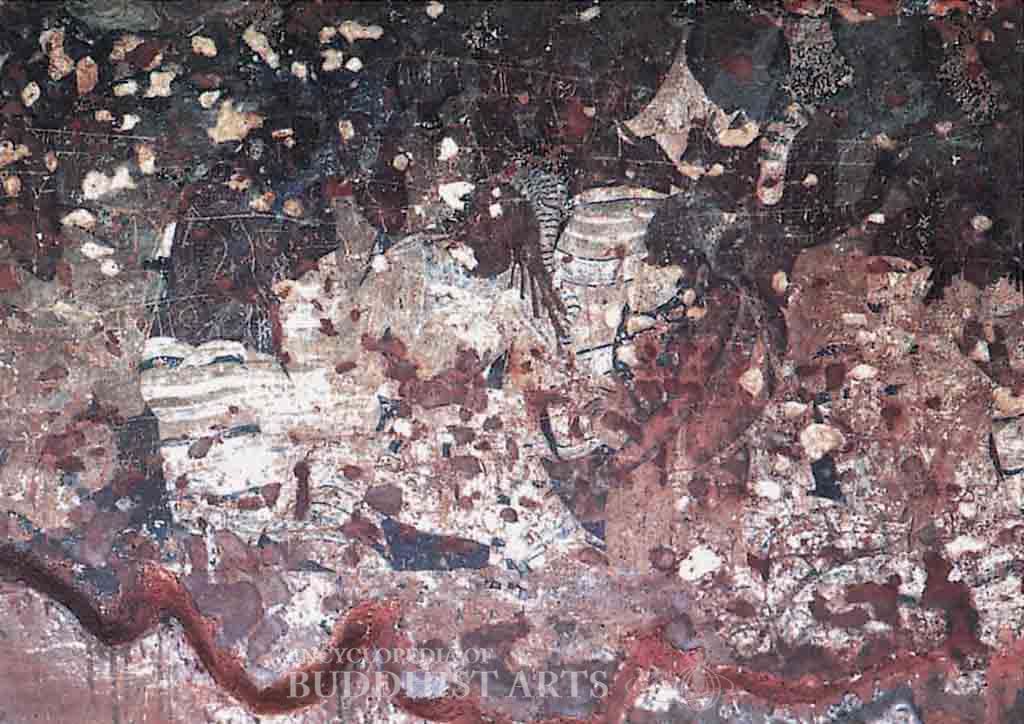
Bagh Caves: Caves 4 and 5 - Portico - Mural (back wall)
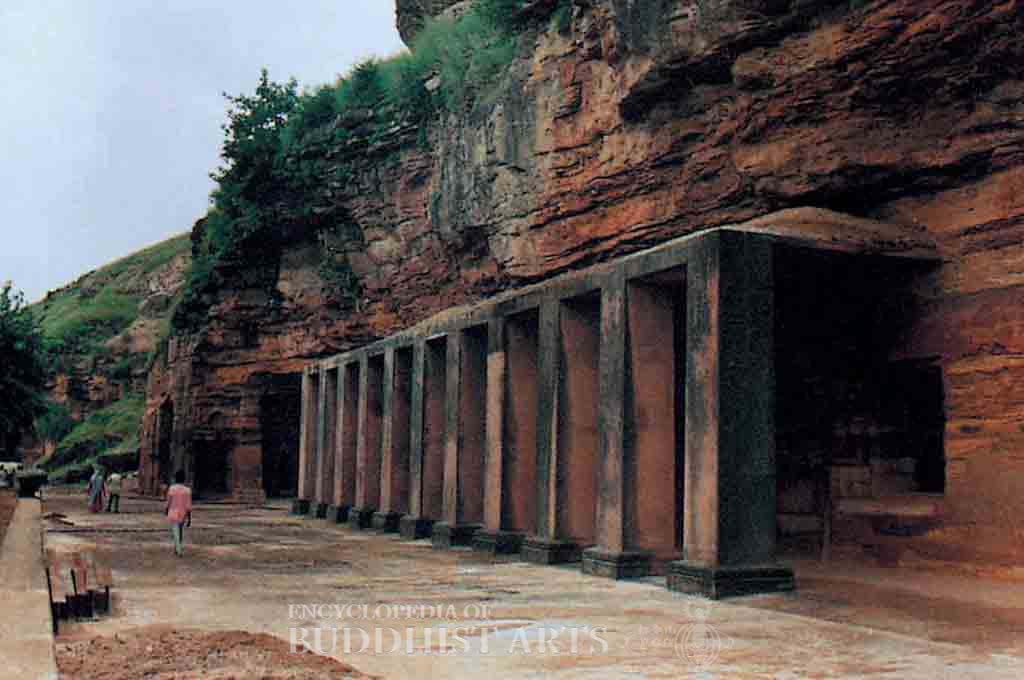
Bagh Caves: Caves 4 and 5 - Portico
Bagh Caves
INDIA, Madhya Pradesh, Indore
The Bagh caves are located on the south side of the Vindhya Range, on a cliff above the Baghini River, a tributary of the Narmada River in Indore, Madhya Pradesh. Extending in a crescent shape along the southern slope, these Mahayana Buddhist caves were built during the 5th and 6th centuries. Originally, there were nine caves, though most of these have collapsed. In recent years the site has been under large scale restoration. The Bagh Caves, close in proximity to the Ajanta Caves, are structurally similar. They include only vihara caves, yet, like caitya caves, some have stupas housed within. Caves 2 and 4 are considered the most significant.
Outside of Cave 2 is a courtyard and portico with a colonnade. Niches with relief images are carved at each end of the courtyard. There are cells at both ends of the portico and the entrance wall consists of three doorways and two windows. The main hall houses 20 square columns which form a corridor around the hall, and in the center another four cylindrical columns exist. The bases, columns, and capitals are carved with decorative works. Eighteen small cells which served as monastic quarters can be found along the back and side walls. Additionally, the center of the back wall consists of an entrance to an antechamber. Both sides within the antechamber depict large images of a Buddha and two Bodhisattvas, while a square shrine beyond houses a stupa. Dharma protectors stand guard on each side of the entrance to the shrine.
As well as being the largest cave, Cave 4 is the most richly decorated. Its layout is similar to Cave 2, except it lacks an antechamber. The porticos of Caves 4 and 5 connect and together are approximately 68 m long. The present portico and colonnades are restored versions of the originals, which consist of a row of 20 octagonal columns along the portico, with the walls and ceiling decorated with colorful murals. Floral patterns are discernable on the ceiling, however most of the murals are badly damaged and archaeologists have removed much of the remaining pieces for conservation. From what can be discerned, the murals here demonstrate enormous diversity and skill. The content likely consists of stories from the Life of the Buddha and the Jatakas, and includes celebratory images of people playing music and dancing.
For more details, go to the Encyclopedia of Buddhist Arts: Caves A-E, page 93.
Cite this article:
author = Hsingyun and Youheng and Johnson, Peter and Mankuang and Huntington, Susan and Edson, Gary and Neather, Robert,
booktitle = {Encyclopedia of Buddhist Arts: Caves A-E},
pages = 93,
title = {{Bagh Caves}},
volume = 5,
year = {2016}}