
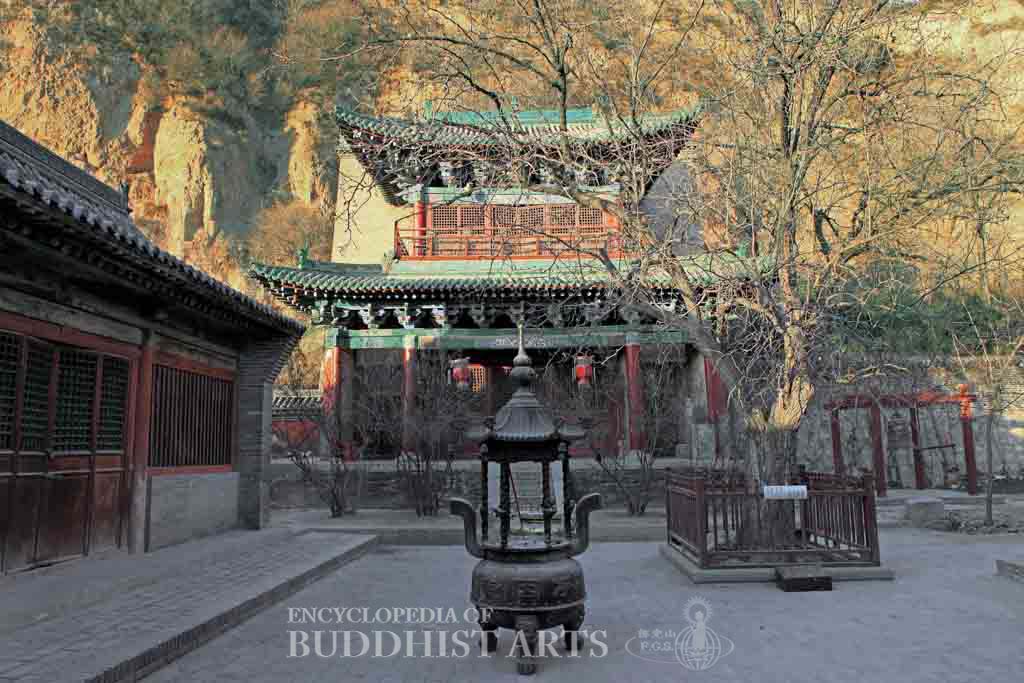
Jingyin Temple: Great Buddha Pavilion
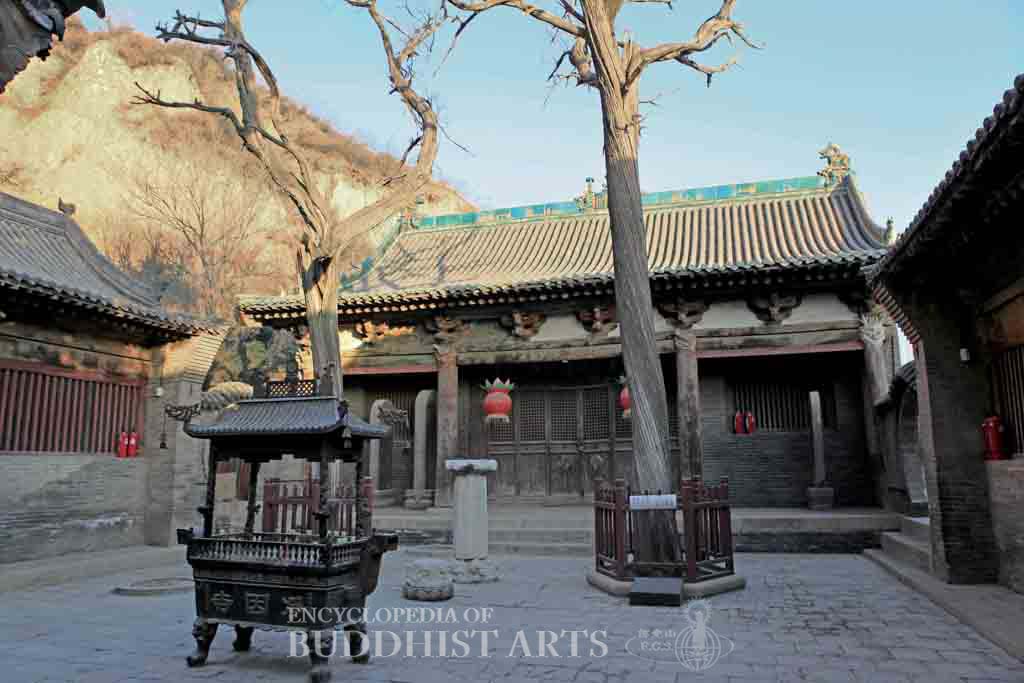
Jingyin Temple: Great Hero Hall
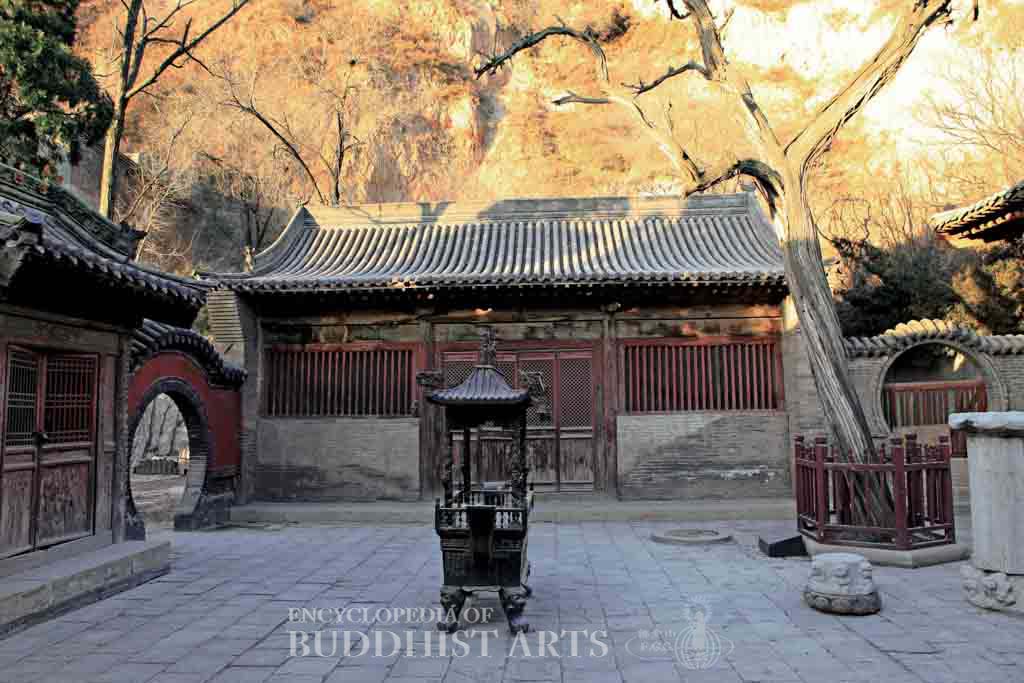
Jingyin Temple: Avalokitesvara Pavilion
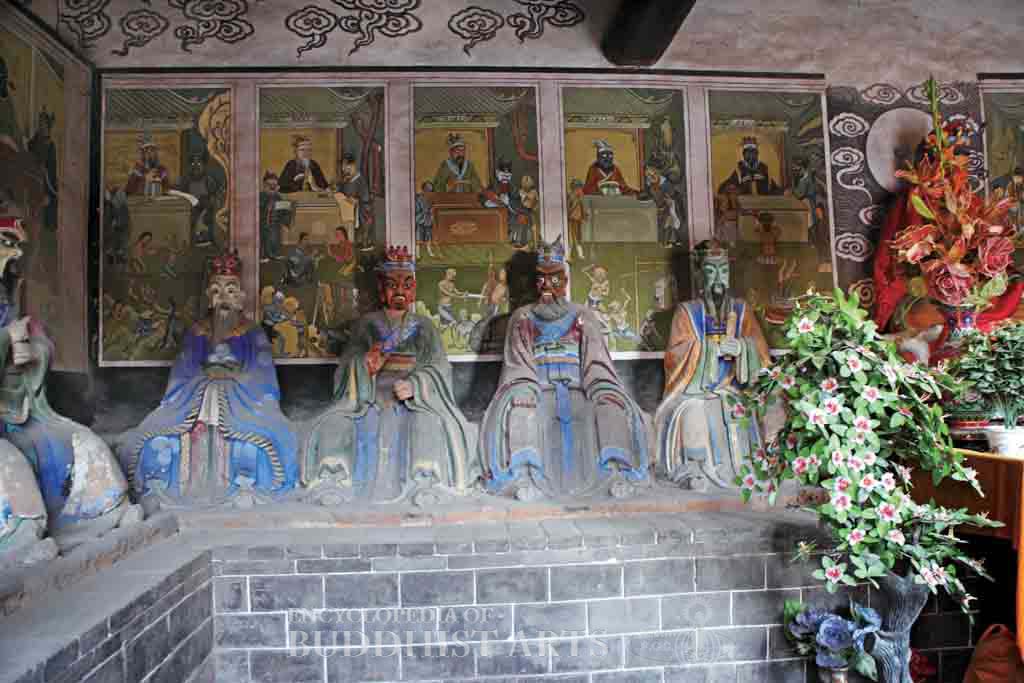
Jingyin Temple: Ksitigarbha Hall - Ten Kings of Hell
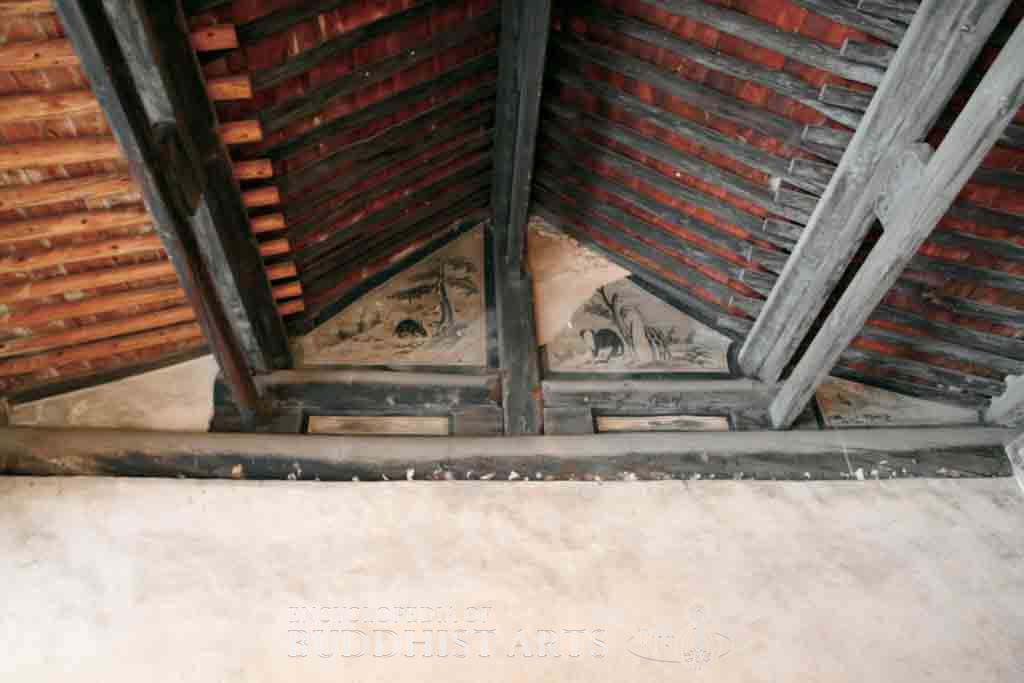
Jingyin Temple: Avalokitesvara Pavilion (interior)
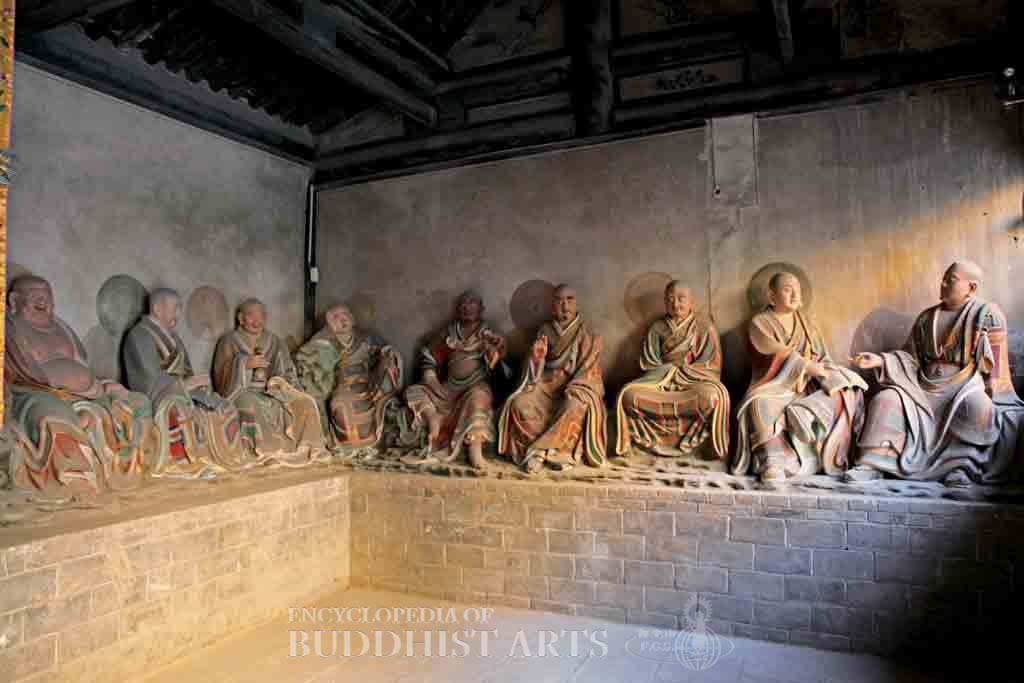
Jingyin Temple: Avalokitesvara Pavilion - Eighteen Arhats
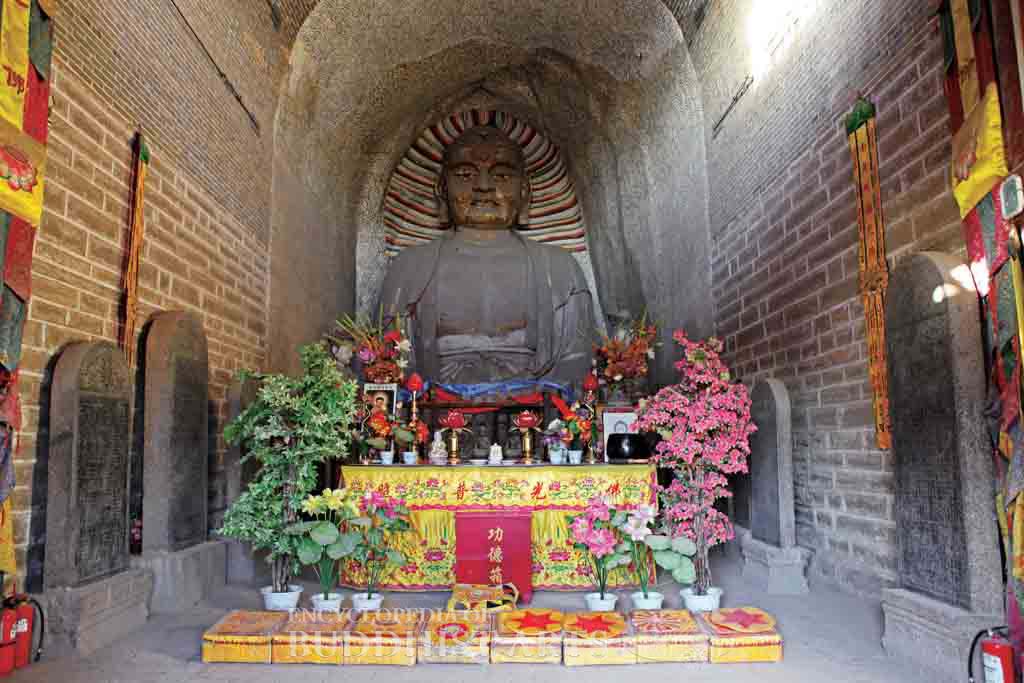
Jingyin Temple: Great Buddha Pavilion - Amitabha Buddha
Jingyin Temple
CHINA, Shanxi, Taiyuan
Jingyin means Cause for Purity, although it is also known as Great Buddha Temple. The temple was rebuilt in 1205 during the Jin dynasty but the existing buildings are mostly from the Ming (1368–1644) and Qing (1644–1911) dynasties. It was listed as a National Cultural Heritage Site in 2006.
The temple faces south, with a river on the east side and a hill on the west. It occupies 5,700 sq m and originally consisted of three courtyards. Only the middle and rear courtyards survive. The Great Buddha Pavilion, Heavenly King Hall, and the east side hall can be found in the middle courtyard, while the Great Hero Hall, Avalokitesvara Pavilion, and Ksitigarbha Hall are located in the rear courtyard.
The Great Buddha Pavilion is the main hall. It faces east and is built against a cliff. It is three bays wide and has a double-eave hip-and-gable roof with green glazed tiles framing the sides. It is two stories high with a veranda enclosed by wooden balustrades surrounding the north, south and east sides. Inside the pavilion there is a cave dug into the cliff with the front part faced by brick and stone, while the back part is just compacted earth. At the very back there is a 10 m high clay statue of Amitabha Buddha, accompanied by 3.7 m high statues of Avalokitesvara and Mahasthamaprapta Bodhisattvas.
The Great Hero Hall has a single-eave overhanging gable roof and a three-bay by six-rafter structure. Sakyamuni Buddha, the Medicine Buddha, and Amitabha Buddha, as well as four attendants, are enshrined within the hall. The Avalokitesvara Pavilion, also called the Arhat Hall, is located on the east side of the Great Hero Hall. The framework on the roof inside is exposed. The building contains a wooden Avalokitesvara along with Eighteen Arhats seated on long brick platforms. Each Arhat sits in a different pose, some sitting alone while others are in pairs. Rare murals cover the gables. The Ksitigarbha Hall is located to the west of the Great Hero Hall and contains a statue of Ksitigarbha Bodhisattva with the Ten Kings of Hell, two City Deities, and four judges in charge of life and death lining either side. Each expression worn by the Ten Kings is different: some are fierce-looking, some awe-inspiring, while others show a gentle dignity.
For more details, go to the Encyclopedia of Buddhist Arts: Architecture G-L, page 530.
Cite this article:
author = Hsingyun and Youheng and Johnson, Peter and Mankuang and Lancaster, Lewis,
booktitle = {Encyclopedia of Buddhist Arts: Architecture G-L},
pages = 530,
title = {{Jingyin Temple}},
volume = 2,
year = {2016}}