

Kumtura Caves

Kumtura Caves: Cave 69 - Antechamber
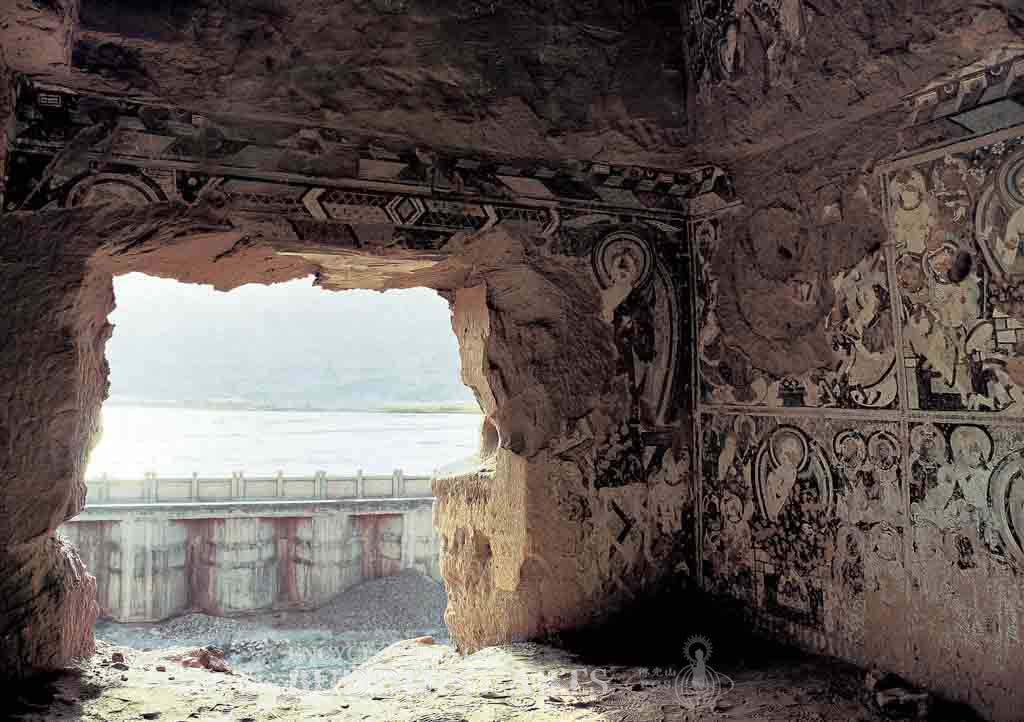
Kumtura Caves: Cave 23 - Main Chamber
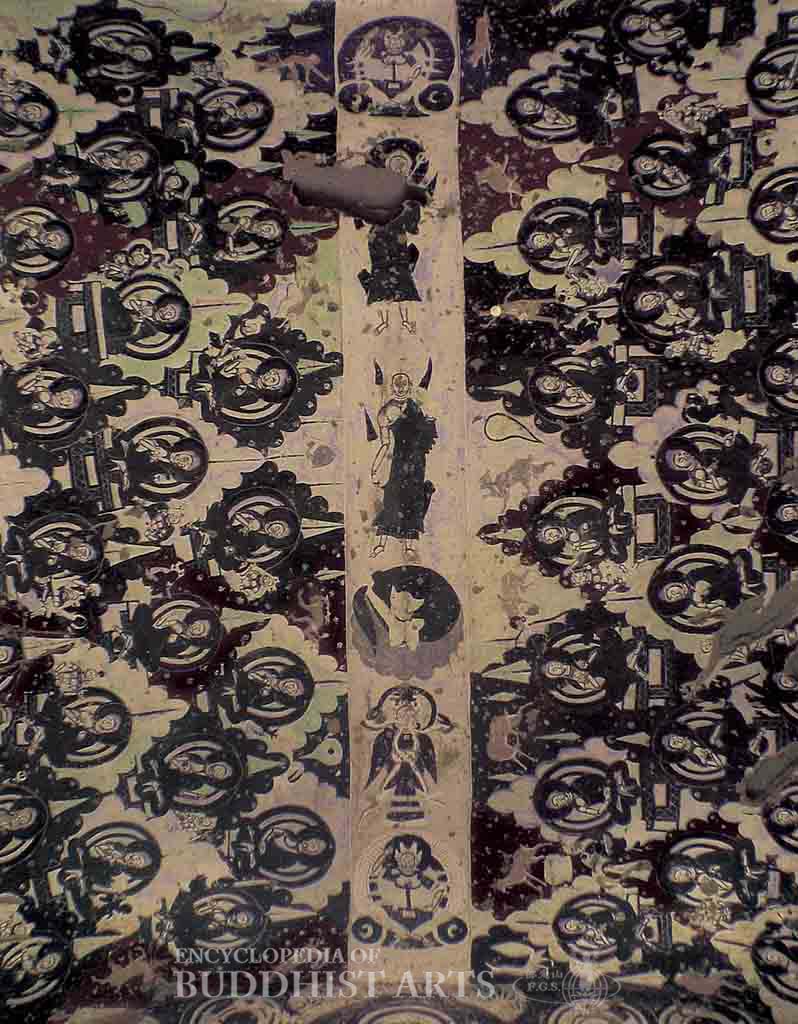
Kumtura Caves: Cave 46 - Main Chamber - Ceiling
Kumtura Caves
CHINA, Xinjiang, Aksu
These caves are located 25 km northwest of Kuche county, on the east bank of the Weigan River in Kumtura village. Construction began in the 5th century, and the caves feature art that reflects Kuchean, Chinese, and Uighur styles, with many Vajrayana Buddhist themes. They are divided into north and south areas, within which there are 80 and 33 caves, respectively. The main cave group is in the north area, while the caves in the south area are known as the Valley Entrance Caves. Over half of the caves contain murals. The caves served a variety of purposes, including teaching, worship, and daily living. They have suffered significant damage over the years, however, steps towards preservation have been taken, and the caves were listed as a National Cultural Heritage Site in 1961.
The caves are characterized by four phases of development. The first phase was during the early Kucha Kingdom (5th–7th century). Some examples of caves from this period include Cave 27 and Valley Entrance Caves 20 to 23. Generally, these caves are rectangular with a vaulted ceiling and a platform at the center of the main chamber. When featuring murals, the caves usually display images from the Life of the Buddha and Jataka tales. A prime example of the murals is the illustration of the Buddha’s Defeat of Mara in Cave 20. These caves also feature sculptural works which are integrated with the murals to create a broad unified setting. The vaulted ceilings feature lotuses in the center, with radial lines dividing the ceiling into sections wherein standing Buddhas and Bodhisattvas are painted.
The second phase of development was the late Kucha Kingdom period, around the 6th century. Some examples of caves from this period include Caves 23, 33, and 46, as well as Valley Entrance Cave 17. Generally, the caves are rectangular with barrel-vaulted ceilings. Corridors are cut into either side of the back wall to form a central pillar in the main chamber and are used for circumambulation. The edge of the ceiling is typically decorated with astrological signs and the slopes of the ceiling with scenes depicting Jataka tales. Portraits of donors are painted within the two side corridors, and scenes from the Mahaparinirvana Sutra are in the rear corridor, featuring the Cremation of the Buddha on the inner wall, and the Distribution of Relics Among the Eight Kings on the outer wall.
The third phase of development was the Anxi Protectorate period (7th–8th century), during which the Tang dynasty (618–907) established military rule in Kucha. During this phase, Tang settlers brought Chinese style art to Kucha, which was then synthesized with the local style. Some examples of the Anxi Protectorate phase include Caves 34, 43, 50, 58, and 63, which demonstrate Kuchean style, and Caves 11, 14, 15, 16, and 73, which primarily feature Chinese style art. Significant developments during this phase include the appearance of images of Vairocana Buddha, the use of new shading techniques, and the introduction of Chinese themes and patterns. Prime examples of such caves include the connected Caves 68 to 72.
The fourth phase of development was in the 9th century during the Uighur ruling period, beginning in 840, when the Uighurs took over rule of Kucha, and lasting until the adoption of Islam in the 11th century. This period is characterized by Uighur renovations to already existing caves, with an emphasis placed upon the portraiture of Buddhas and Bodhisattvas, the use of cloud and lotus themes on the ceilings, intricate ink patterning, and the use of Uighur models and cultural aesthetics. However, the overall renovations emphasized and preserved Kuchean themes. Significant examples from the Uighur period include Caves 10, 12, 38, 42, and 45.
For more details, go to the Encyclopedia of Buddhist Arts: Caves R-L, page 609.
Cite this article:
author = Hsingyun and Youheng and Johnson, Peter and Mankuang and Huntington, Susan and Edson, Gary and Neather, Robert,
booktitle = {Encyclopedia of Buddhist Arts: Caves R-L},
pages = 609,
title = {{Kumtura Caves}},
volume = 6,
year = {2016}}