
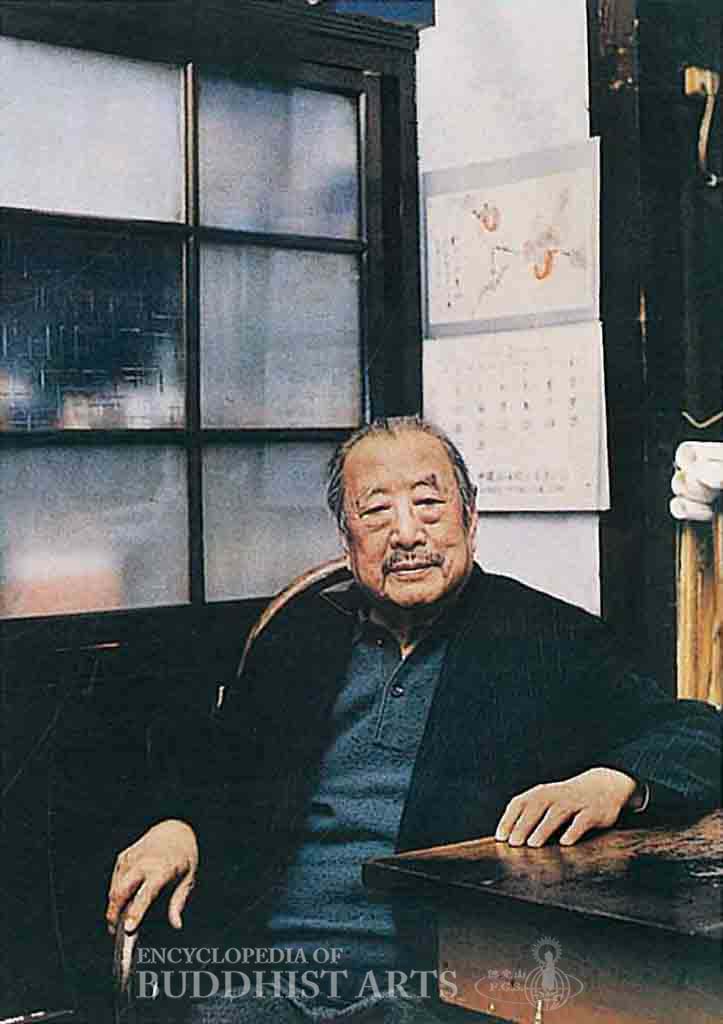
Tai Ching-Nung
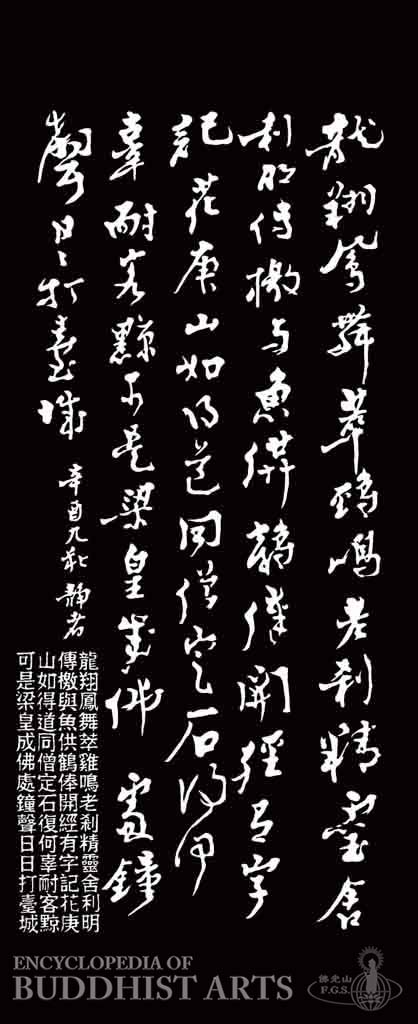
Seven-Character Poem by Tai Ching-Nung; Dated 1981
Rubbing
Tai Ching-Nung
CHINA, Anhui, Lu'an
Tai Ching-Nung had an original family name of Fu-Yen and was known as Po-Chien. Born in Huoqiu county of Lu’an, he was an author, calligrapher, seal engraver, painter, photographer, and teacher.
Tai taught at a variety of institutions throughout China including Zhongfa University and the Catholic University of Peking in Beijing, and Xiamen University in Fujian. In 1945, he became the Dean of the Department of Chinese Literature at National Taiwan University in Taipei. He compiled Lu Xun and His Works, the earliest collection of data in research on Lu Xun, a famous author of modern Chinese literature. Literary works by Tai are comprised of writings which are realistic and carefree in nature. Although he focused on composing short novels, he also wrote many verses and scholarly articles. Over the years, his written works have been collected and published.
Tai was a skilled calligrapher, seal engraver, and painter. His stele calligraphy uses regular, cursive, clerical, and seal scripts. Two books compiling his calligraphy include Collection of Tai Ching-Nung’s Calligraphy and Special Collection of Calligrapher Tai Ching-Nung.
Seven-Character Poem in running-cursive script is engraved on the Stele Wall at Fo Guang Shan Monastery in Kaohsiung, Taiwan. The content describes Tai’s thoughts on visiting Jiming Temple in Jiangsu, and his reflection on the merits of Emperor Wu (reigned 502–549) of the Liang dynasty. His Buddhist work, Trichiliocosm, a red-character square seal, is kept at the National Museum of History in Taipei, Taiwan.
For more details, go to the Encyclopedia of Buddhist Arts: People, page 249.
Cite this article:
author = Hsingyun and Youheng and Youlu and Pokorski, Stefanie and Yichao and Mankuang and Miaohsi,
booktitle = {Encyclopedia of Buddhist Arts: People },
pages = 249,
title = {{Tai Ching-Nung}},
volume = 19,
year = {2016}}