
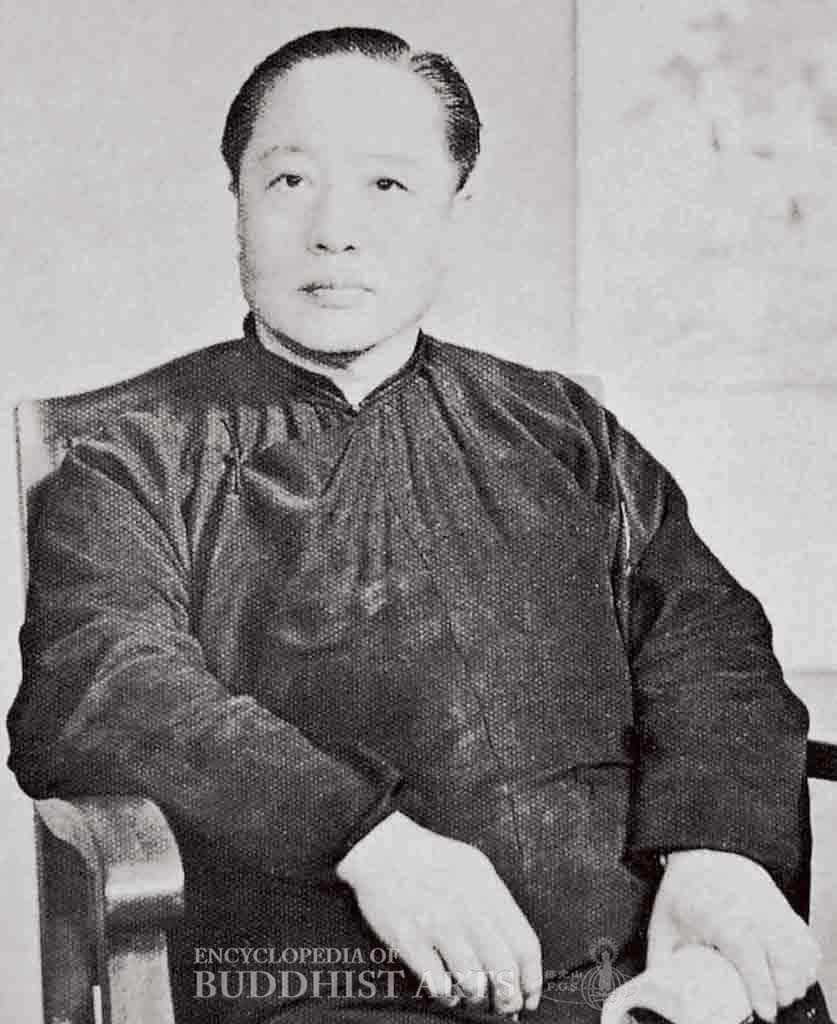
Pu Ru
Pu Ru
CHINA, Beijing
Pu Ru was a painter and calligrapher from Wanping, Hebei (present day Beijing). He was a member of the Aisin Gioro imperial family as the grandson of the Manchurian Prince Gongqin, who was the sixth son of Emperor Daoguang (reigned 1820–1850) of the Qing dynasty. From an early age he was well-versed in Chinese classics, history, and literature. Pu obtained his doctorate degree in Germany, but upon returning to China, he chose to live in seclusion at Jietai Temple in Beijing for several years.
On the eve of 1949, Pu left Mainland China and moved to Taiwan and taught at Taiwan National Normal University in Taipei. Although he proclaimed himself to be best in poetry, he was multi-talented with skills in calligraphy, and was most well-known for his paintings. Together, Pu and the famous artist Chang Dai-Chien were known as Southern Zhang and Northern Pu, and with Wu Hufan, they were known as Northern Pu and Southern Wu.
Pu’s style of landscape painting is characterized by forceful yet serene strokes. He was highly-skilled in depicting flowers and birds, and with the inclusion of written calligraphic text, his works portray an artistic elegance that provides a sense of tranquility. Pu’s calligraphy was mainly written in running-cursive script with graceful strokes that embody a certain liveliness and charm. His works include a painting of Avalokitesvara Bodhisattva, kept at Songshan Temple in Taipei, Taiwan, and a transcription of the Diamond Sutra, kept at Guanghua Temple in Beijing.
For more details, go to the Encyclopedia of Buddhist Arts: People, page 213.
Cite this article:
author = Hsingyun and Youheng and Youlu and Pokorski, Stefanie and Yichao and Mankuang and Miaohsi,
booktitle = {Encyclopedia of Buddhist Arts: People },
pages = 213,
title = {{Pu Ru}},
volume = 19,
year = {2016}}