
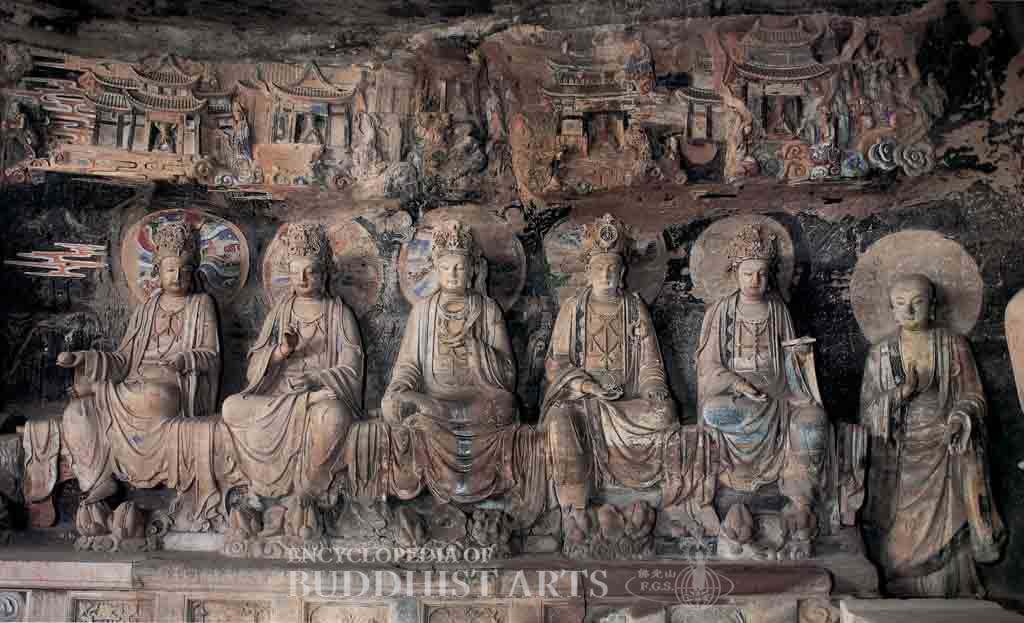
Anyue Huayan Caves: Cave 1 - Bodhisattvas (left wall)
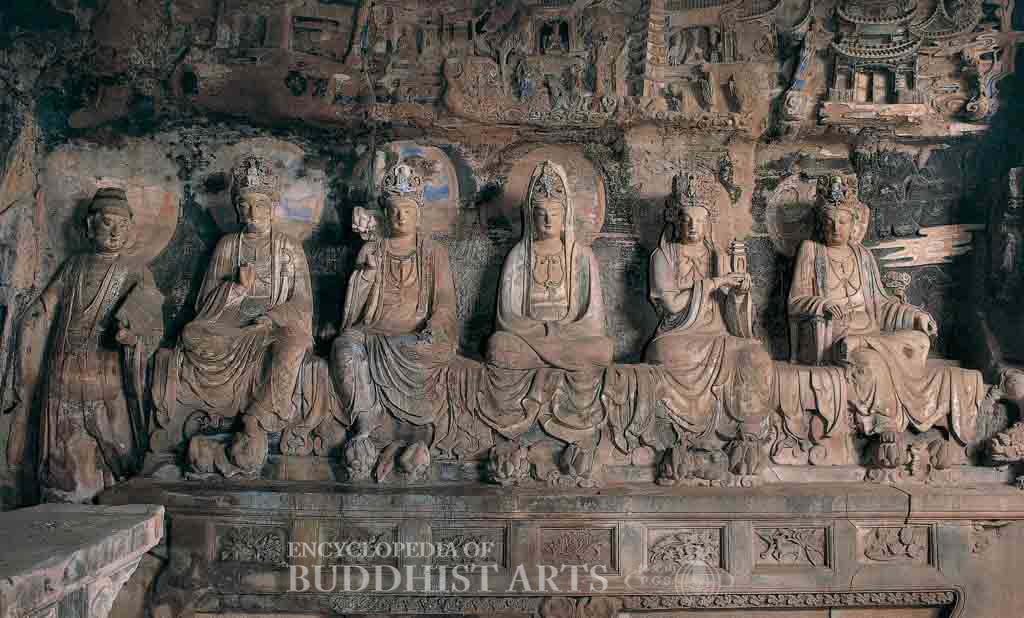
Anyue Huayan Caves: Cave 1 - Bodhisattvas (right wall)
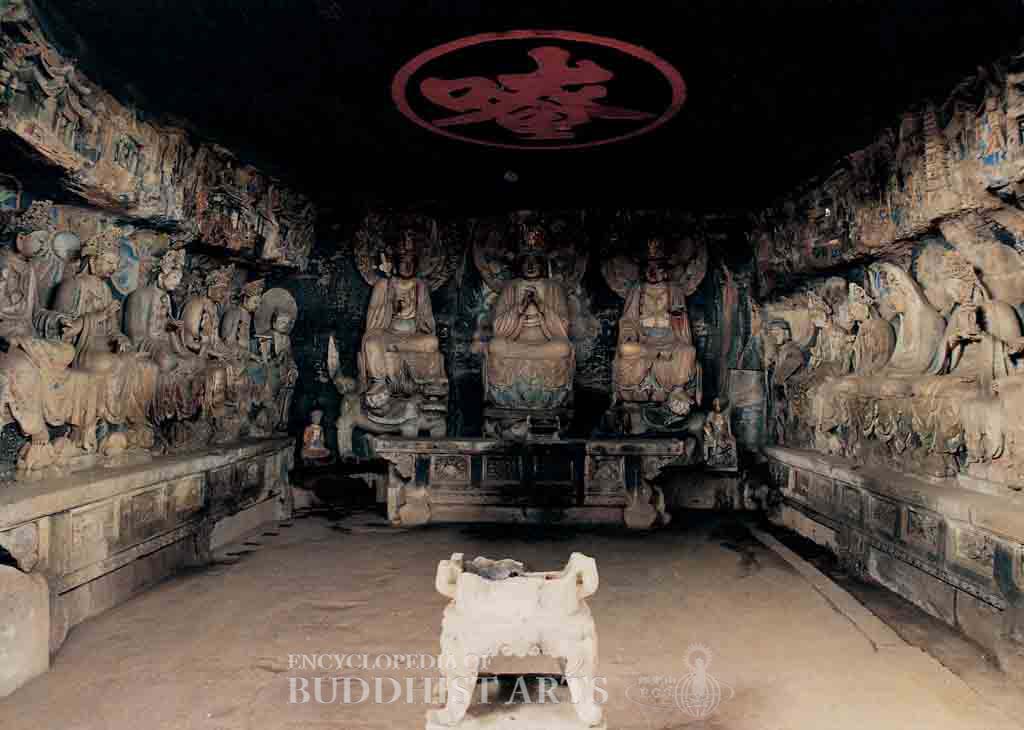
Anyue Huayan Caves: Cave 1
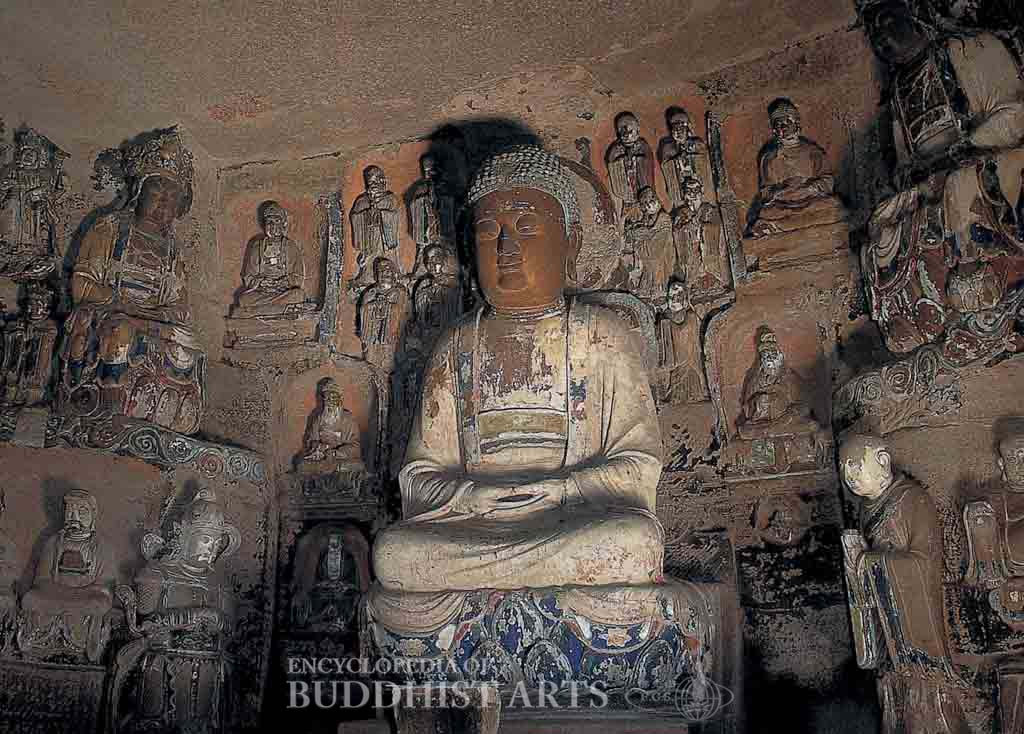
Anyue Huayan Caves: Cave 2
Anyue Huayan Caves
CHINA, Sichuan, Ziyang
The Anyue Huayan (Avatamsaka) Caves are located on Xianggaishan (Box Lid Mountain), 56 km southeast of Anyue county. Based on the style of the carvings inside the cave, they are believed to have been made sometime between the Northern Song (960–1127) and Ming (1368–1644) dynasties. The two extant caves at the site, Cave 1 and Cave 2, contain a total of 159 sculptures. The cave complex was listed as a National Cultural Heritage Site in 2006.
Cave 1 is square with a flat ceiling, measuring 10.1 m in both length and width, and 6.2 m in height. Its well-organized layout and sculptural style are characteristic of the transition from the Tang (618–907) to Song (960–1279) dynasty. The cave features an Avatamsaka Triad on the back wall and five Bodhisattvas on each of the other two walls. The triad is depicted according to descriptions in the Avatamsaka Sutra; the ten Bodhisattvas, in addition to the two flanking the Buddha, represent the Twelve Perfect Enlightenment Bodhisattvas.
In the center of the Avatamsaka Triad is Vairocana Buddha, flanked by Manjusri and Samantabhadra Bodhisattvas. Vairocana Buddha sits on a lotus throne supported by two crouching lions, and wears a tall headdress with the figure of Liu Benzun dressed as a lay practitioner in the center. The Buddha’s eyes are partially closed, and both hands form a mudra. Both Manjusri and Samantabhadra wear a monastic robe, ornaments, and a headdress featuring a Buddha image. The two Bodhisattvas sit in relaxation posture on lotus thrones; Manjusri’s throne is supported by a lion, while Samantabhadra’s is supported by an elephant. All three figures have nimbuses decorated with flame patterns.
Five Bodhisattvas are located on each of the side walls, together representing the ten grounds of the Bodhisattva path. The Bodhisattvas all wear headdresses decorated with Buddha images backed by round, brightly colored nimbuses. They sit in various positions, including full lotus position, relaxation posture, or with legs pendent. Two lotus pedestals are positioned under each Bodhisattva’s feet. Each figure either forms a mudra or holds an object. The right wall features Bodhisattvas Vajragarbha, Pure Wisdom, Sound Discernment, Universal Enlightenment, and Foremost in Virtue and Goodness. The Bodhisattvas on the left wall are Universal Vision, Maitreya, Unhindered Power and Virtue, Purifier of All Karmic Hindrances, and Perfect Enlightenment. Surrounding the main figures are other carvings illustrating the Fifty-Three Visits of Sudhana.
Cave 2, known as the Great Wisdom Cave, integrates themes from Buddhism, Daoism, and Confucianism. It was excavated during the Southern Song dynasty (1127–1279) and its carvings display more local folk characteristics.
For more details, go to the Encyclopedia of Buddhist Arts: Caves A-E, page 66.
Cite this article:
author = Hsingyun and Youheng and Johnson, Peter and Mankuang and Huntington, Susan and Edson, Gary and Neather, Robert,
booktitle = {Encyclopedia of Buddhist Arts: Caves A-E},
pages = 66,
title = {{Anyue Huayan Caves}},
volume = 5,
year = {2016}}