
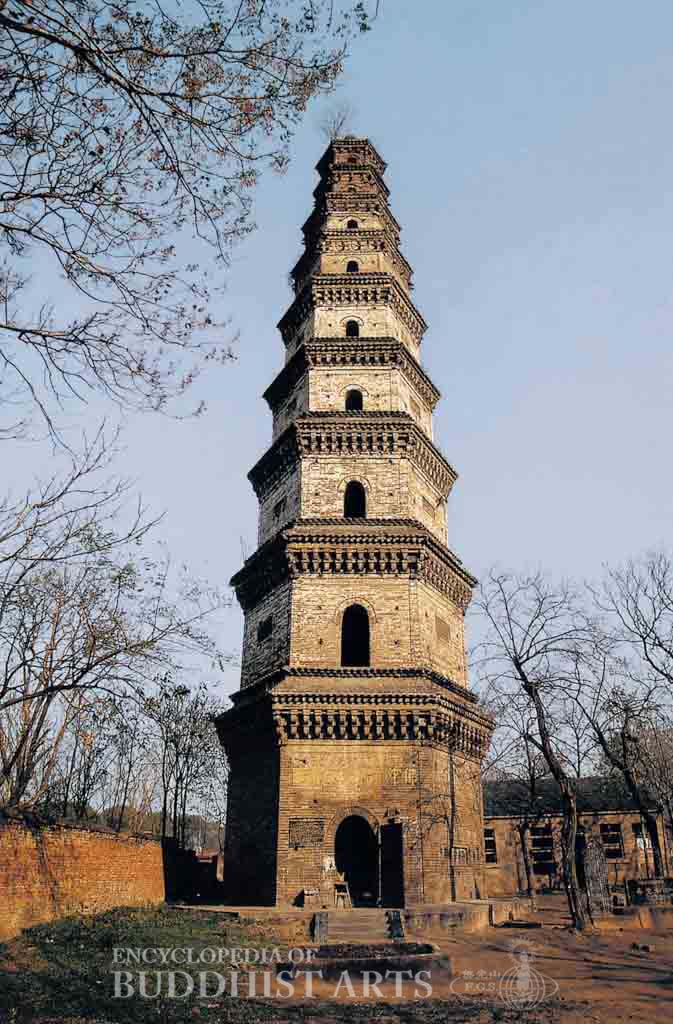
Shousheng Temple Pagoda
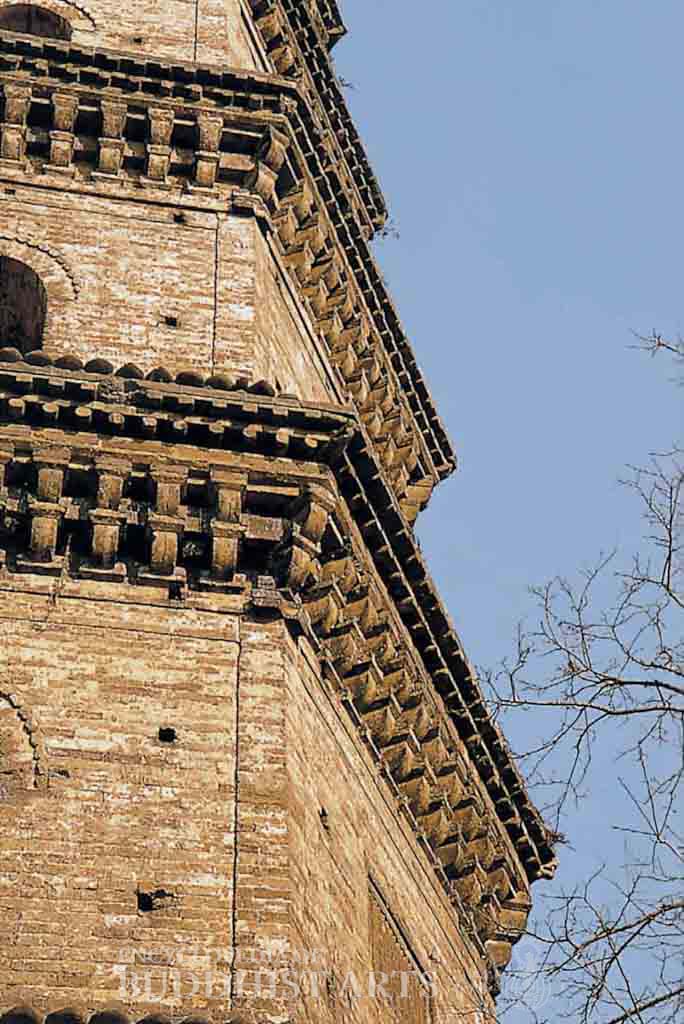
Shousheng Temple Pagoda (detail)
Shousheng Temple Pagoda
CHINA, Henan, Zhoukou
The pagoda was built in 1033 during the Northern Song dynasty. According to the inscription on the pagoda body, it was renovated in 1549 during the Ming dynasty. When it was being repaired in 1998, workers found a heavenly palace within the base of the spire. Inside there were artifacts such as Buddha statues made from lead or bronze, a white glazed china plate, and Buddhist scrolls. The pagoda was listed as a National Cultural Heritage Site in 2006.
The nine-story, hexagonal, brick pagoda is 41.5 m high. A stone arched doorway is located on the south side of the first story. On the door frame there is an inscription listing the date of the construction of the pagoda, as well as carvings of floral patterns. The other stories have similar arched doorways, also on the south side. Vertical bar windows are found on every story of the southeast and southwest walls. Architectural features include pilasters at the corners, architraves, and imitation wooden bracket sets. Three stone statues of Buddhas are located along the north wall within the fourth story. The iron spire is shaped like a vase. A wooden pole used for anchoring the spire runs through the ninth down to the eighth story. During the Song dynasty (960–1279), these wooden poles were often seen in pagodas in southern China and sometimes extended by another story, depending on the height and weight of the spire.
For more details, go to the Encyclopedia of Buddhist Arts: Architecture M-S, page 1006.
Cite this article:
author = Hsingyun and Youheng and Johnson, Peter and Mankuang and Lancaster, Lewis,
booktitle = {Encyclopedia of Buddhist Arts: Architecture M-S},
pages = 1006,
title = {{Shousheng Temple Pagoda}},
volume = 3,
year = {2016}}