
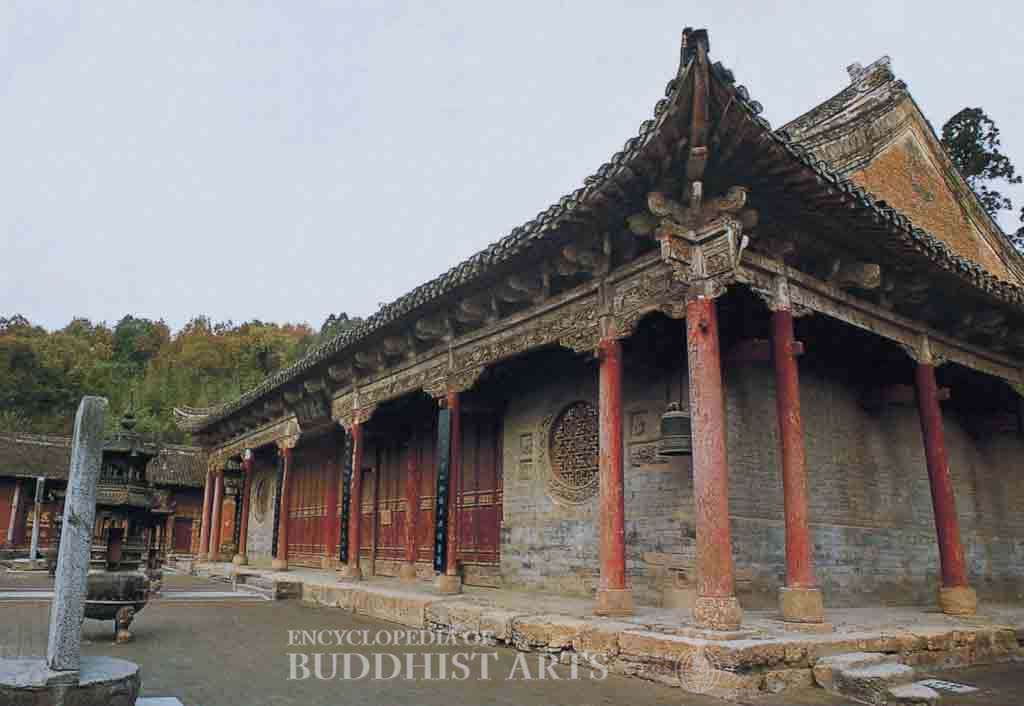
Xiangyan Temple: Great Hero Hall
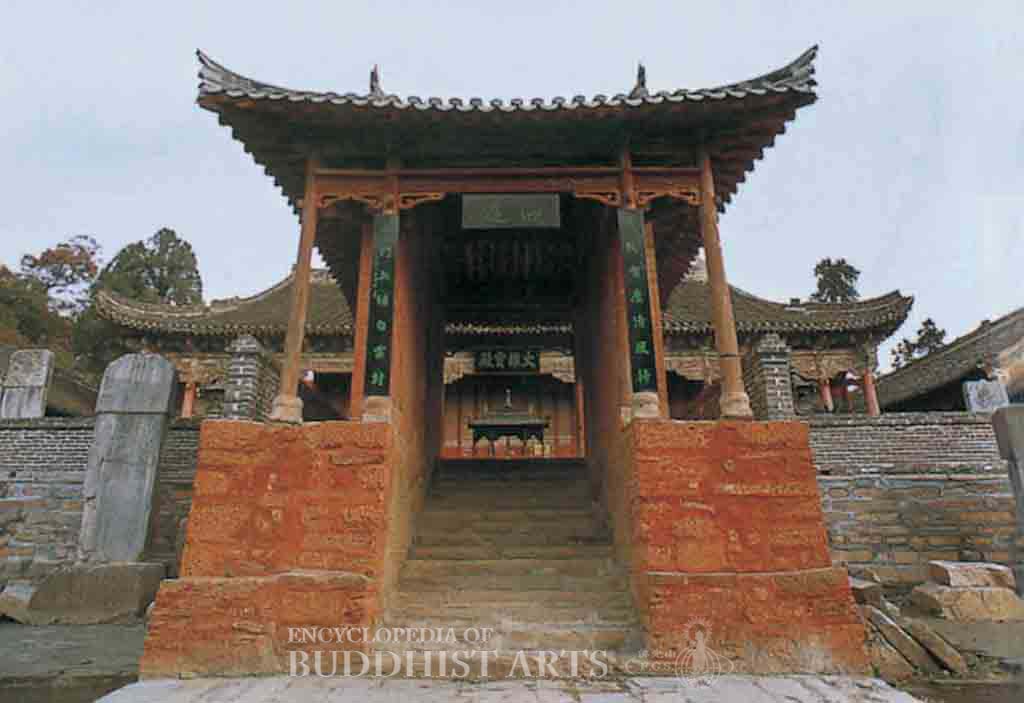
Xiangyan Temple: Intermediate Hall
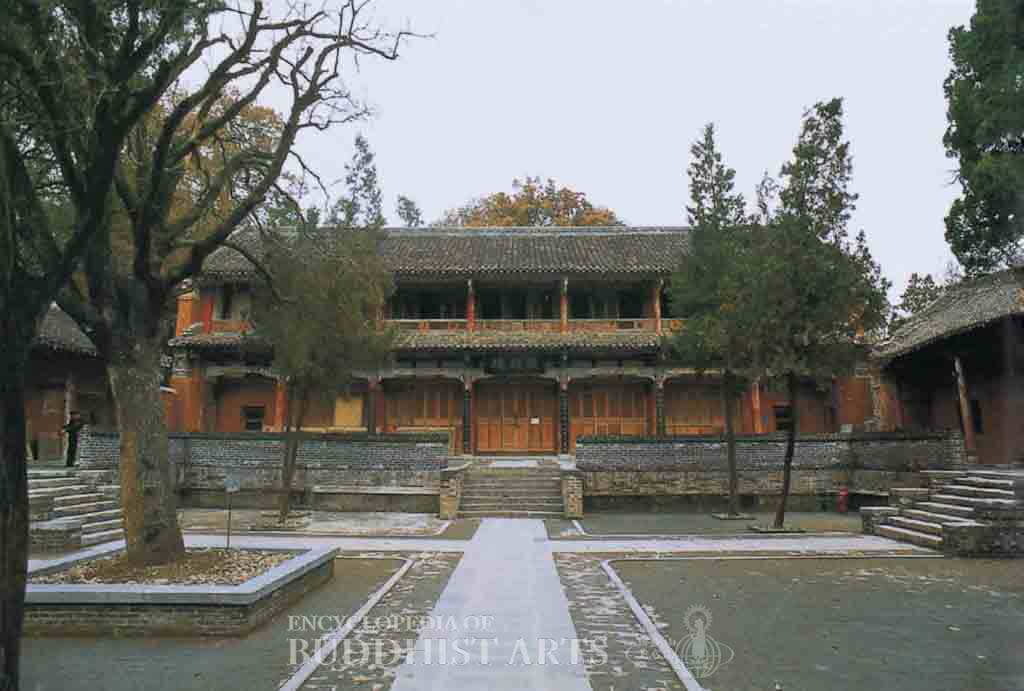
Xiangyan Temple: Sutra Repository
Xiangyan Temple
CHINA, Henan, Nanyang
Xiangyan means Permeated with Fragrance. It is located on Baiyashan (White Cliff Mountain). According to a Ming dynasty (1368–1644) record, the temple was built during the Tang dynasty (618–907). There are also stele inscriptions describing it as the temple of National Master Huizhong, who was active during the Tang dynasty. After Master Huizhong passed away and his relics were being enshrined in a stupa, a fragrance permeated the air for hundreds of miles and lasted for a long time, thus the temple was called Xiangyan. It was destroyed and rebuilt a number of times. The current buildings date from the Qing dynasty (1644–1911). It was listed as a National Cultural Heritage Site in 2006.
There was originally a lower temple, which was flooded to form the Danjiang reservoir in 1970, so only the upper temple remains. The upper temple faces south and was built according to the contours of the mountain. It consists of five courtyards, with buildings such as the gateway, the main temple gate, Skanda Hall, intermediate hall, Great Hero Hall, Moon Gazing Pavilion, Dharma Hall, and the sutra repository. The Manjusri Hall and Samantabhadra Hall are located on either side of the sutra repository. The temple also contains 27 stone stupas, as well as funerary stupas of eminent monks. They date from the Song (960–1279) to the Qing dynasties.
The stone gateway was built during the Ming dynasty and is three bays wide. The three-by-three bay intermediate hall has a single-eave hip-and-gable roof. Its eaves are supported by single-tier bracket sets with downward-pointing cantilevers. There is a limestone pathway that leads from within the intermediate hall all the way to the Great Hero Hall.
The seven-by-five bay Great Hero Hall has a single-eave hip-and-gable roof covered in gray tiles. The eaves are supported by single-tier bracket sets and cantilevers that point downwards at a 45 degree angle. The structure is painted with circular patterns on the outside, while the interior contains colorful murals from the Qing dynasty. The seven-by-three bay, two-story sutra repository has a flush gable roof. There are circular patterns painted on the timber structure. Murals dating back to the Qing dynasty can be found inside the building. The buildings within the temple combine architectural styles from the Central Plains with decorative features found in the south of China. It serves as a valuable resource for the study of timber architecture in the Central Plains.
For more details, go to the Encyclopedia of Buddhist Arts: Architecture T-Z, page 1314.
Cite this article:
author = Hsingyun and Youheng and Johnson, Peter and Mankuang and Lancaster, Lewis,
booktitle = {Encyclopedia of Buddhist Arts: Architecture T-Z},
pages = 1314,
title = {{Xiangyan Temple}},
volume = 4,
year = {2016}}