

Rajagriha: Ajatasatru Stupa
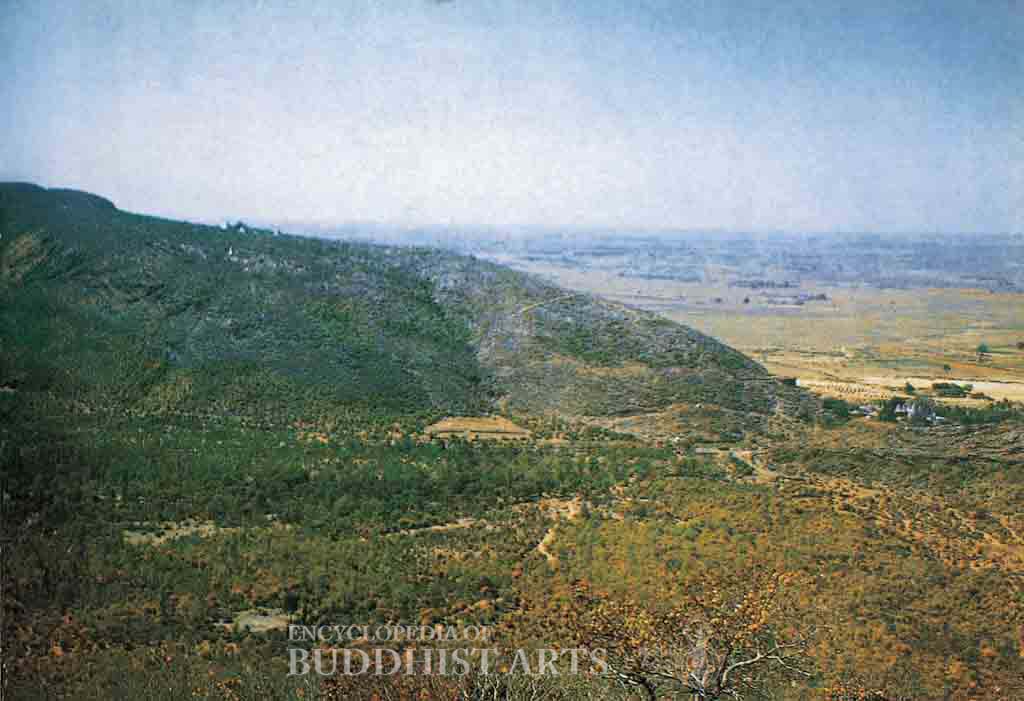
Rajagriha
Rajagriha
INDIA, Bihar, Rajgir
Rajagriha, meaning Royal Abode, was the capital of the ancient kingdom of Magadha during the time of the Buddha. It is situated in modern day Rajgir, in the Nalanda district of Bihar. It is surrounded by five hills known as the Rajgir Hills, and is 70 km northeast of Bodhgaya and 15 km from the city of Nalanda. It is the city where the Buddha delivered some of his most famous teachings and, according to the Samantpasadika, there were 18 large monasteries located here during that time. It continued to remain as an important Buddhist center for centuries, even after Pataliputra, modern-day Patna, became the new capital of Magadha. King Asoka (reigned circa 269–232 BCE) of Maurya visited the city and erected a pillar and a stupa during his pilgrimage of Buddhist sites. In the 5th century, when Chinese pilgrim Master Faxian visited Rajagriha, he found the city desolate, but the Venuvana Monastery was still inhabited by Buddhist monks. However, when Chinese pilgrim Master Xuanzang visited here in the 7th century, the city was completely deserted and the Buddhist buildings were in ruins. In the 19th century, many British archaeologists, including Alexander Cunningham, explored the city and located many Buddhist historic sites.
Today the identified Buddhist sites in the area include: Gridhakuta (Vulture Peak), where the Buddha delivered major teachings; Venuvana Monastery, which was donated by King Bimbisara (reigned 543–491 BCE) and which was the first Buddhist monastery; Bimbisara’s Jail, where King Bimbisara was imprisoned by his son Ajatasatru, and where he spent his last days; the Pippala Stone House, believed to be the dwelling place of Mahakasyapa; the Saptaparni Cave, where the First Buddhist Council took place; and the Ajatasatru Stupa, Asoka Pillar, and Asoka Stupa.
Rajagriha is mentioned in numerous Buddhist sutras and many well-known events in the life of the Buddha took place here. After the First Turning of the Dharma Wheel in Sarnath, the Buddha traveled to Rajagriha and taught the Dharma to King Bimbisara. This is the place where the Buddha converted Sariputra and Maudgalyayana, the two principal disciples of the Buddha, and added 500 members to the sangha. The Buddha’s calming of a drunken elephant, an event often depicted in Buddhist art, also took place in this city.
For more details, go to the Encyclopedia of Buddhist Arts: Architecture M-S, page 891.
Cite this article:
author = Hsingyun and Youheng and Johnson, Peter and Mankuang and Lancaster, Lewis,
booktitle = {Encyclopedia of Buddhist Arts: Architecture M-S},
pages = 891,
title = {{Rajagriha}},
volume = 3,
year = {2016}}