
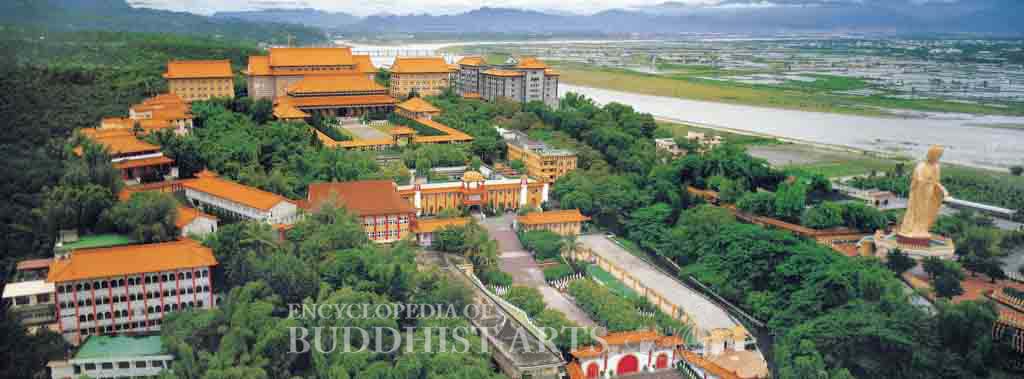
Fo Guang Shan Monastery
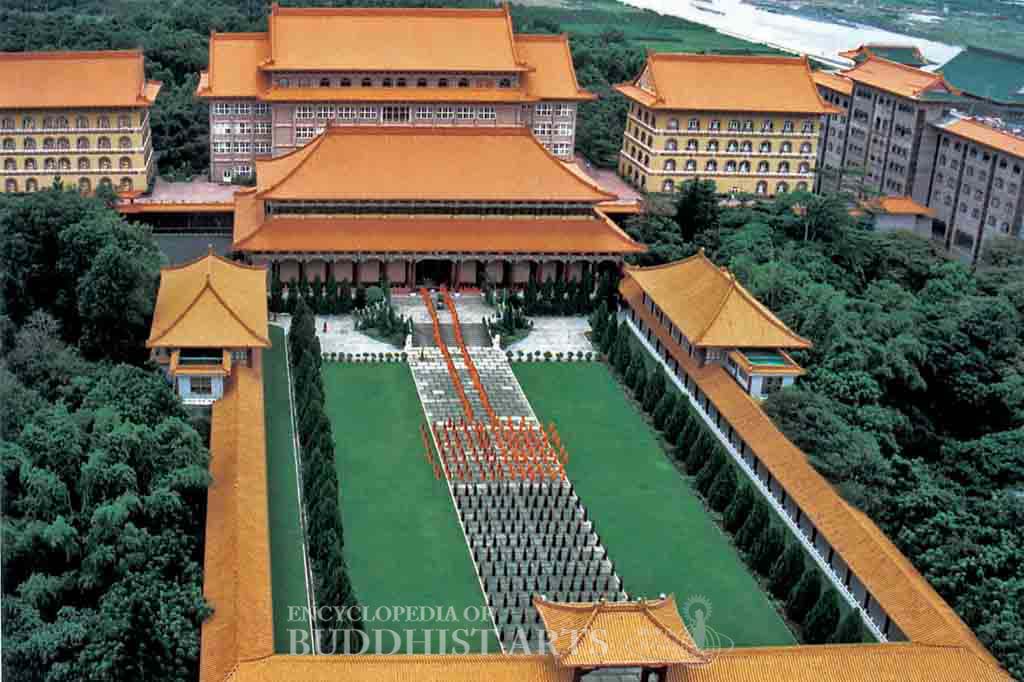
Fo Guang Shan Monastery
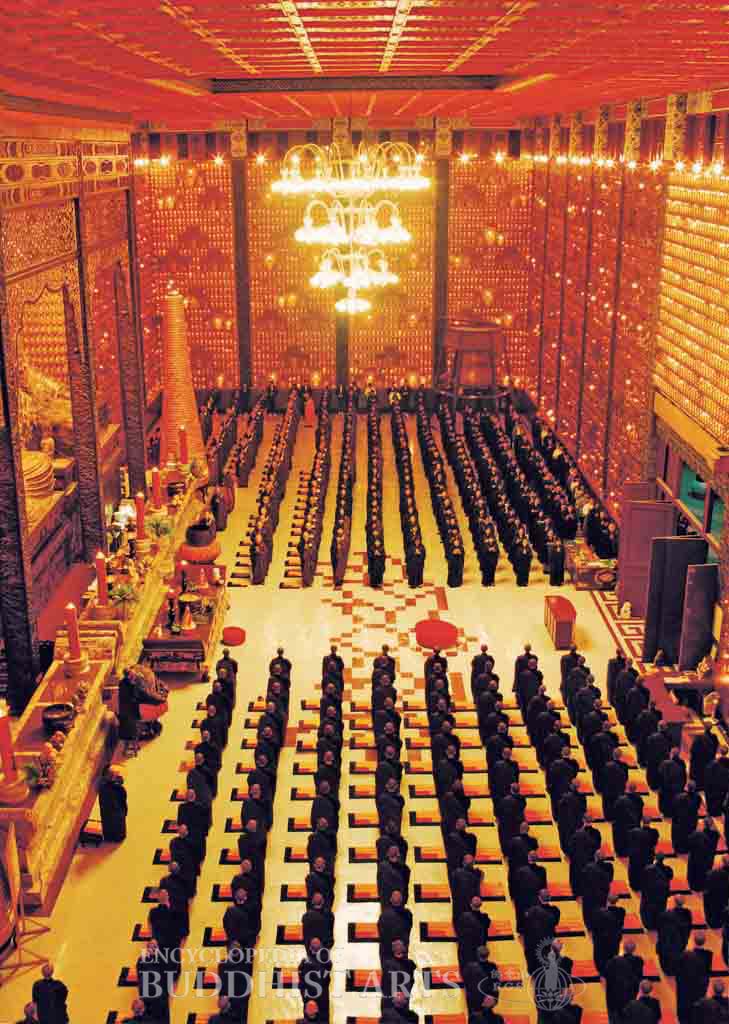
Fo Guang Shan Monastery: Great Hero Hall (interior)
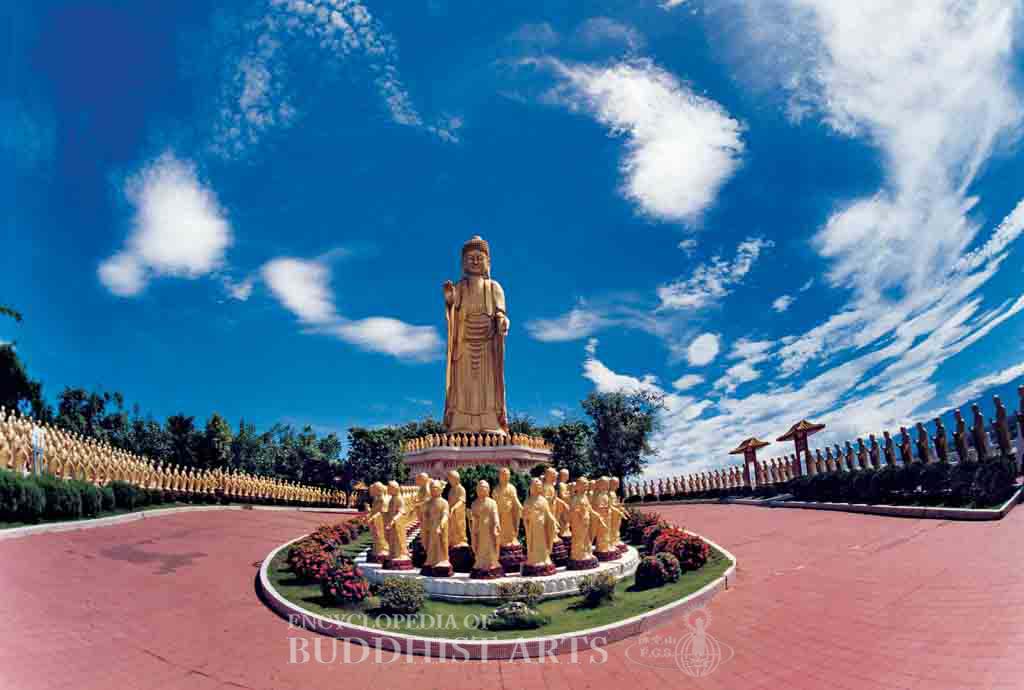
Fo Guang Shan Monastery: Great Buddha Land
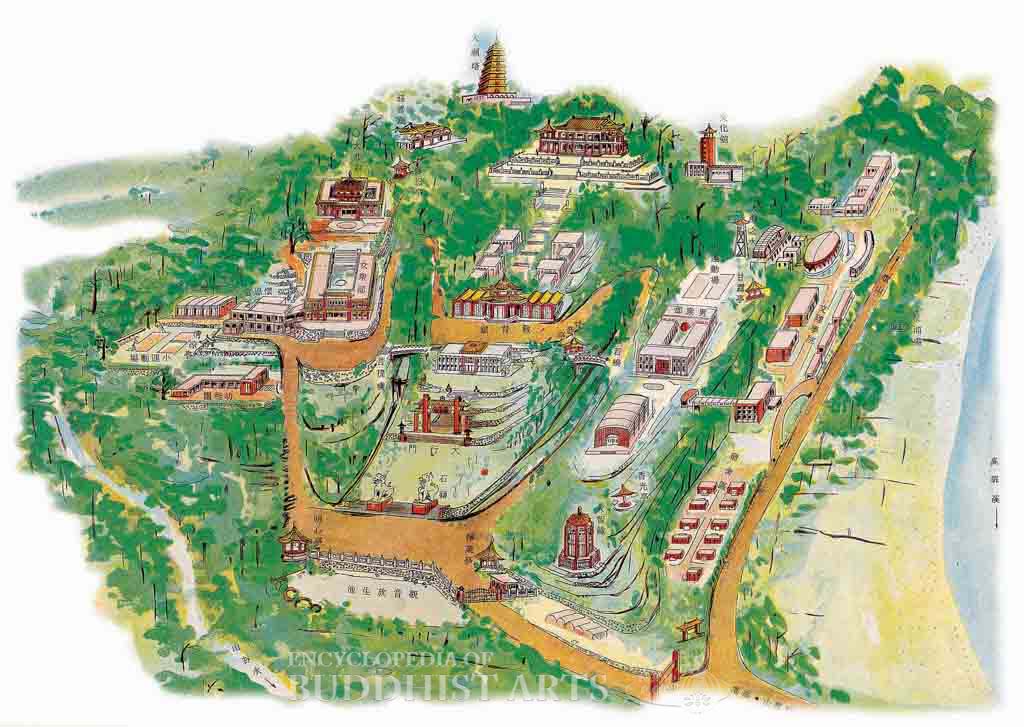
Fo Guang Shan Monastery (rendering)
Fo Guang Shan
TAIWAN, Kaohsiung
Fo Guang Shan, which means Buddha’s Light Mountain, is an international Buddhist organization with over 200 branch temples worldwide. The Fo Guang Shan Monastery, located in Dashu district in Kaohsiung, is the organization’s world headquarters. Founded by Master Hsing Yun in 1967, it is the largest monastery in Taiwan. Master Hsing Yun also established the Buddha’s Light International Association, a Fo Guang Shan affiliated organization for lay Buddhists, in 1990; it became a UNESCO Non-Governmental Organization in 2003.
The monastery faces south and occupies 100 ha. It is built on five sloping ridges that resemble a five-petal lotus. Master Hsing Yun designed the buildings based on the Four Sacred Buddhist Mountains in China and other famous Buddhist sites around the world. Along the central axis there are the Non-Duality Gate, Five Hundred Arhats Garden, Pilgrims Lodge, Great Hero Hall, Tathagata Building, Golden Buddha Building, and Jade Buddha Building. The eastern ridge contains the Great Buddha Land, Great Vow Hall, Great Wisdom Hall, Dharma Transmission Center, Cloud Dwelling Building, and bell tower. On the western ridge there are the Great Practice Hall, Great Compassion Hall, and drum tower. Other places of interest include Fo Guang Shan Tsung Lin University, Longevity Memorial Park, Ta Tzu Children’s Home, Fo Guang Yuan Art Gallery, Buddhist Museum, and Pure Land Cave.
The five-by-four bay Great Compassion Hall was completed in 1971. The first hall to be erected, it has a double-eave hip-and-gable roof, and contains a 6 m high statue of Avalokitesvara Bodhisattva. Along the outer walls, there are twelve reliefs depicting the deeds and manifestations of Avalokitesvara.
Construction of the eleven-by-four bay Great Hero Hall started in 1975. It has a double-eave hip roof and is approximately 30 m high. There is a couplet written by a famous scholar Zhang Ling at the sides of the entrance, and a horizontal inscribed board with calligraphy by Chang Dai-Chien above the entrance. Statues of Sakyamuni Buddha, Amitabha Buddha, and the Medicine Buddha, each 7.8 m high, are enshrined within the hall. The walls are filled with 14,800 Buddha niches.
The Tathagata Building is five stories high and has a single-eave hip-and-gable roof. The first story contains offices and reception rooms, the Museum of Fo Guang Shan History is on the second story, a meditation hall is located on the third story, and an auditorium for 2,000 people occupies the fourth and fifth stories. There is a “Memorial of Fo Guang Shan’s Inauguration” stele outside the Tathagata Building with names of the benefactors on the sides. The Cloud Dwelling Building has single-eave hip-and-gable roof and consists of six stories above ground with an additional two basement levels. It is reinforced with steel, allowing for wide open spaces without interior columns on the first and second stories that can hold over 4,000 people.
The monastery houses numerous precious cultural artifacts, including treasures from underground palaces and palm leaf manuscripts. The most renowned piece in the collection is the 2,000-fascicle woodblock printed Tetsugen Tripitaka, one of only two known sets of this tripitaka left in the world. The monastery also contains more than 100 jade Buddha statues from Myanmar, Thailand, Sri Lanka, and China. Most of them are found in the niches on the exterior of the Jade Buddha Building. The largest statue, weighing approximately 20 t, is enshrined within the auditorium of the Tathagata Building. Additionally, marble statues of Arhats carved in China are located within the Five Hundred Arhats Garden.
For more details, go to the Encyclopedia of Buddhist Arts: Architecture A-F, page 299.
Cite this article:
author = Hsingyun and Youheng and Johnson, Peter and Mankuang and Lancaster, Lewis,
booktitle = {Encyclopedia of Buddhist Arts: Architecture A-F},
pages = 299,
title = {{Fo Guang Shan}},
volume = 1,
year = {2016}}