
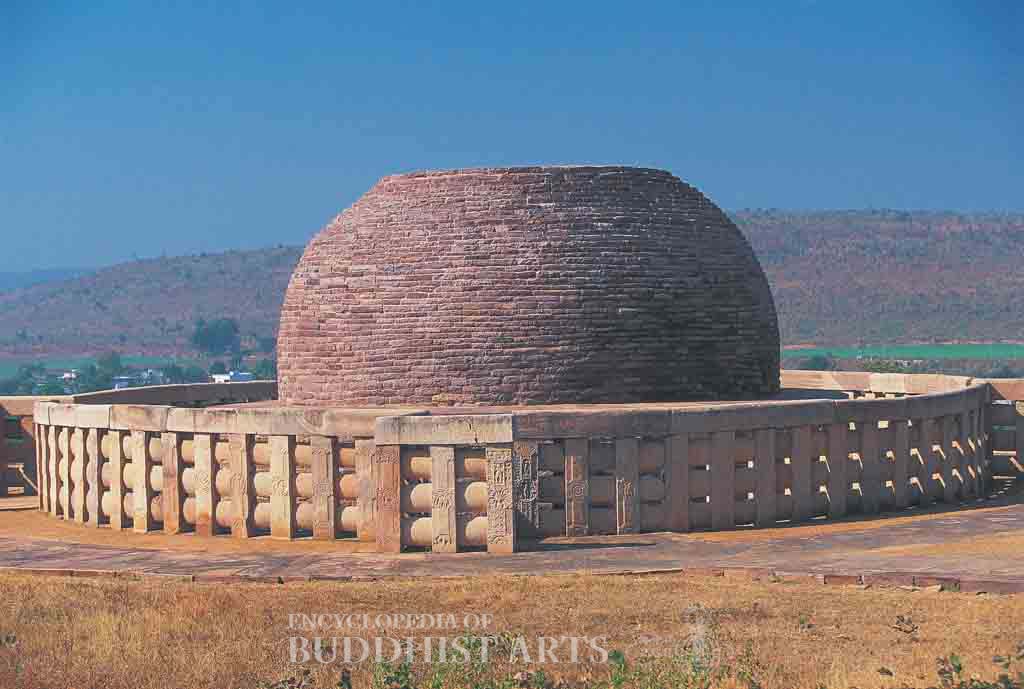
Sanchi Stupa 2
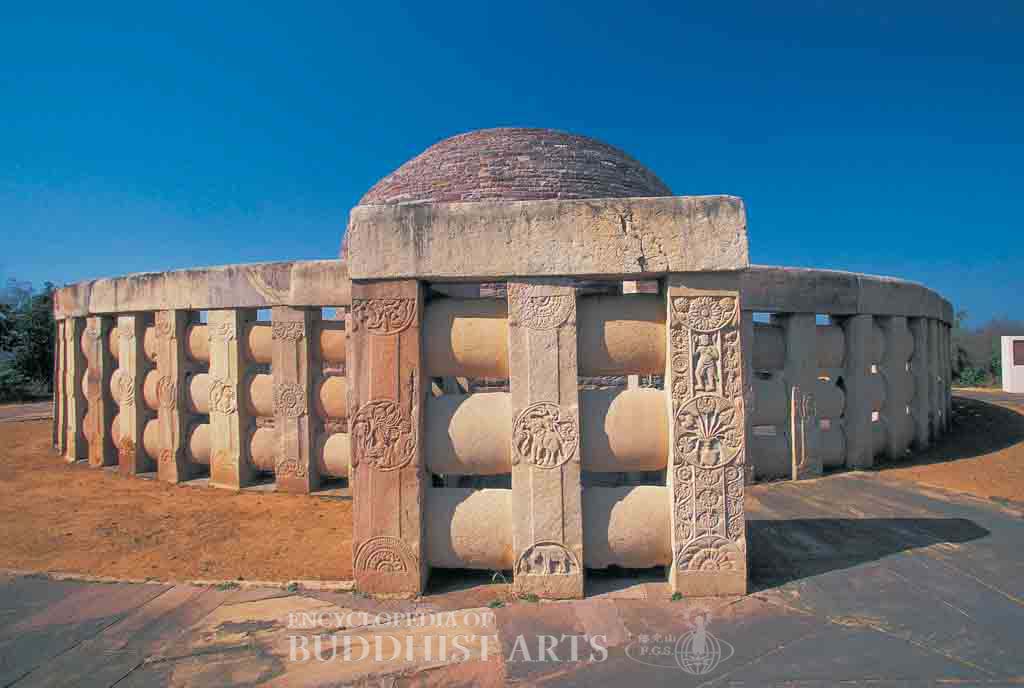
Sanchi Stupa 2: Railings
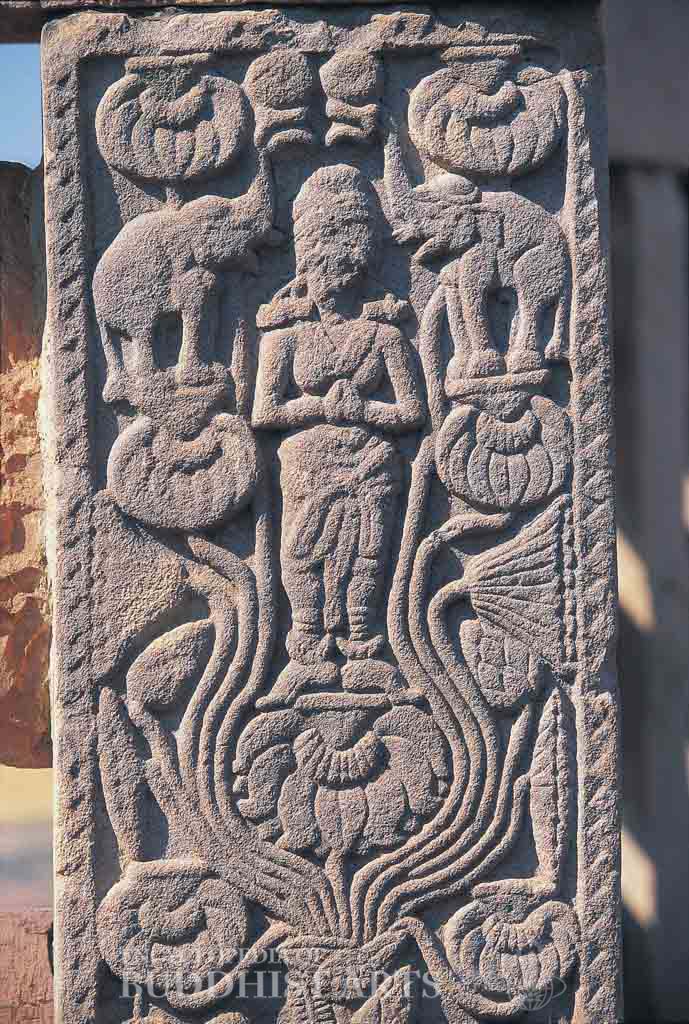
Sanchi Stupa 2: Railing - Bas-reilef
Sanchi Stupa 2
INDIA, Madhya Pradesh, Sanchi
This stupa is located on the western slope of the hill at Sanchi, approximately 320 m west of Stupa 1. It was built in the 2nd century BCE during the Sunga period (187–75 BCE). The stupa was forgotten after the 13th century until its rediscovery in 1818. In 1851 British archaeologists Alexander Cunningham and Frederick Maisey directed a project to restore the stupa. During the excavation process they discovered four caskets. In 1912 John Marshall renovated the structure resulting in its present appearance. As part of the Buddhist Monuments at Sanchi, it was listed as a UNESCO World Heritage Site in 1989.
The stupa is in the form of an inverted bowl and is made of bricks. It is approximately 14.3 m in diameter and 8.8 m high. There are two paths for circumambulation, one at ground level and one on the wide base platform which is accessible from the two staircases on the east side. The path on the platform is not guarded by railings but there are railings surrounding the stupa at ground level, with entrances at the four cardinal points. These railings are 2.3 m high and 43.7 m in circumference and are made up of a total of 88 stone posts divided into four sections, each with 22 posts. Except for three posts by the southern entrance that were damaged and rebuilt, all the posts are original. Both sides of the posts are decorated with reliefs. There are only a few scenes from Buddhist stories; most of the reliefs depict animals, flowers, and other symbols. They include images of peacocks, kinnaras, lions, and nagas, as well as motifs of elephant heads, makara tails, lotus flowers, and Dharma wheels.
According to inscriptions found on the caskets discovered in the central chamber of the stupa, the relics within the caskets belong to ten eminent monks. They were Kasapagota, Majhima, Haritiputa, Vachhiya Suvijayata, Mahavanaya, Apagira, Kodiniputa, Kosikiputa, Gotiputa, and Mogaliputa. They lived during the 3rd century BCE and were sent out as missionaries by King Asoka (reigned circa 269–232 BCE).
For more details, go to the Encyclopedia of Buddhist Arts: Architecture M-S, page 936.
Cite this article:
author = Hsingyun and Youheng and Johnson, Peter and Mankuang and Lancaster, Lewis,
booktitle = {Encyclopedia of Buddhist Arts: Architecture M-S},
pages = 936,
title = {{Sanchi Stupa 2}},
volume = 3,
year = {2016}}