
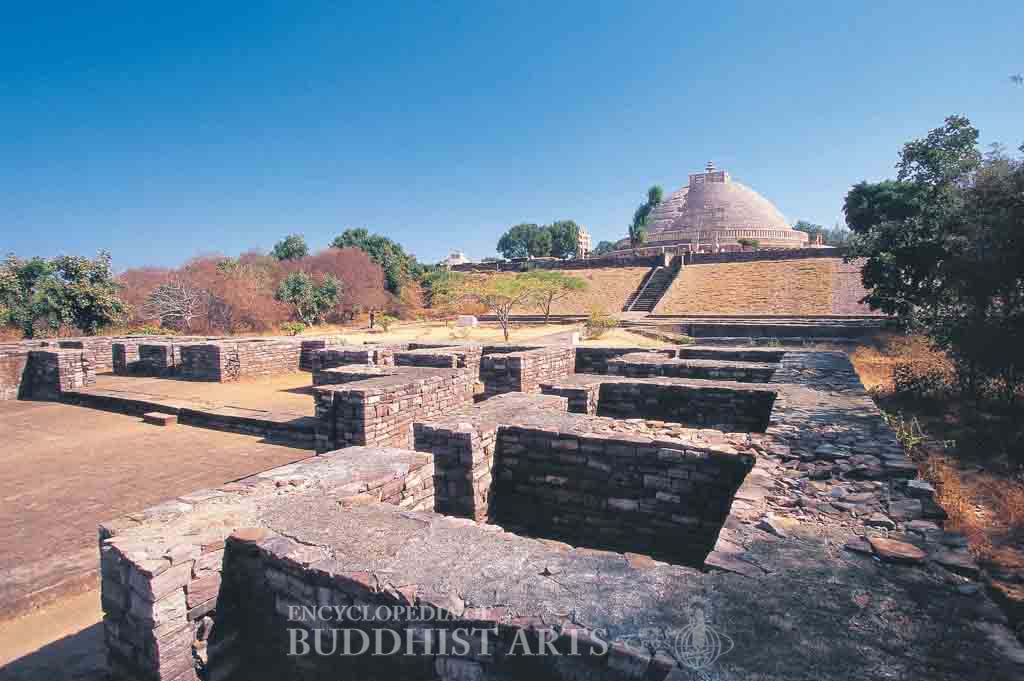
Sanchi
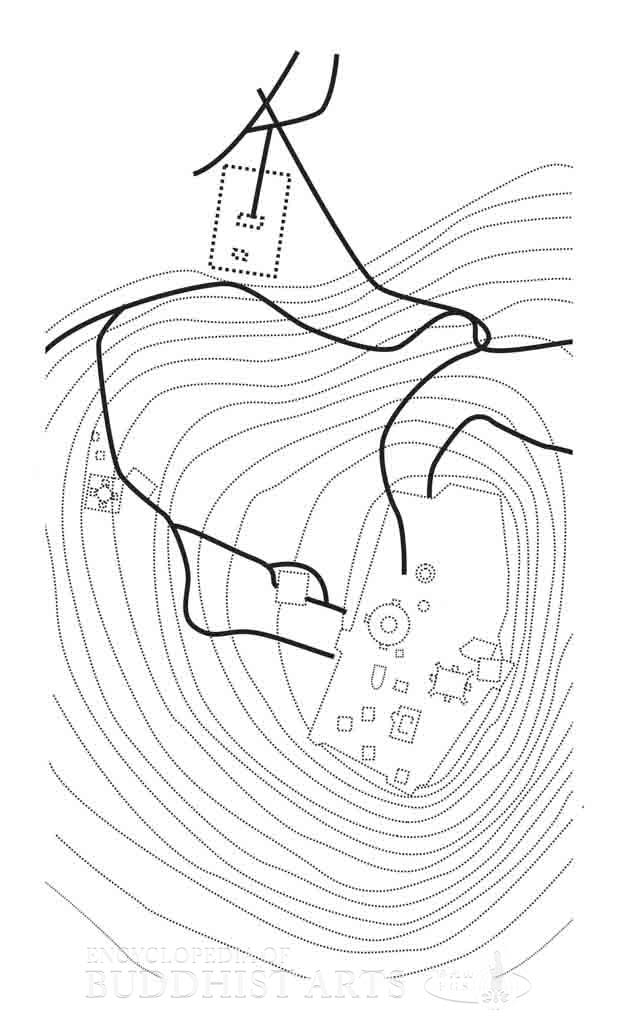
Sanchi (site layout)
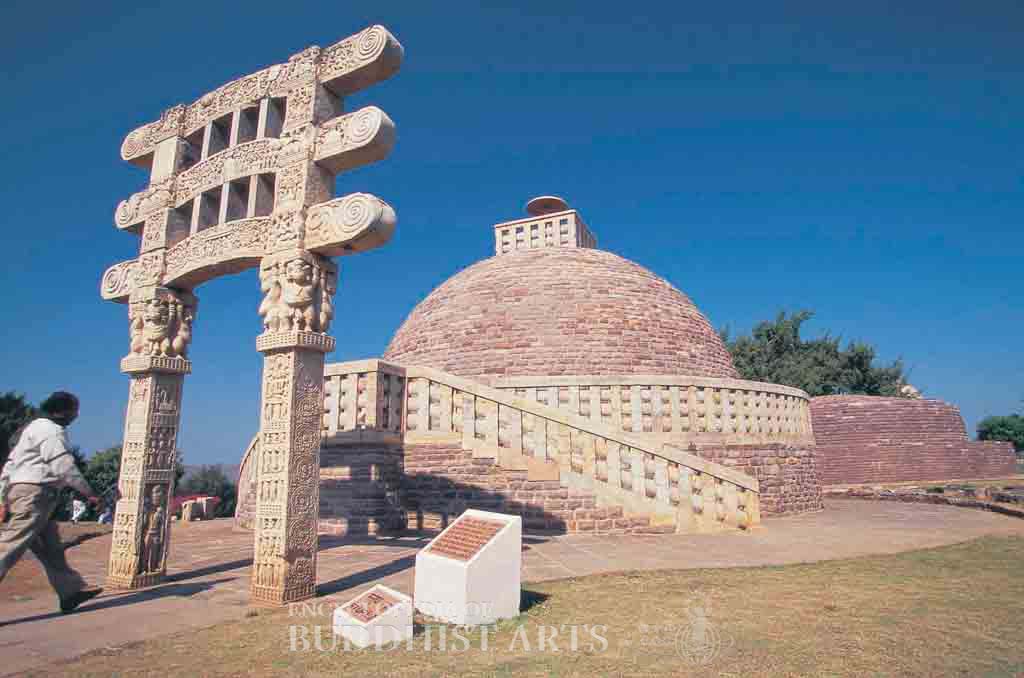
Sanchi: Stupa 3
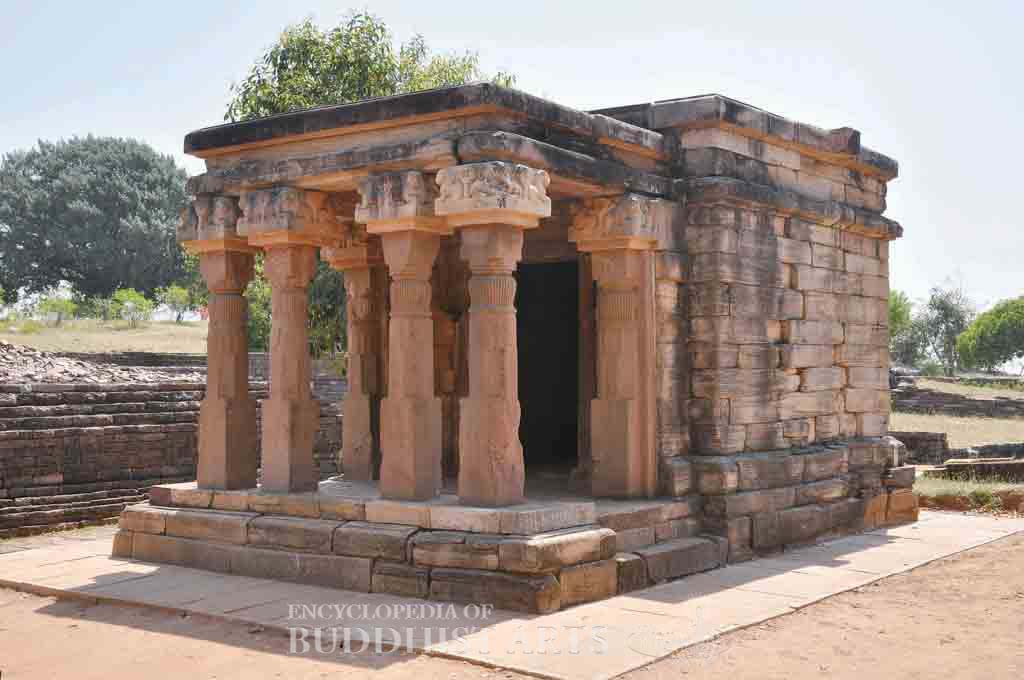
Sanchi: Temple 17
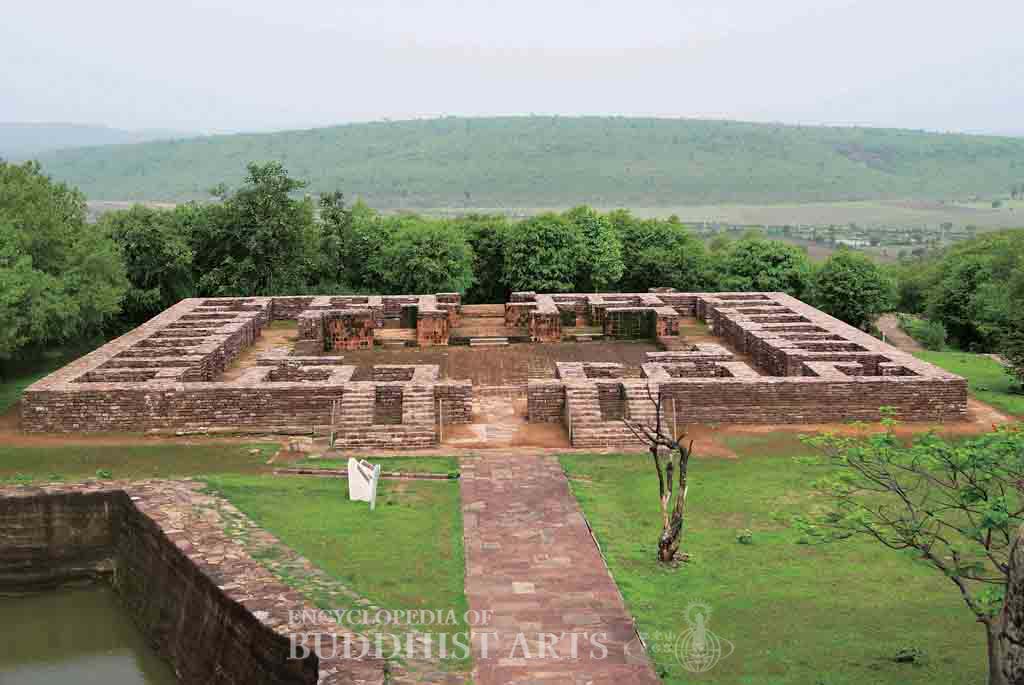
Sanchi: Monastery 51
Sanchi
INDIA, Madhya Pradesh
Sanchi is a small village in the Raisen district of Madhya Pradesh. It is one of the oldest and best preserved Buddhist historical sites in the world. In the 3rd century BCE King Asoka (reigned circa 269–232 BCE) erected a pillar and built a stupa (known as Stupa 1) to enshrine the Buddha’s relics, while his wife Devi founded a monastery here. During the Sunga period (187–75 BCE), Stupa 1 was expanded with railings, and Stupa 2 and Stupa 3 were added. During the Satavahana period (circa 200 BCE–250 CE), the gateways of Stupa 1 and Stupa 3 were erected. After that, from the Gupta period (circa 320–550) to the 12th century, the temples and monasteries here continued to be renovated and expanded. The site was abandoned after the 13th century when the Muslims invaded India. In 1818 British General Taylor discovered the site. In 1912 British archaeologist John Marshall directed an excavation and restoration project to bring the site to its present appearance. It was listed as a UNESCO World Heritage Site in 1989.
Currently over 50 monuments have been excavated at Sanchi. Among them the most well-known is Stupa 1, popularly known as the Great Stupa. Other monuments within the site include Stupa 2, Stupa 3, the Asoka Pillar, and other pillars, temples, monasteries, buildings, and the remains of other stupas. Each monument at Sanchi is marked with a serial number according to its date of excavation.
Stupas 1, 2, and 3 at Sanchi set an example for later Buddhist stupas around the world. They all have a stupa body in the shape of an inverted bowl encircled by stone railings. Some of the railings are adorned with medallions carved with floral designs and images of animals. Elaborately decorated gateways are erected at the entrances of Stupas 1 and 3. The gateways of Stupa 1 are particularly unique. Stupa 1 is said to enshrine relics of the Buddha, while Stupa 2 contained relics of ten eminent monks during King Asoka’s time, and Stupa 3 once held the remains of Sariputra and Maudgalyayana, the great disciples of the Buddha.
Among other monuments at Sanchi, the most impressive are the Asoka Pillar, Temples 17, 18, and 40, as well as Monasteries 45 and 51. The inscribed shaft of the Asoka Pillar, or Pillar 10, is located near the southern gateway of the Great Stupa, whereas the crown, consisting of four intricately carved lions, is now kept at the Archaeological Museum in Sanchi. Temple 17 is a remarkable example of architecture from the Gupta period. Standing on a low base platform, it consists of a square building with a flat roof. It has a portico supported by columns, each of which is composed of a square base, followed by an octagon, a hexadecagon, and an inverted lotus. The abacus is carved with lions and tree reliefs.
Monastery 45 is the best preserved monastic compound, consisting of a courtyard, a towering temple, stupas, and living quarters. Some structures within the compound date to the 7th or 8th century, while the temple date to the 9th or 10th century. Monastery 51 is the largest monastic compound with an area of 33.2 m by 32.7 m. There is a large brick-paved courtyard and a total of 22 cells within the compound.
For more details, go to the Encyclopedia of Buddhist Arts: Architecture M-S, page 931.
Cite this article:
author = Hsingyun and Youheng and Johnson, Peter and Mankuang and Lancaster, Lewis,
booktitle = {Encyclopedia of Buddhist Arts: Architecture M-S},
pages = 931,
title = {{Sanchi}},
volume = 3,
year = {2016}}