
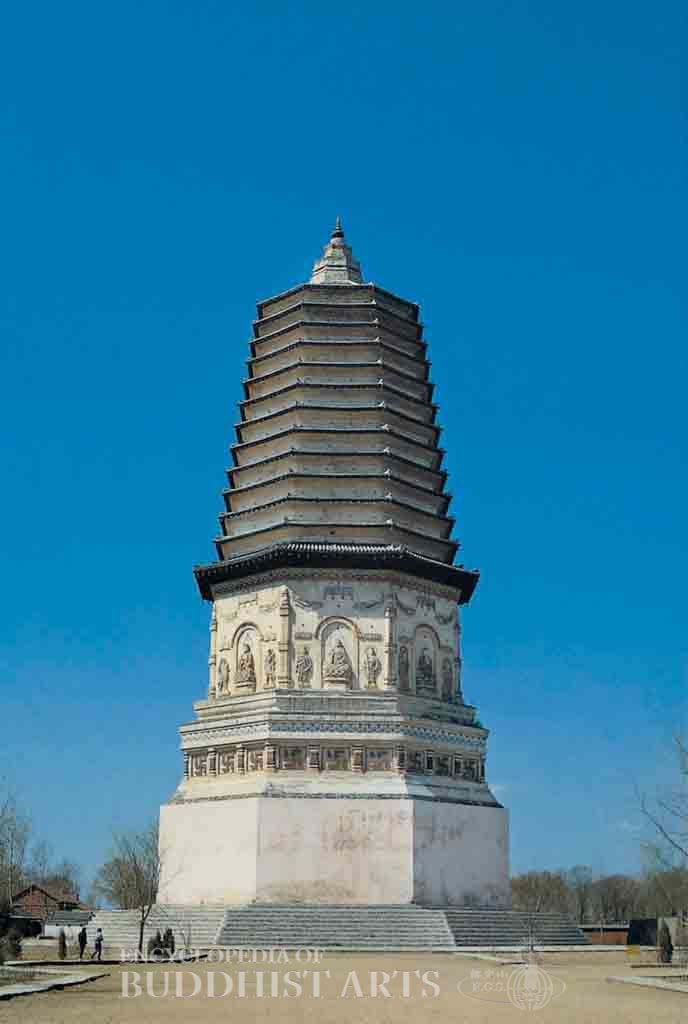
Daming Pagoda
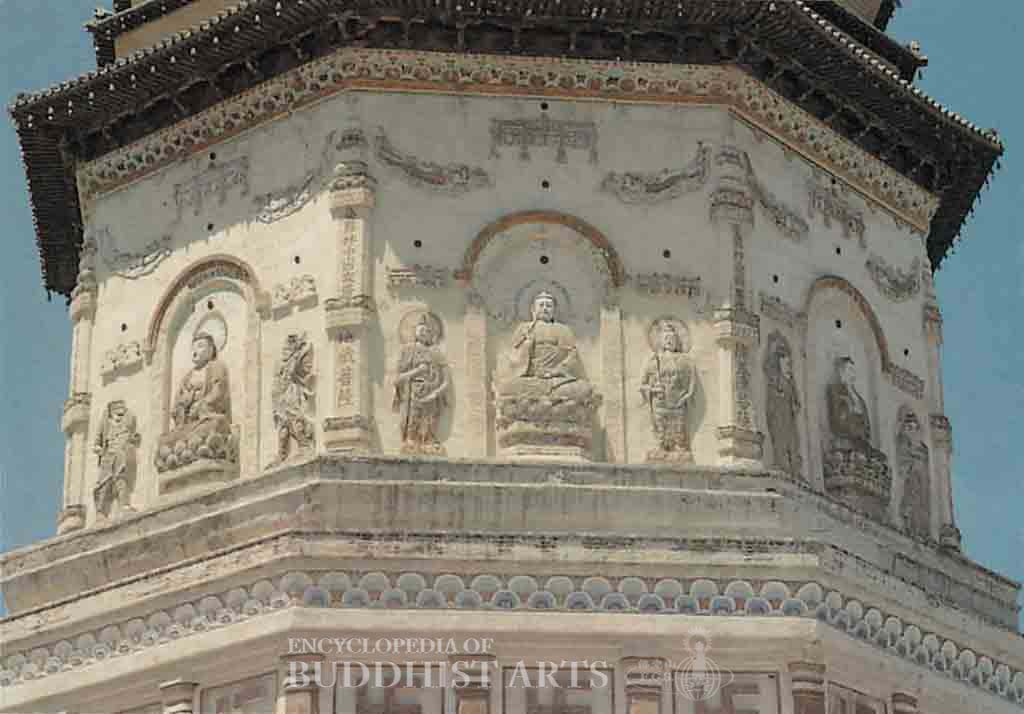
Daming Pagoda (detail)
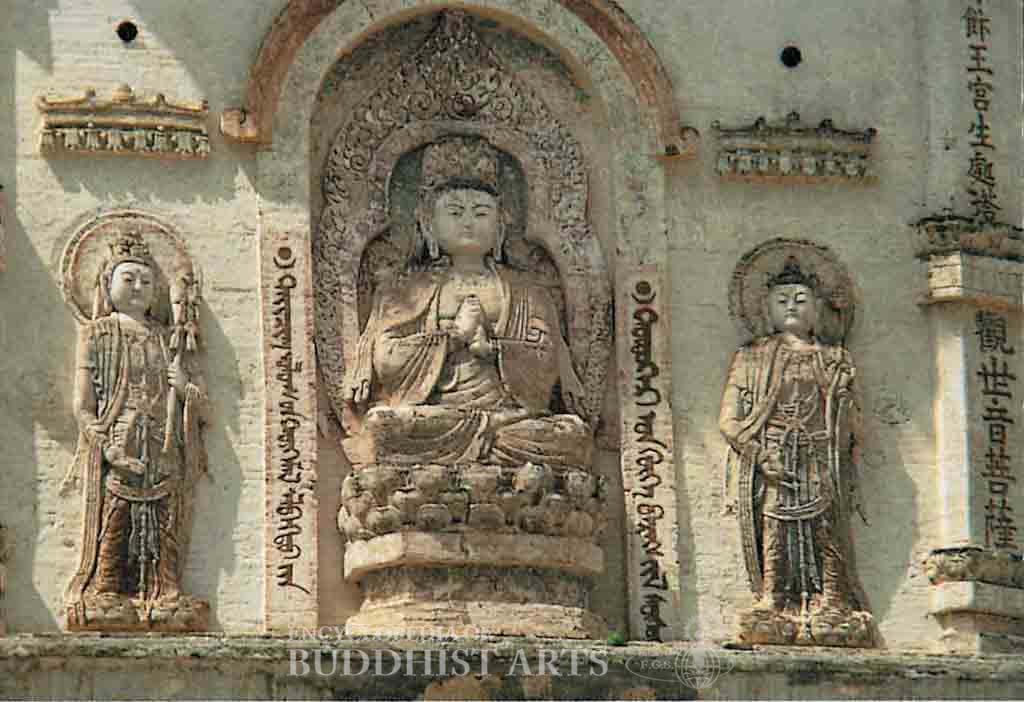
Daming Pagoda (detail)
Daming Pagoda
CHINA, Inner Mongolia, Chifeng
Located at the site of the ruined capital of the Liao dynasty (907–1125) in Ningcheng county, it is the largest among the ancient pagodas of the Liao and Jin (1115–1234) dynasties. According to the inscriptions on the eaves on the second tier, the pagoda was constructed between 1007 and 1098 and has undergone a number of renovations. It is also traditionally known as the White Pagoda. It was listed as a National Cultural Heritage Site in 1961.
The 13-tier, octagonal, brick pagoda is 80.2 m high. The plain high base is about one fifth of the entire pagoda. The first tier of the pagoda body is extensive and in the center of each side there is a niche containing a seated Buddha flanked by attendants. On the south side there is an inscription in Mongolian recording the renovation which was undertaken in 1854 during the Qing dynasty. There is also a small pagoda and a partially damaged pagoda at the site.
For more details, go to the Encyclopedia of Buddhist Arts: Architecture A-F, page 209.
Cite this article:
author = Hsingyun and Youheng and Johnson, Peter and Mankuang and Lancaster, Lewis,
booktitle = {Encyclopedia of Buddhist Arts: Architecture A-F},
pages = 209,
title = {{Daming Pagoda}},
volume = 1,
year = {2016}}