
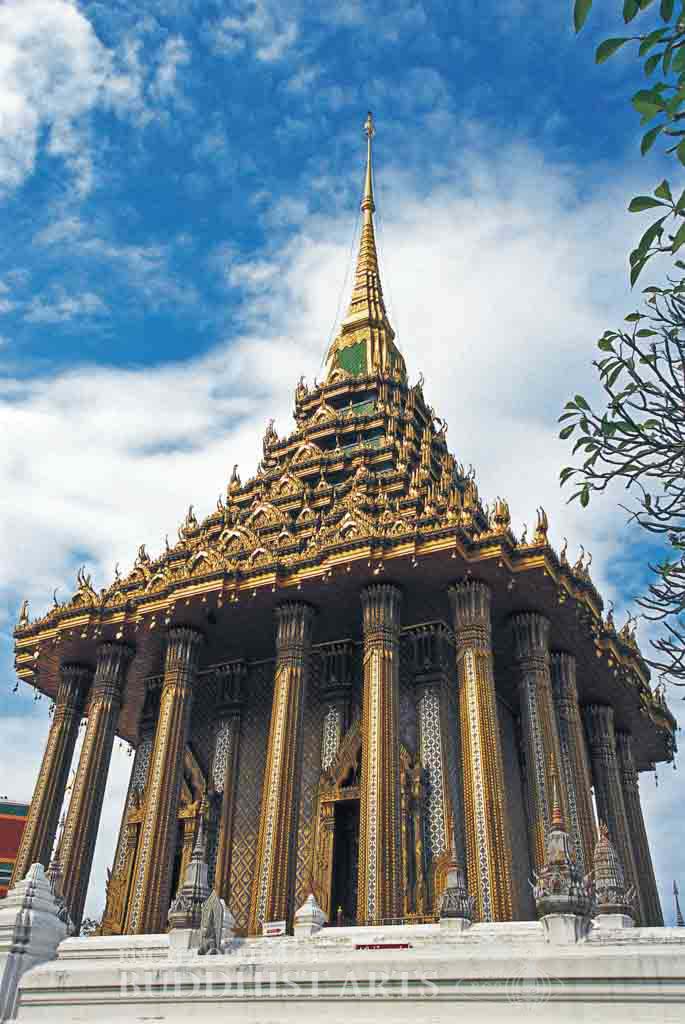
Wat Phra Phutthabat: Hall of the Buddha’s Footprint
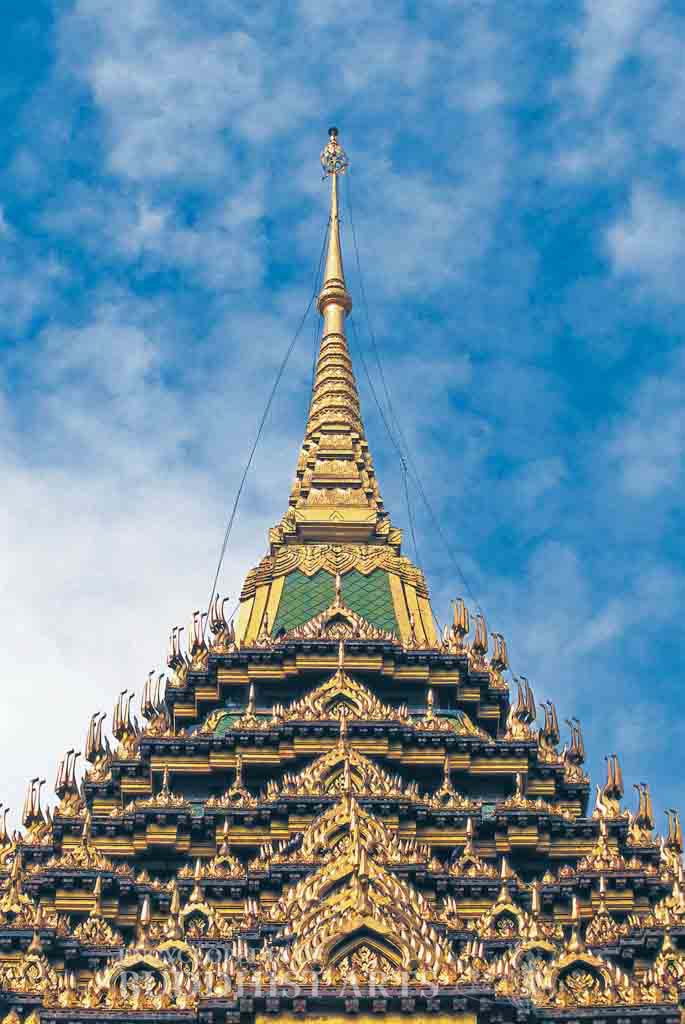
Wat Phra Phutthabat: Hall of the Buddha’s Footprint - Roof
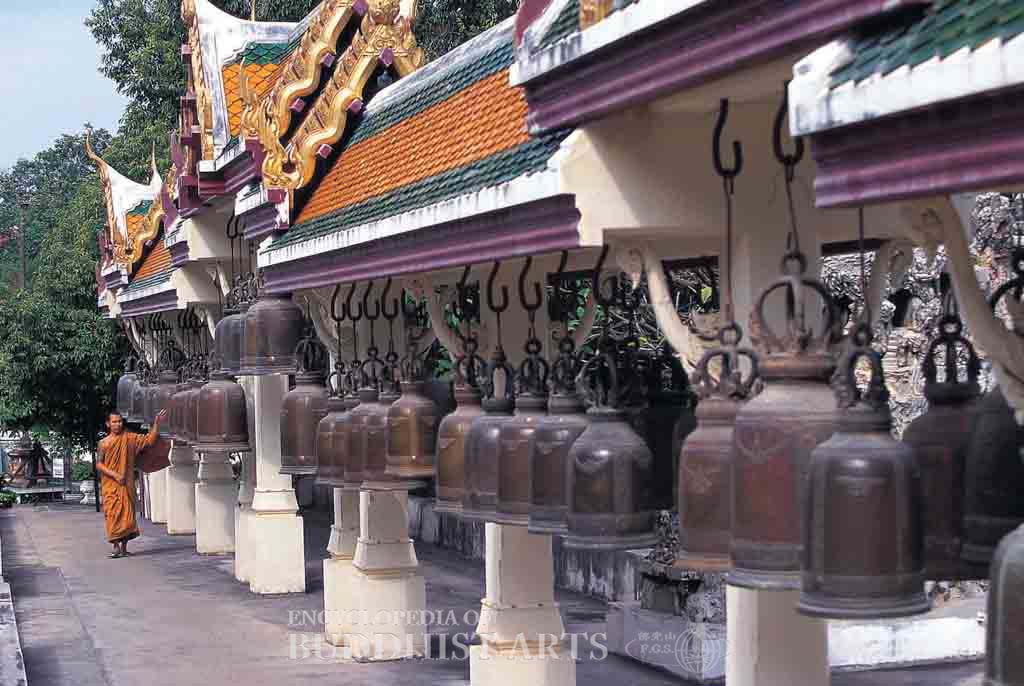
Wat Phra Phutthabat: Bells
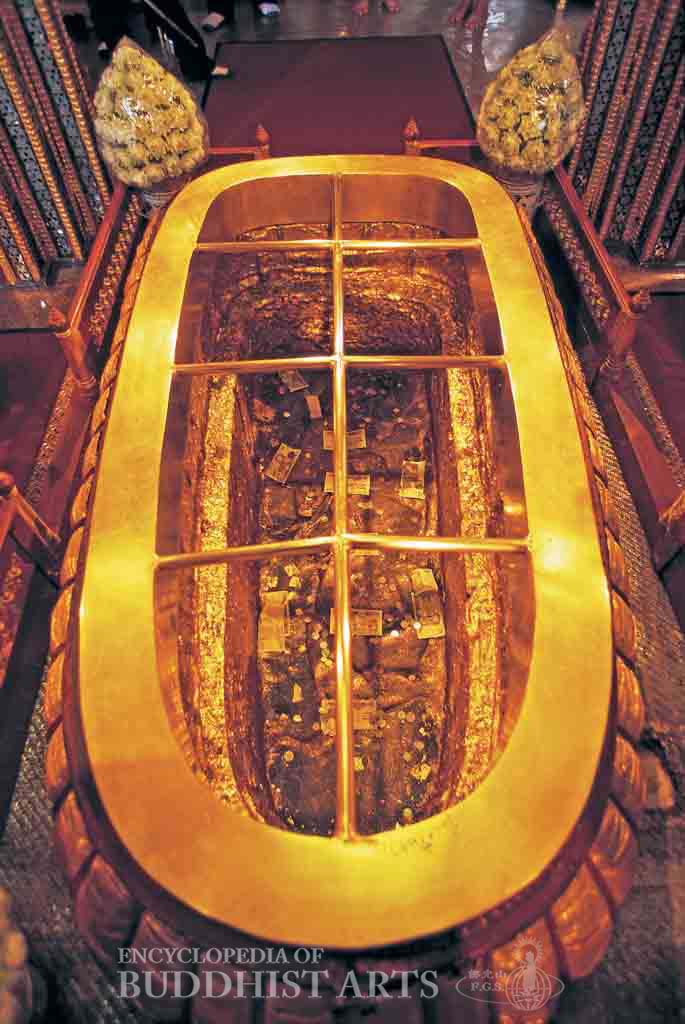
Wat Phra Phutthabat: Hall of the Buddha's Footprint - Buddha’s Footprint
Wat Phra Phutthabat
THAILAND, Saraburi
Wat Phra Phutthabat means the Temple of the Buddha’s Footprint. It is a first class royal temple built by King Songtham (reigned 1610–1628) of Ayutthaya in 1620, and took eight years to complete. The temple houses the Buddha’s footprint, a symbol revered by Buddhists in Thailand. According to historical records, the Buddha’s footprint was discovered on a natural rock surface by a hunter. When King Songtham learned of this, he personally examined the rock, acknowledged the auspicious signs of the Buddha’s footprint, and ordered a temple to be built on the site. However, the temple was set on fire during an invasion in an attempt to melt the gold in the canopy over the Buddha’s footprint. During the time of King Rama I (reigned 1782–1809), the temple was rebuilt and the golden canopy was recast.
The temple includes the Hall of the Buddha’s Footprint, ordination hall, and Buddha hall. The most important structure in the temple is the Hall of the Buddha’s Footprint. The entrance is approached by three staircases that are flanked by nagas. The hall has a square layout and its walls are decorated with simple but attractive patterns. The entrance door, which is inlaid with mother-of-pearl, is one of the finest works of art of its type in Thailand. Elegant columns with alternate flat and ribbed faces support the eaves of the roof. Their capitals are in the form of upturned lotuses. The roof is glazed in green tiles and is shaped like a pyramid with seven projecting tiers. The edges of the tiers are decorated with garudas and nagas, which give the roof its distinctive appearance. The roof is surmounted by a harmika in the shape of a truncated pyramid with multiple corners, followed by octagonal stacked rings. The lower section of the finial has an elegantly shaped jewel, after which it rises sharply culminating in the canopy. The columns, exterior walls, and roof are gilded and decorated with colorful glass, giving the building a glittering and striking appearance. The roof is particularly ornate, contrasting with the simple lines of the golden spire and finial.
The Buddha’s footprint enshrined in the hall is 150 cm long, 50 cm wide, and 30 cm deep. It is gilded, apart from the underside, where the natural rock is visible. It is enclosed in an ornate gold housing.
Around the Hall of the Buddha’s Footprint there is a series of bells which devotees can ring to bring merit.
For more details, go to the Encyclopedia of Buddhist Arts: Architecture T-Z, page 1229.
Cite this article:
author = Hsingyun and Youheng and Johnson, Peter and Mankuang and Lancaster, Lewis,
booktitle = {Encyclopedia of Buddhist Arts: Architecture T-Z},
pages = 1229,
title = {{Wat Phra Phutthabat}},
volume = 4,
year = {2016}}