
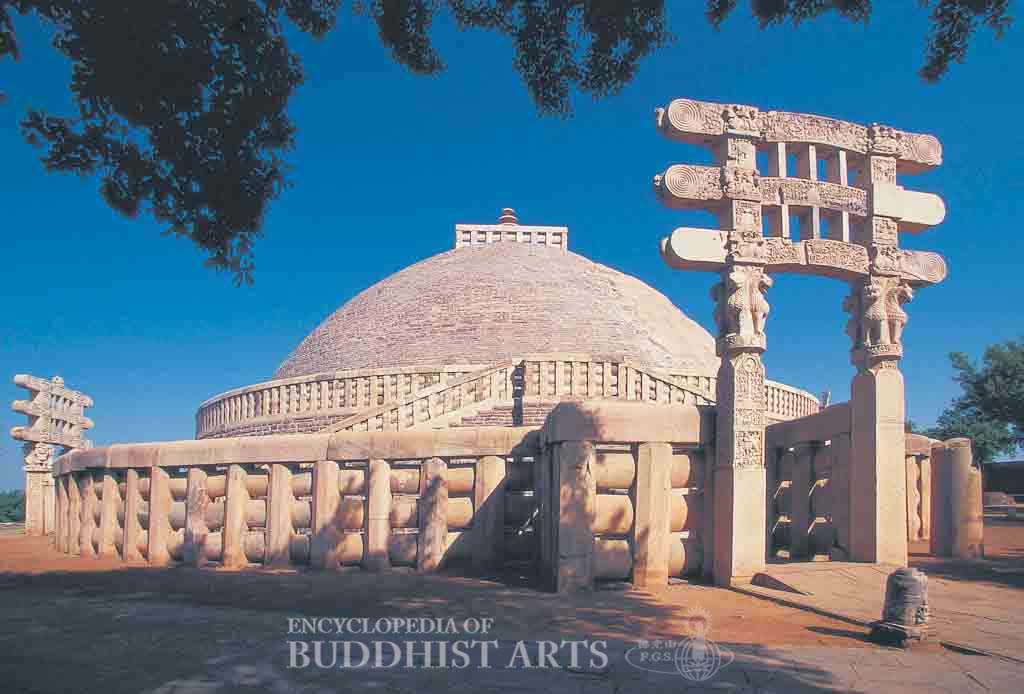
Sanchi Stupa 1
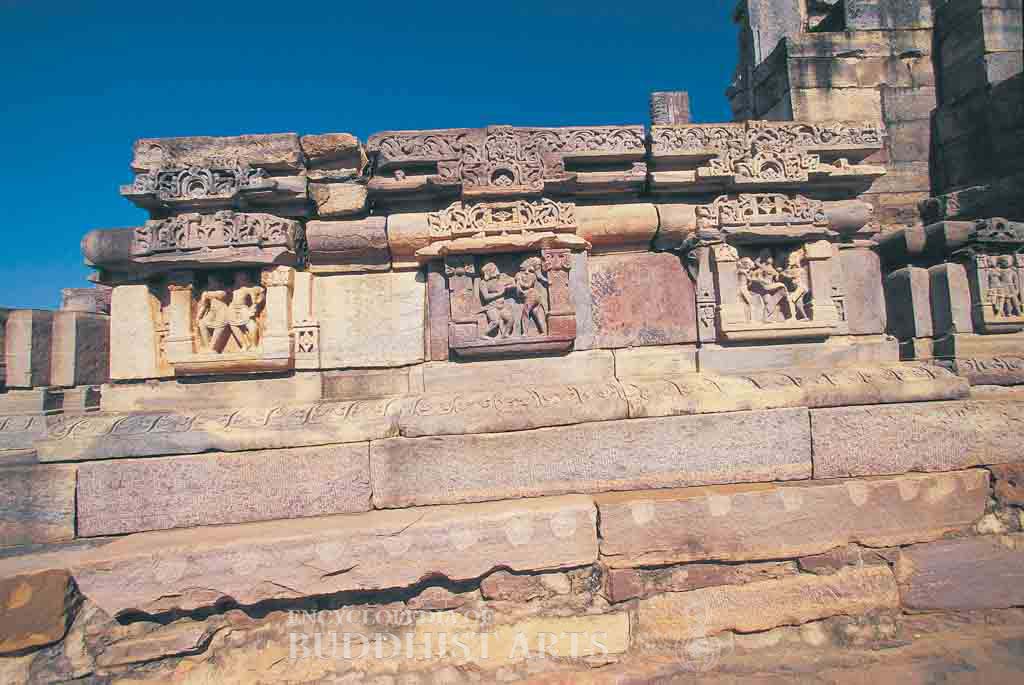
Sanchi Stupa 1 (detail)
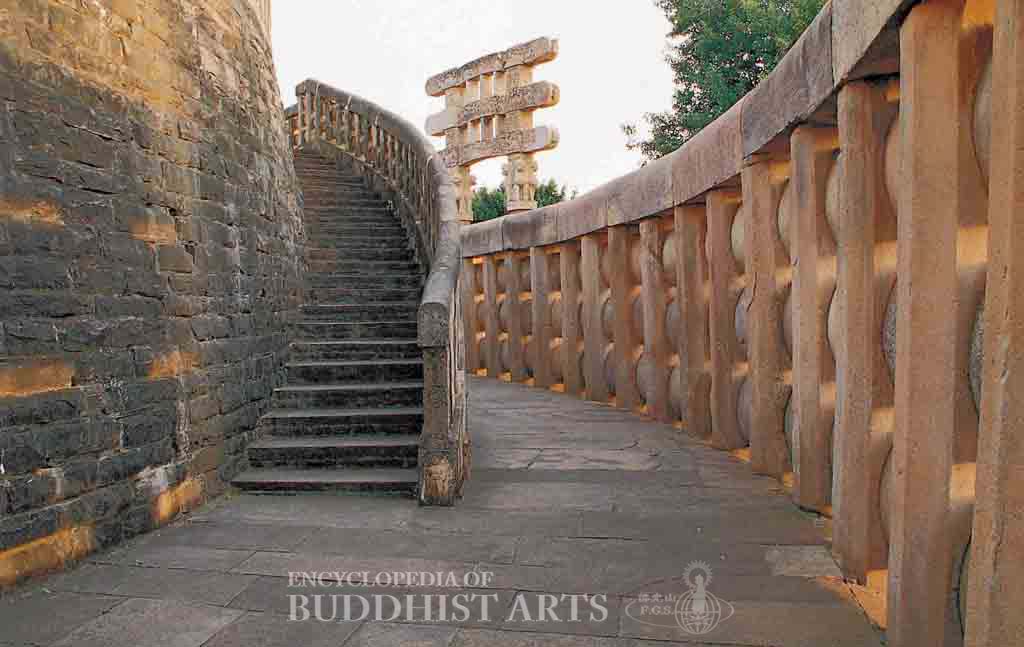
Sanchi Stupa 1: Circumambulation Path
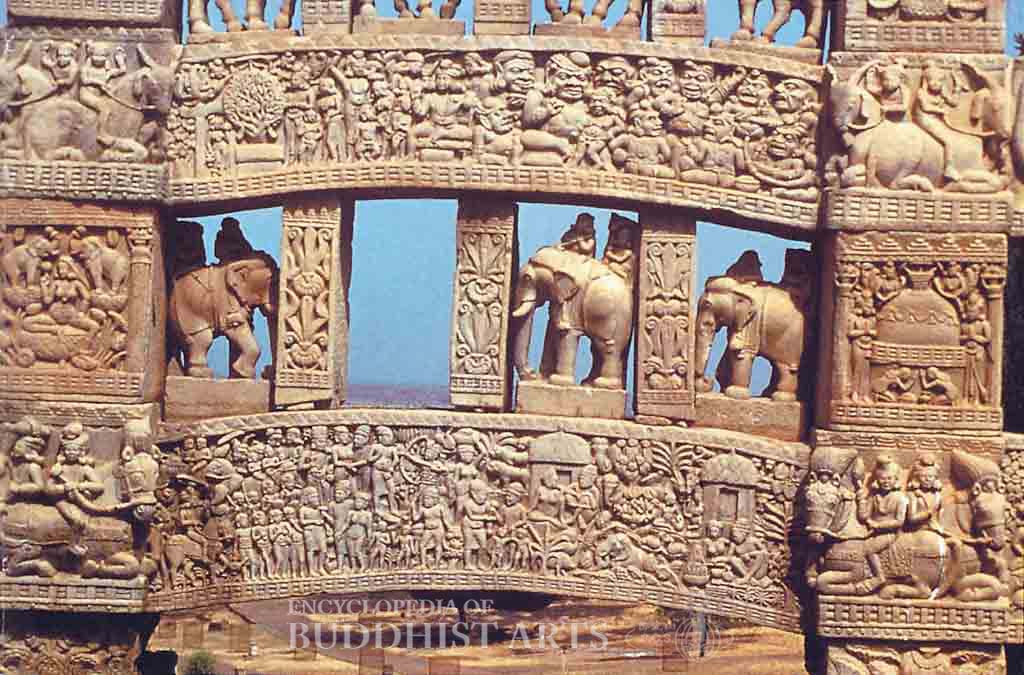
Sanchi Stupa 1: Northern Gateway (detail)
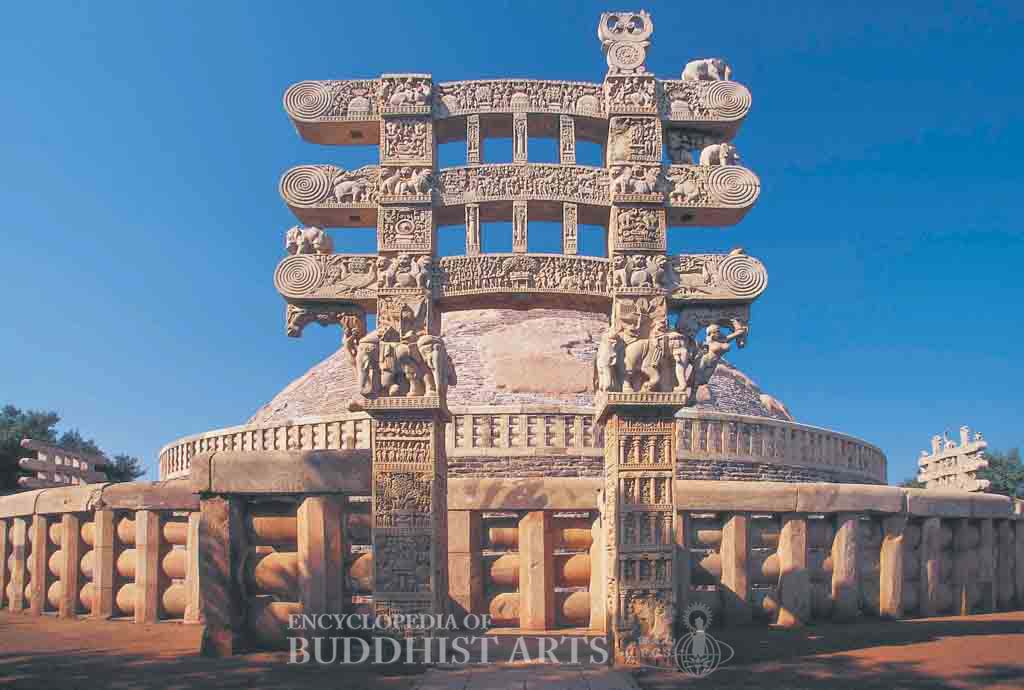
Sanchi Stupa 1: Eastern Gateway
Sanchi Stupa 1
INDIA, Madhya Pradesh, Sanchi
It is also known as the Great Stupa and is the most elaborate and famous among all the stupas in Sanchi. It is an excellent example of an early Indian Buddhist stupa and its architectural style and sculptures have had a profound influence on Buddhist art. It was originally built by King Asoka (reigned circa 269–232 BCE) in the 3rd century BCE to enshrine the Buddha’s relics. The stupa was made of mud and brick, but was enlarged in the 2nd century BCE during the Sunga period (187–75 BCE), doubling its size and covering it with stone. Railings, stairs, and a harmika were also added at that time. Four gateways were erected during the Satavahana period (circa 200 BCE–250 CE). Along with other monuments at Sanchi, the stupa was forgotten after the 13th century until its rediscovery in 1818. Subsequent excavation and restoration brought the stupa to its present appearance. As part of the Buddhist Monuments at Sanchi, it was listed as a UNESCO World Heritage Site in 1989.
The stupa is made of brick and stone and is 16.5 m high. The base is circular and measures 36.6 m in diameter. The stupa body is in the shape of an inverted bowl and is topped by a square harmika with railings and a spire with a triple canopy. A raised terrace encircles the base, with double staircases on the south side. Guarded by carved stone railings, the terrace serves as a circumambulation path for pilgrims. Another set of unadorned stone railings surrounds the stupa on the ground level to create a similar path. There are four elaborately carved gateways at the four cardinal directions of the railings.
Each gateway is 10 m high and consists of three curvilinear crossbars supported by two square columns. The columns and crossbars are richly carved with reliefs, depicting scenes from the Life of the Buddha and Jataka tales. In these scenes, the Buddha is not represented in human but in symbolic form, for example with the Bodhi tree, Dharma wheel, diamond throne, and footprints. The four gateways were not sculpted systematically and there is no particular pattern to the themes of the reliefs on the gateways: some stories are repeated and some scenes are out of sequence. This is probably a consequence of the donation of the reliefs by devotees, who each selected particular scenes to be carved. Other motifs decorate the gateways, such as patterns of lotus and other floral designs, images of Dharma protectors, yaksas, lions, horses, elephants, and peacocks, as well as the Dharma wheel and Triratna (Triple Gem) symbols. There are over a hundred different images of heavenly beings, animals, and buildings on these magnificent gateways.
For more details, go to the Encyclopedia of Buddhist Arts: Architecture M-S, page 933.
Cite this article:
author = Hsingyun and Youheng and Johnson, Peter and Mankuang and Lancaster, Lewis,
booktitle = {Encyclopedia of Buddhist Arts: Architecture M-S},
pages = 933,
title = {{Sanchi Stupa 1}},
volume = 3,
year = {2016}}