
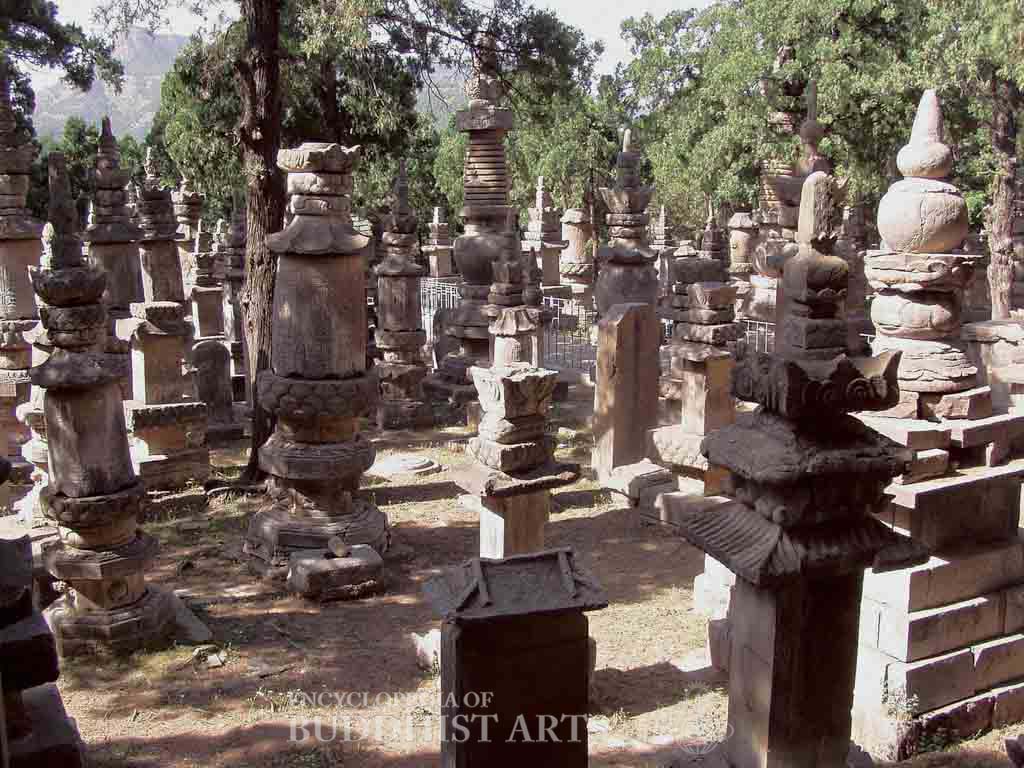
Lingyan Temple Forest of Stupas
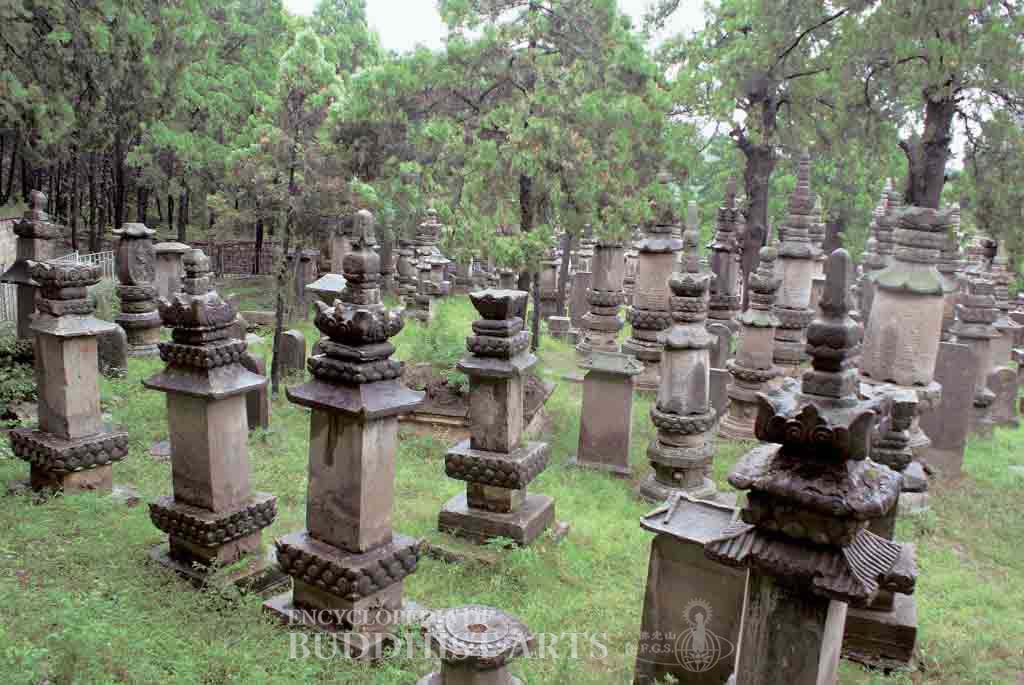
Lingyan Temple Forest of Stupas
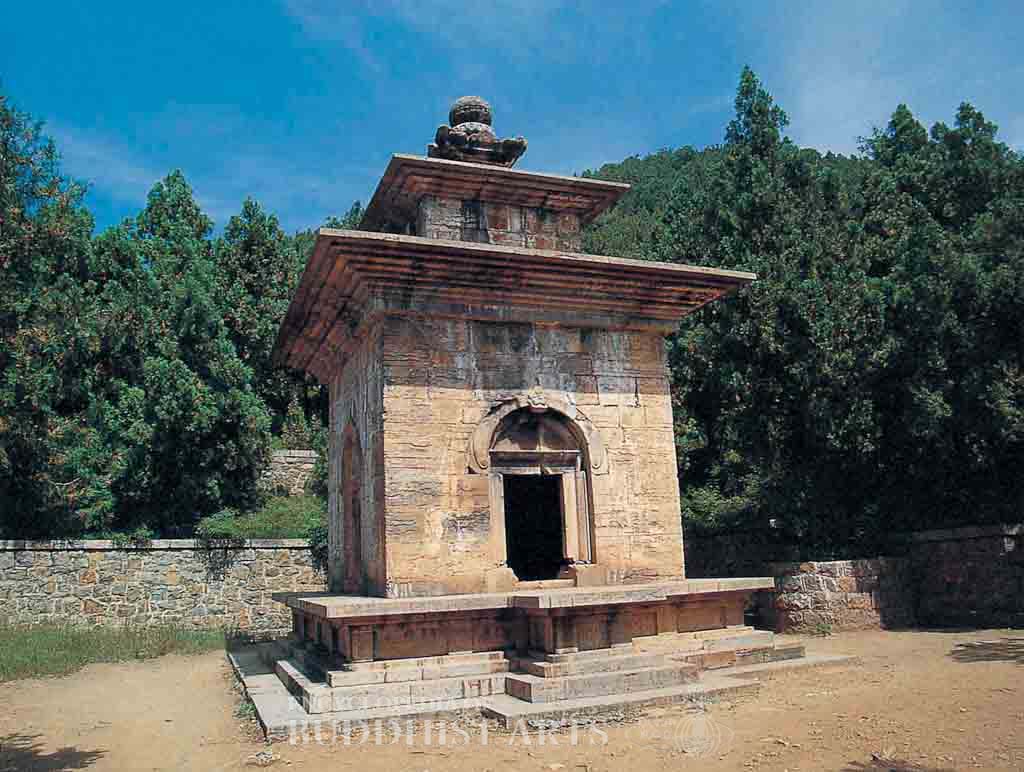
Lingyan Temple Forest of Stupas: Huichong Stupa
Lingyan Temple Forest of Stupas
CHINA, Shandong, Jinan
The forest of stupas is located to the west of Lingyan Temple. There are a total of 167 funerary stupas of eminent monks dating from the Tang (618–907) through to the Qing (1644–1911) dynasties. There are also 81 stone memorial steles. Such a collection is rare in terms of the number, time span, and the differences in style. These stupas are comparable to those at Shaolin Temple.
There is a stone walkway along the center with stupas erected in clusters on either side. The stupas can be classified into six types: tablet-shaped, bell-shaped, drum-shaped, Tibetan style, sutra pillar-style, and pavilion-style. The pavilion-style pagodas are the largest and they include the Huichong Stupa built during the rule of Emperor Xuanzong (reigned 712–756) of the Tang dynasty, and the Haihui Stupa that Chan Master Miaokong built for many monastics in 1123.
The single-story double-eave Huichong Stupa is 5.3 m high. It consists of a cuboid stupa body on a Sumeru base. At the front there is a doorway with a tympanum and arch above. The other three sides have false doors with panels that appear to be half opened. Inside the pagoda there is a small chamber with an arched ceiling. The eaves are in the form of corbeling. The spire consists of a Sumeru base followed by decorative leaves, an upright lotus, and a jewel.
For more details, go to the Encyclopedia of Buddhist Arts: Architecture G-L, page 672.
Cite this article:
author = Hsingyun and Youheng and Johnson, Peter and Mankuang and Lancaster, Lewis,
booktitle = {Encyclopedia of Buddhist Arts: Architecture G-L},
pages = 672,
title = {{Lingyan Temple Forest of Stupas}},
volume = 2,
year = {2016}}