
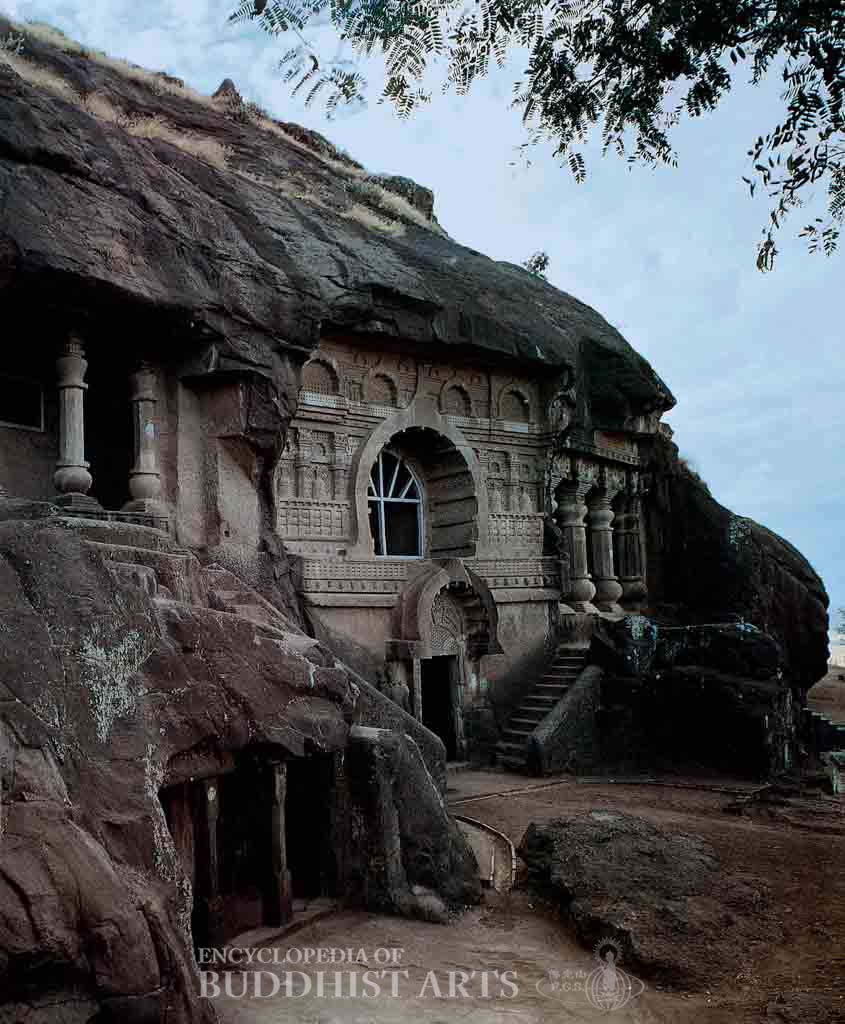
Nasik Caves: Caves 17 to 19
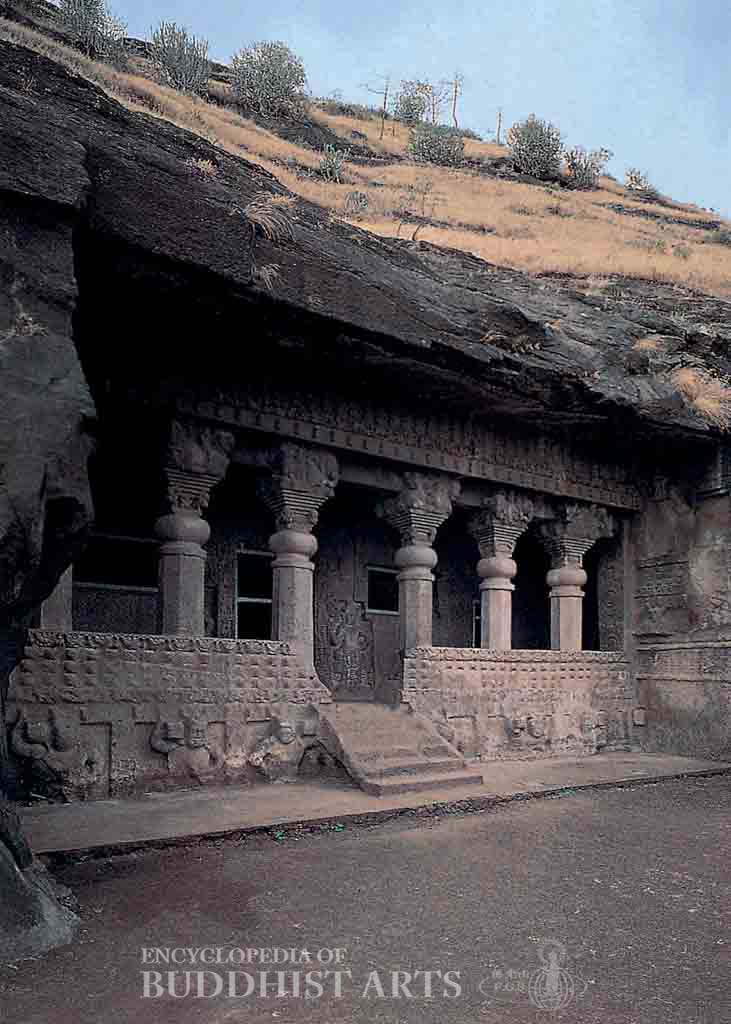
Nasik Caves: Cave 3

Nasik Caves
Nasik Caves
INDIA, Maharashtra, Aurangabad
The Nasik Caves, also known as Pandulena, are located in Maharashtra, on the north cliff of a hill 8 km southwest of the town of Nasik on the Deccan Plateau. Presently, 24 caves remain and are situated along an east-west axis; 13 of them contain inscriptions. The ages of the caves vary widely, with the majority created between the 2nd century BCE and the 2nd century CE, though some caves were still being built late into the 6th century. The earliest is Cave 19, which still holds the inscription from the time of King Krishna (reigned circa 205–187 BCE) of Satavahana.
Cave 18 is the only caitya cave and was created sometime between the 1st century BCE and the 1st century CE. The facade has a caitya window and complex carving work. Originally, two door guardians stood on each side of the entrance, however, only the left statue remains. Seventeen columns are found within the cave, forming a corridor on each side. A stupa is located at the rear of the hall.
Cave 3 was commissioned by the mother of King Gautamiputra Satakarni (reigned circa 78–102), and is an exquisitely embellished vihara cave. Aside from the reliefs on the walls of the entrance and column bases, the most notable part of the cave is the massive relief stupa located on the back wall of the main hall. The inclusion of this stupa relief implies that this vihara cave functioned as a place of worship.
Cave 10 is a vihara cave constructed sometime prior to Cave 3. It has a portico at the front, and the columns within the main hall are richly decorated. The three interior walls of the cave contain sixteen cells with rock-cut beds. Caves 3 and 10 contain dated inscriptions that include nobility’s and common people’s donation records, which have provided valuable information for researchers.
For more details, go to the Encyclopedia of Buddhist Arts: Caves Mo-S, page 1261.
Cite this article:
author = Hsingyun and Youheng and Johnson, Peter and Mankuang and Huntington, Susan and Edson, Gary and Neather, Robert,
booktitle = {Encyclopedia of Buddhist Arts: Caves Mo-S},
pages = 1261,
title = {{Nasik Caves}},
volume = 8,
year = {2016}}