
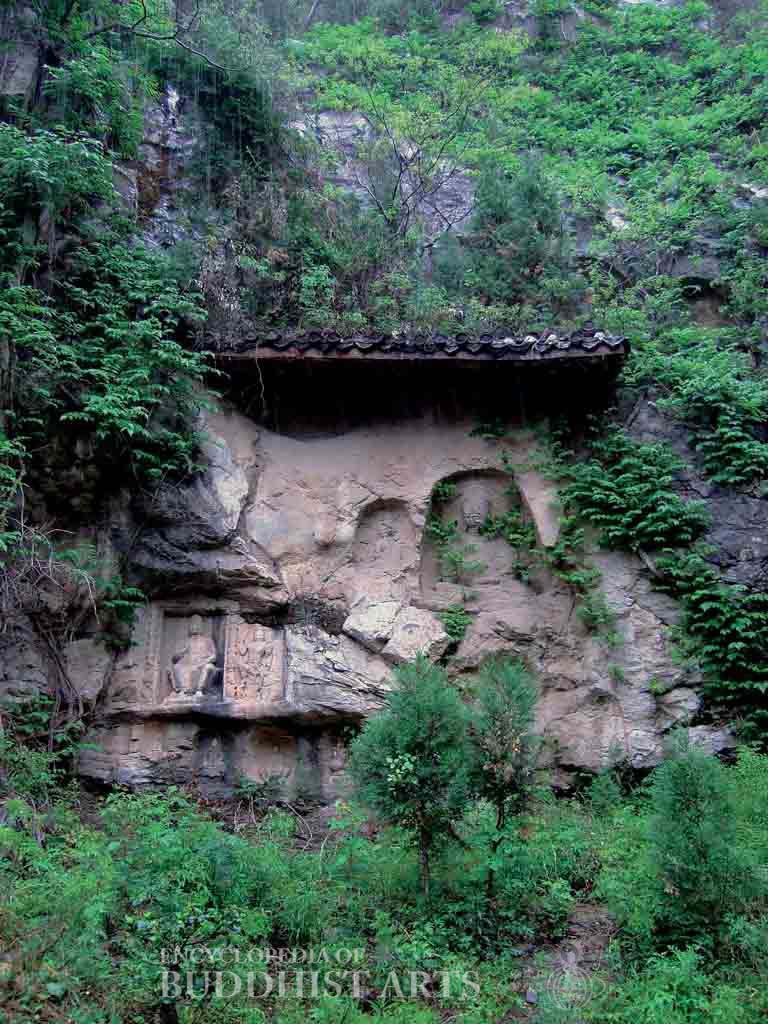
Shengtong Temple Thousand Buddha Cliff Rock Carvings
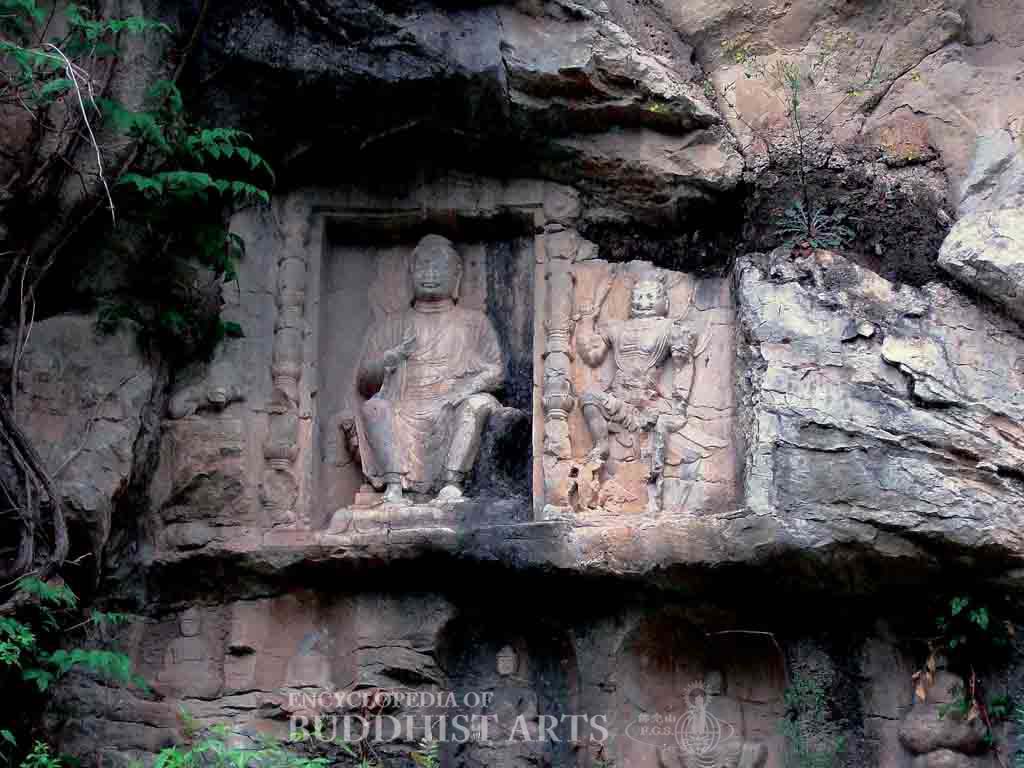
Shengtong Temple Thousand Buddha Cliff Rock Carvings: Niche 27 - Maitreya Buddha and Warrior
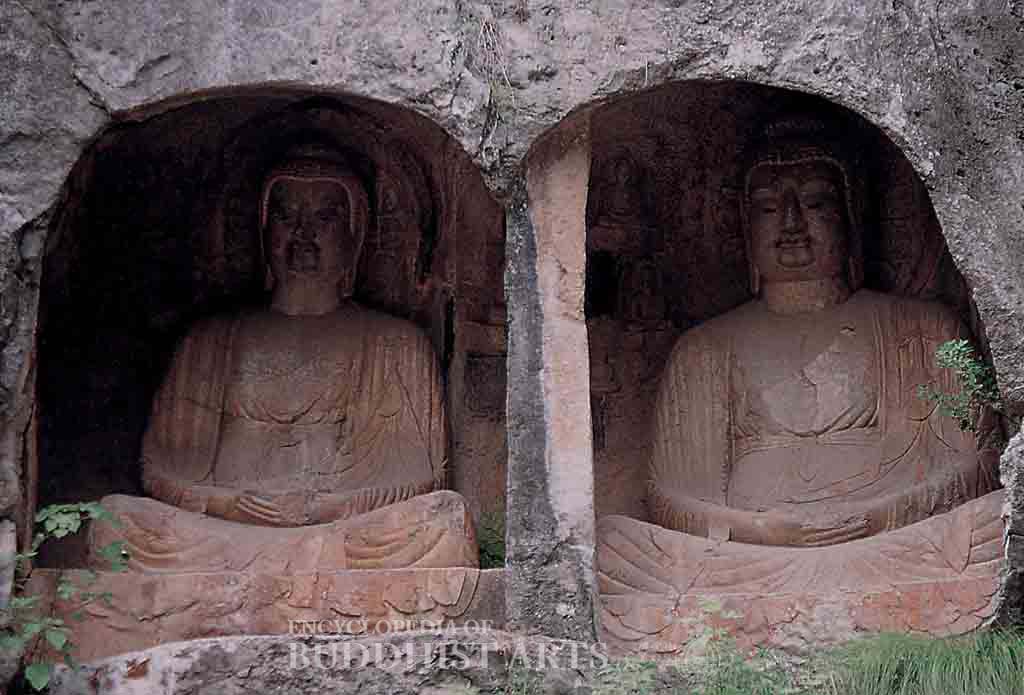
Shengtong Temple Thousand Buddha Cliff Rock Carvings: Niche 50 - Two Seated Buddhas
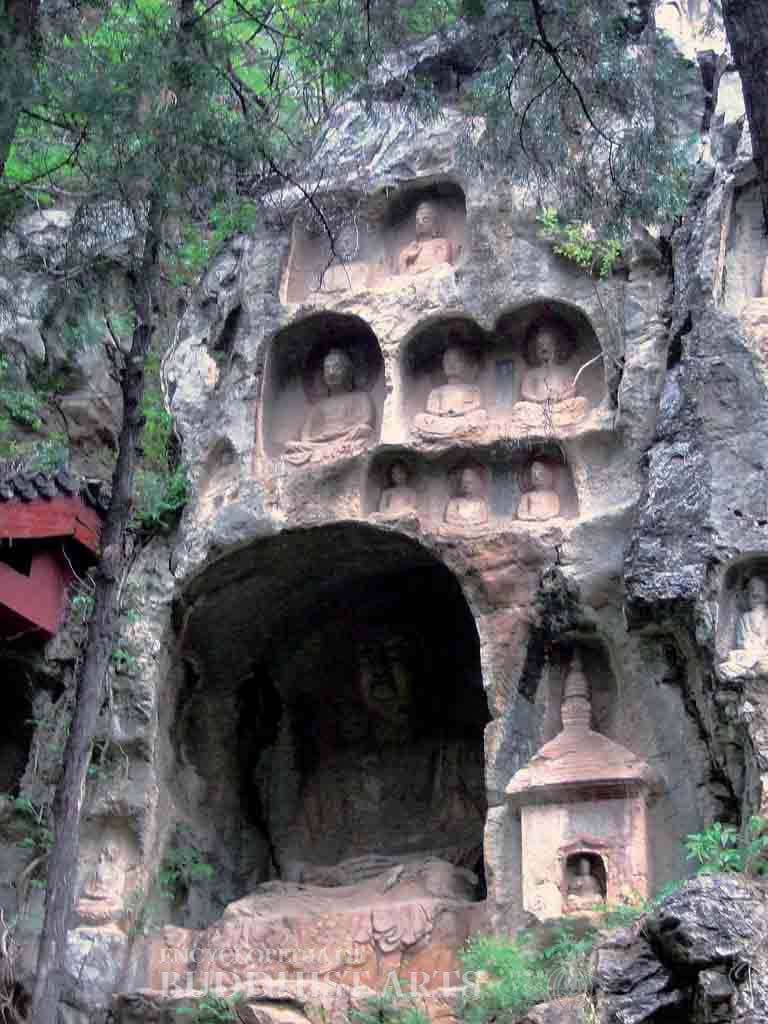
Shengtong Temple Thousand Buddha Cliff Rock Carvings
Shengtong Temple Thousand Buddha Cliff Rock Carvings
CHINA, Shandong, Jinan
These carvings are located at the eastern foot of Baihushan (White Tiger Mountain), west of Shengtong Temple in Jinan. The carvings stretch is 35 m long and 7 m high, and there are approximately 100 niches and a total of 200 sculptures. The majority of the sculptures can be found in arched niches or are carved in relief. This area was listed as a National Cultural Heritage Site in 1988.
Most of the niches hold only one statue. However, a few niches house more than one, including Niches 17, 38, and 39, which contain attendants. The largest niche has a main statue that is approximately 2.5 m in height. Today, 40 inscriptions remain on the cliff, and 36 of them date to the Tang dynasty (618–907).
Niche 1 is the most important because it holds a Tang dynasty statue commissioned by Princess Nanping in 657. Carved inside the niche is a Buddha with a low usnisa seated on a Sumeru throne. The figure wears a monastic robe with long sleeves. Niche 6 has a seated Buddha statue commissioned by monk Mingde in 658. This figure’s hands form the dhyana (meditation) mudra. Niche 27 has a statue commissioned in 657 by Liu Xuanyi, husband of Princess Nanping. The square niche holds a Maitreya that sits with legs pendent and a warrior, in relief, stands just outside.
Meanwhile, Niche 50 contains statues commissioned by Zhao Wangfu in 658. It takes the form of a double niche with two arches above two seated Buddhas. Both figures form the dhyana (meditation) mudra. It can be inferred from an inscription on the cliff that these niches were primarily constructed by royalty from the court of Emperor Taizong (reigned 626–649). Most of the carving was done during the time of Emperor Gaozong (reigned 649–683).
For more details, go to the Encyclopedia of Buddhist Arts: Caves Mo-S, page 1362.
Cite this article:
author = Hsingyun and Youheng and Johnson, Peter and Mankuang and Huntington, Susan and Edson, Gary and Neather, Robert,
booktitle = {Encyclopedia of Buddhist Arts: Caves Mo-S},
pages = 1362,
title = {{Shengtong Temple Thousand Buddha Cliff Rock Carvings}},
volume = 8,
year = {2016}}