
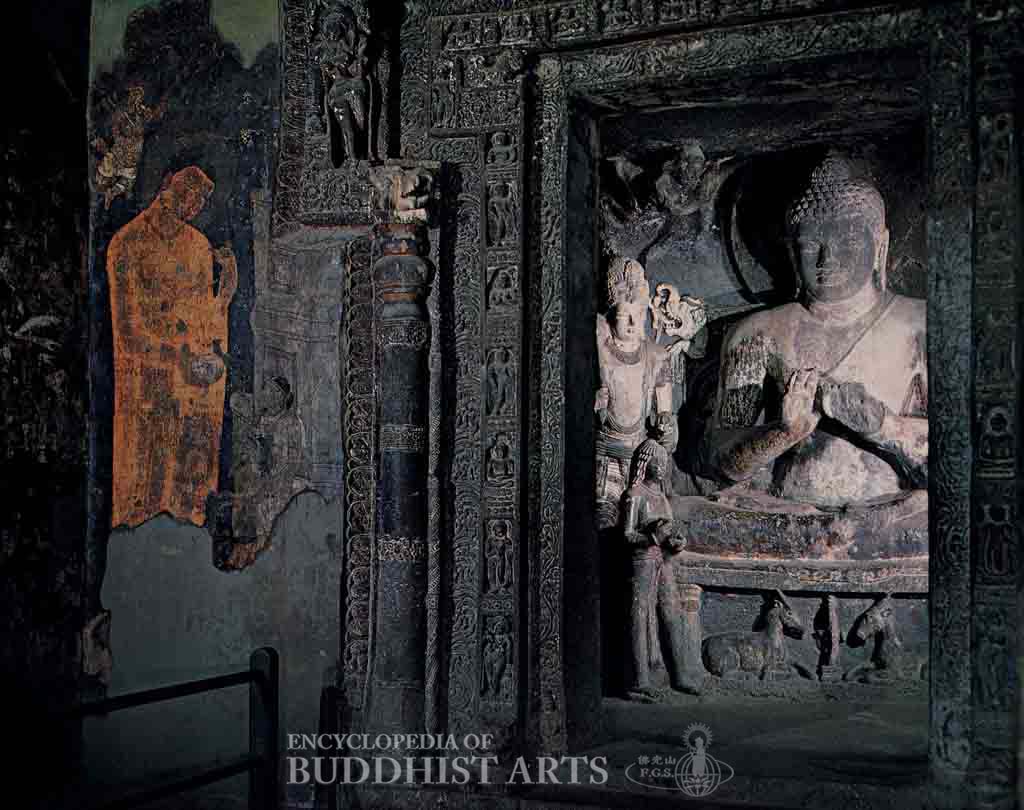
Ajanta Cave 17: Antechamber and Main Shrine
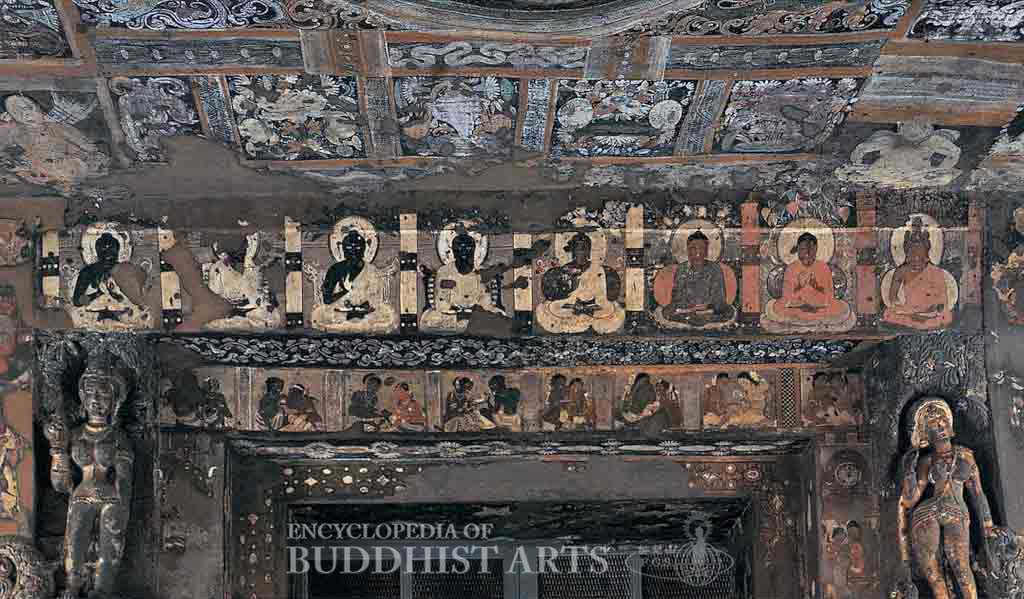
Ajanta Cave 17: Door Lintel
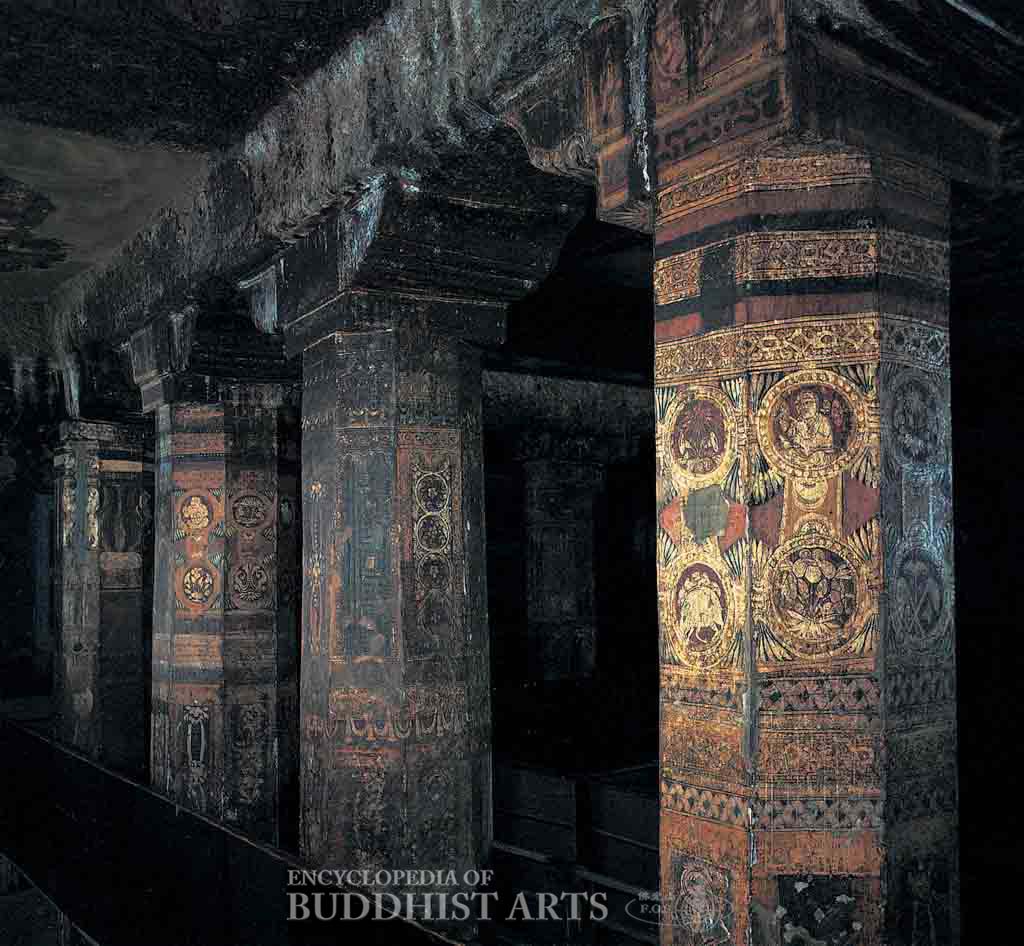
Ajanta Cave 17: Main Hall - Columns
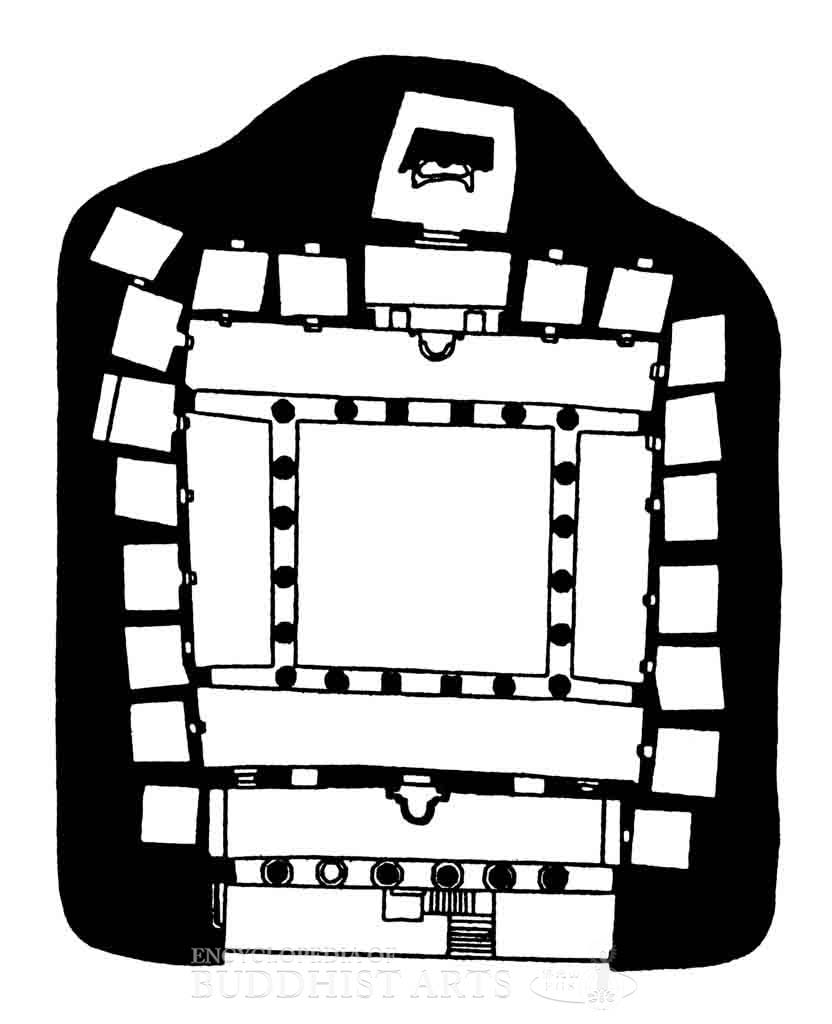
Ajanta Cave 17 (plan)
Ajanta Cave 17
INDIA, Maharashtra, Aurangabad
According to an inscription, this vihara cave was donated by a feudatory of King Harisena (reigned circa 475–510) of Vakataka during the mid-to-late 5th century. Like the other vihara caves at the site, this cave consists of a portico, main hall, antechamber, and main shrine, with small cells surrounding the main hall.
The portico is 19.5 m wide, 3 m deep, and has six columns, with small cells found at either end. The main hall is square, measuring 19.2 m in length. Twenty columns form aisles along all four sides and a total of 17 cells are built within the walls surrounding the main hall. A doorway at the center of the back wall leads to the antechamber, which is square and approximately 5.6 m deep. The main shrine beyond measures 5.5 m by 5.9 m and contains a massive Buddha statue.
The cave is best known for its numerous murals. The walls of the portico, main hall, antechamber, and much of the ceilings and columns are embellished with beautiful artworks. The Life of the Buddha and the Jataka tales are the principal subject matter of the murals. There are also depictions of the Wheel of Rebirth, Seven Buddhas of the Past, and Maitreya Bodhisattva. The extraordinary skills of the artists who worked here are demonstrated throughout the cave.
For more details, go to the Encyclopedia of Buddhist Arts: Caves A-E, page 38.
Cite this article:
author = Hsingyun and Youheng and Johnson, Peter and Mankuang and Huntington, Susan and Edson, Gary and Neather, Robert,
booktitle = {Encyclopedia of Buddhist Arts: Caves A-E},
pages = 38,
title = {{Ajanta Cave 17}},
volume = 5,
year = {2016}}