
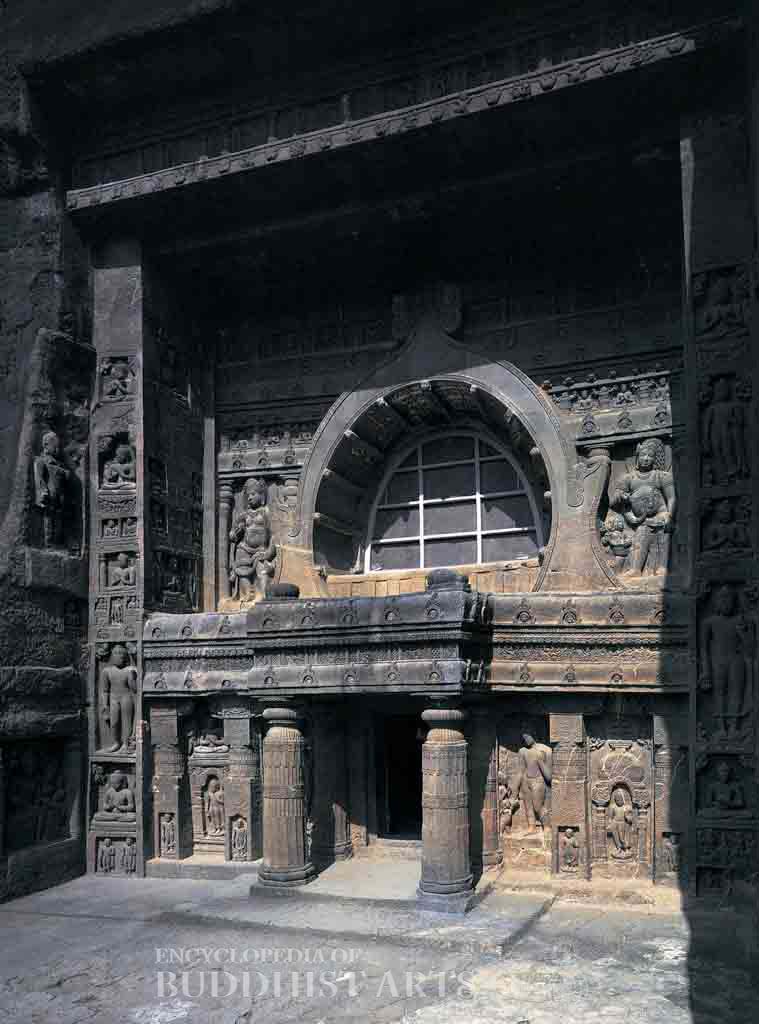
Ajanta Cave 19
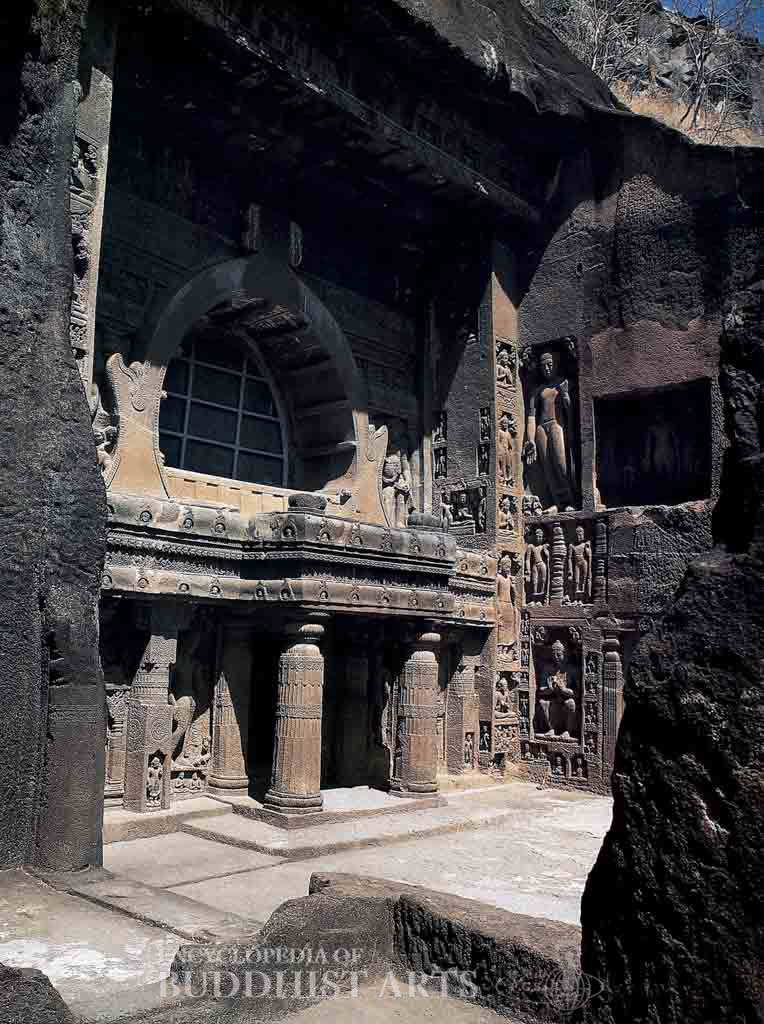
Ajanta Cave 19
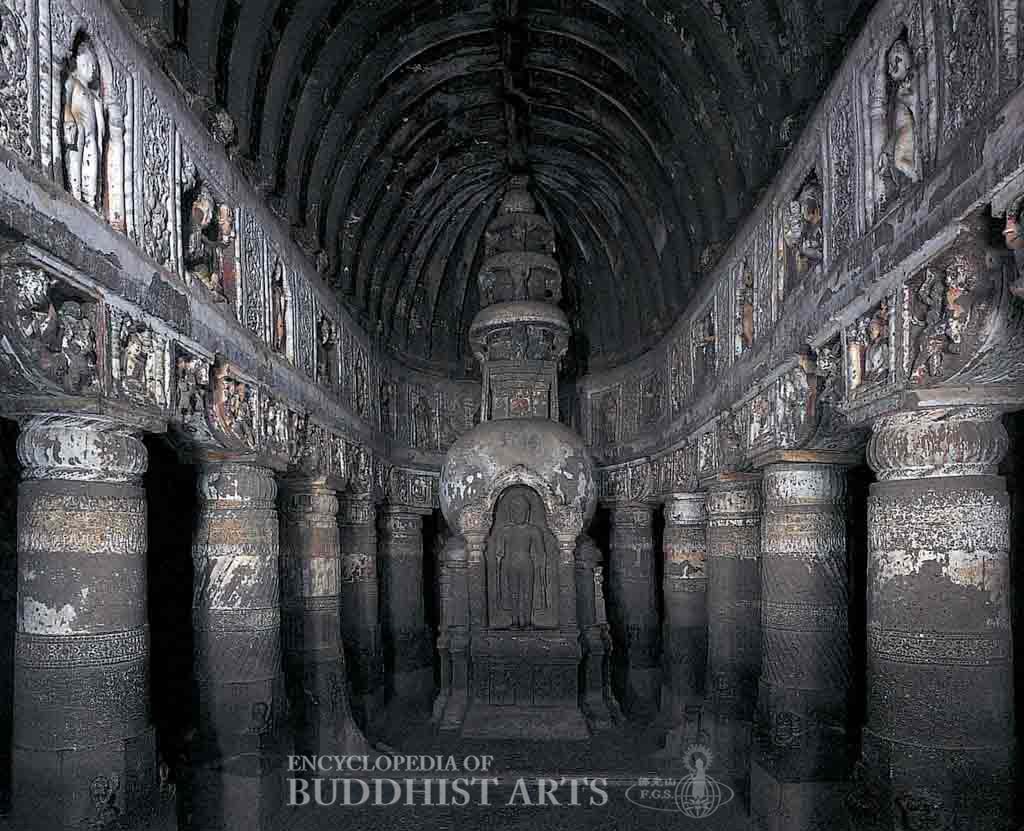
Ajanta Cave 19: Main Hall
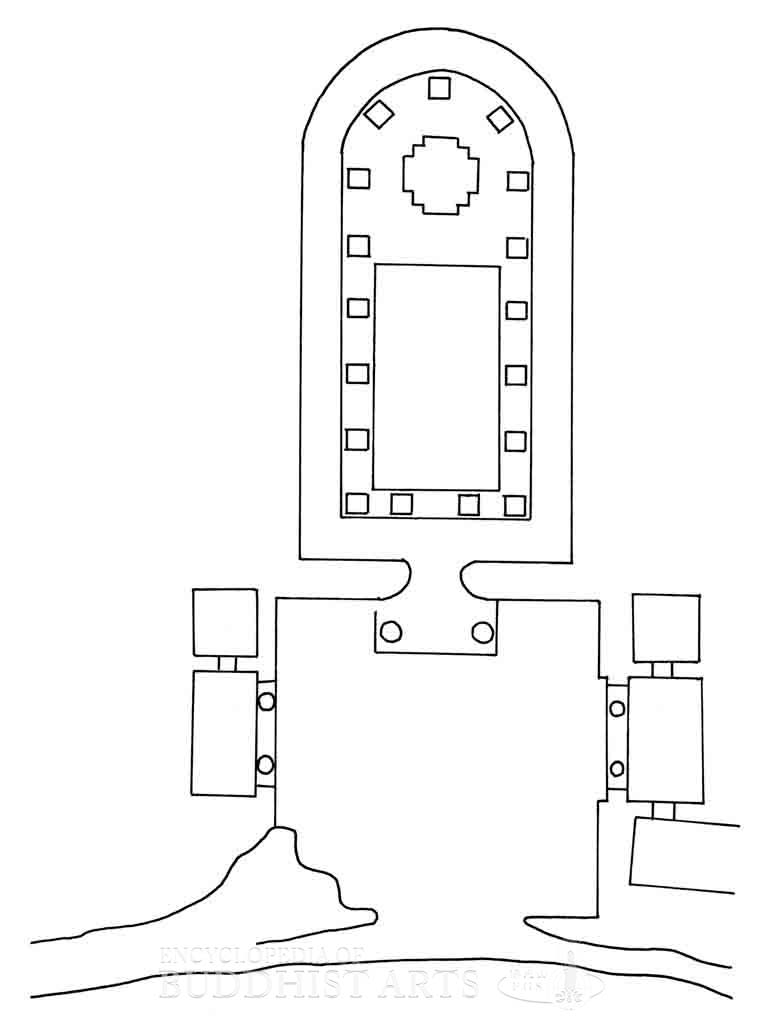
Ajanta Cave 19 (plan)
Ajanta Cave 19
INDIA, Maharashtra, Aurangabad
This cave is located near the center of the cave system, and was constructed around mid-to-late 5th century. The cave has an apsidal layout with a barrel-vaulted ceiling and a colonnade forming a path around the main hall. The layout resembles early caitya halls but differs in the presence of carved Buddha images. The murals are elaborate and utilize resplendent colors.
The outside walls of the entrance and courtyard are covered in decorative reliefs. In addition to Buddhas, there are a naga king and two queens on the left wall of the courtyard, two guardian yaksas flanking the caitya window and numerous images of other deities. Niches at the entrance highlight the merit of generosity with relief images of the Prophecy of Dipamkara Buddha and King Asoka Making a Sand Offering in a former life. The sheer number of exquisite sculptural works invokes a sense of awe in visitors to the site and exhibits the superb standards of architectural art during this prosperous period of Mahayana.
For more details, go to the Encyclopedia of Buddhist Arts: Caves A-E, page 53.
Cite this article:
author = Hsingyun and Youheng and Johnson, Peter and Mankuang and Huntington, Susan and Edson, Gary and Neather, Robert,
booktitle = {Encyclopedia of Buddhist Arts: Caves A-E},
pages = 53,
title = {{Ajanta Cave 19}},
volume = 5,
year = {2016}}