
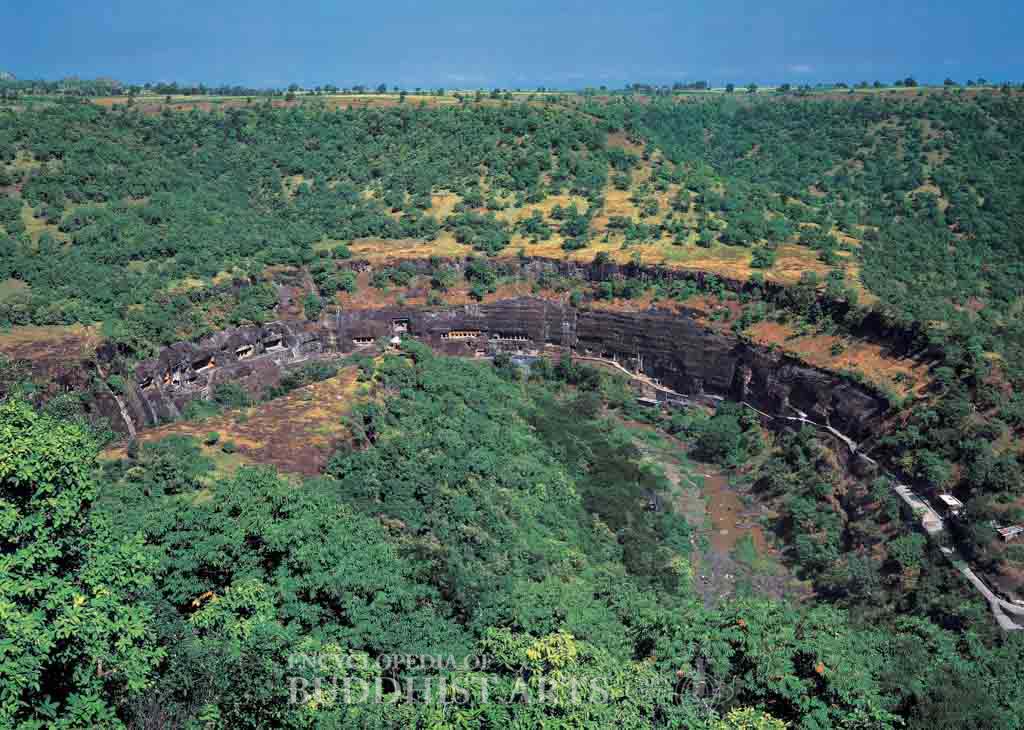
Ajanta Caves
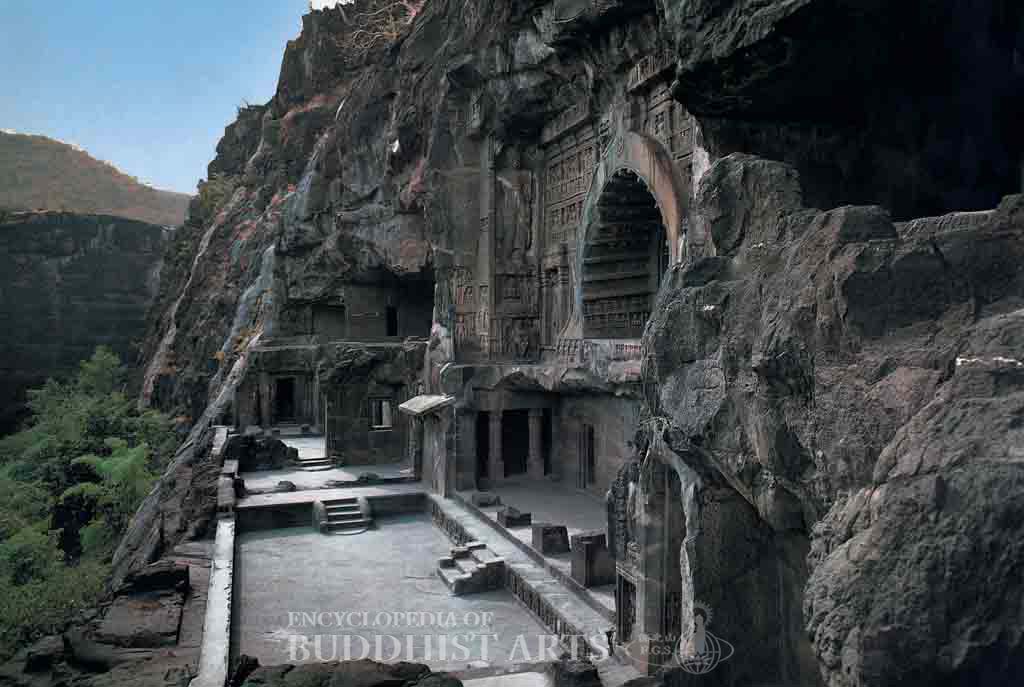
Ajanta Caves: Cave 26
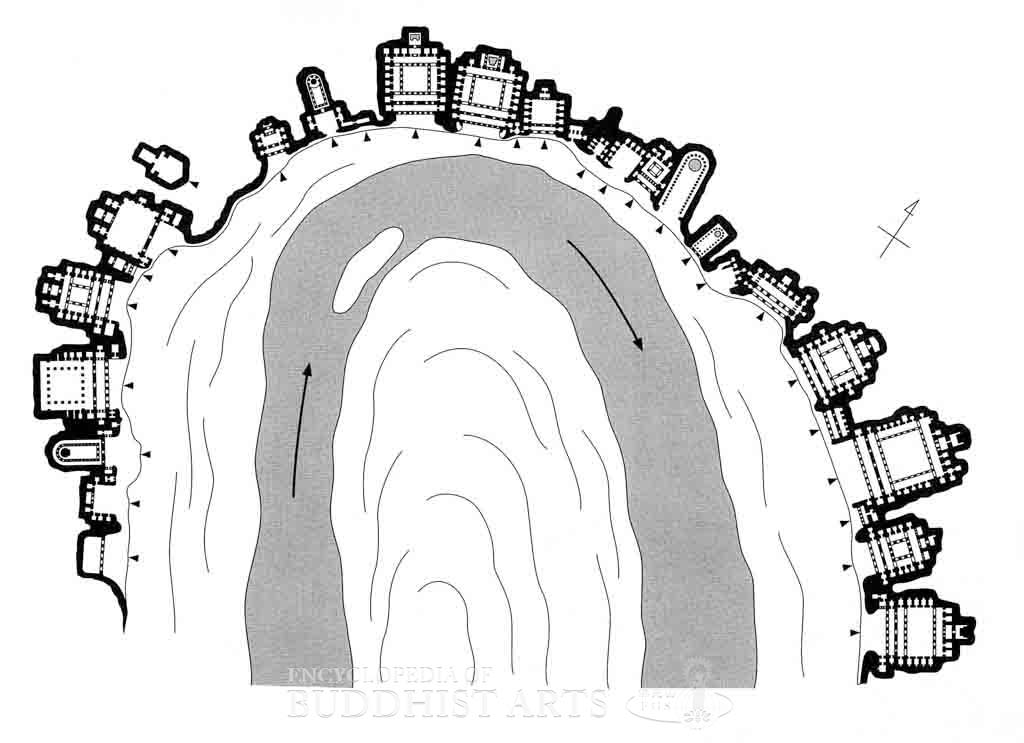
Ajanta Caves (site layout)
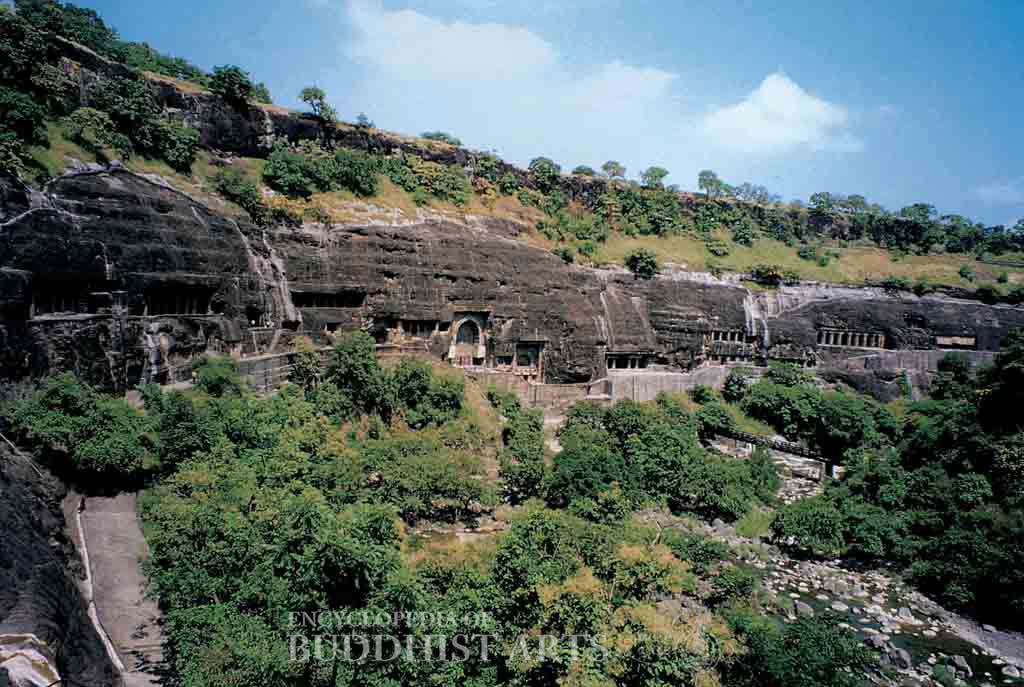
Ajanta Caves
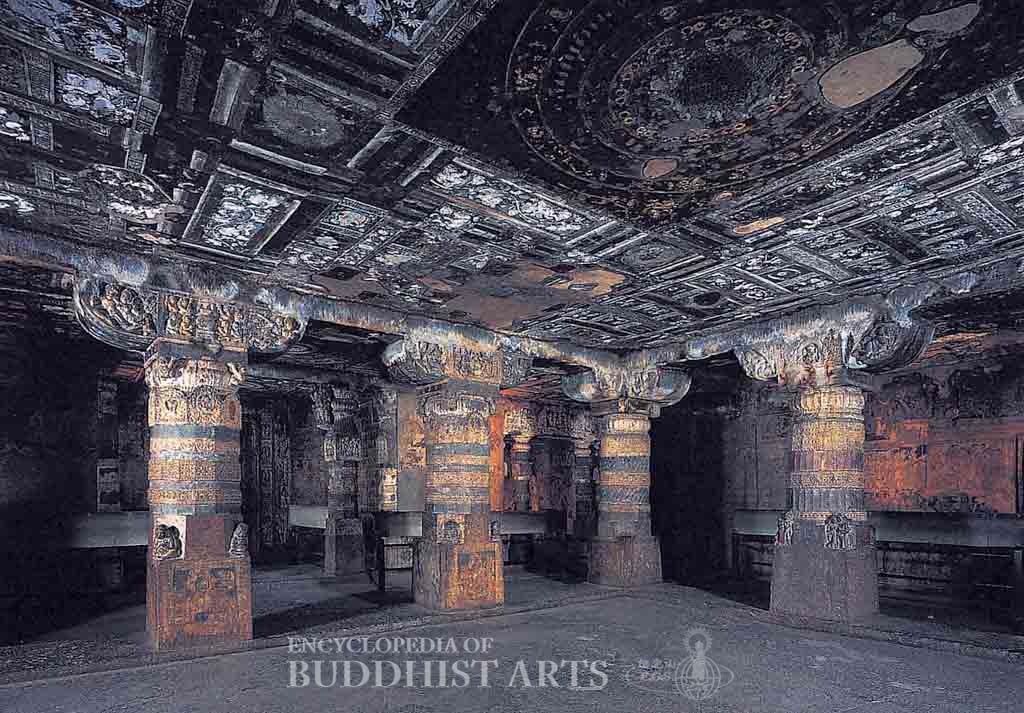
Ajanta Caves: Cave 2 - Main Hall
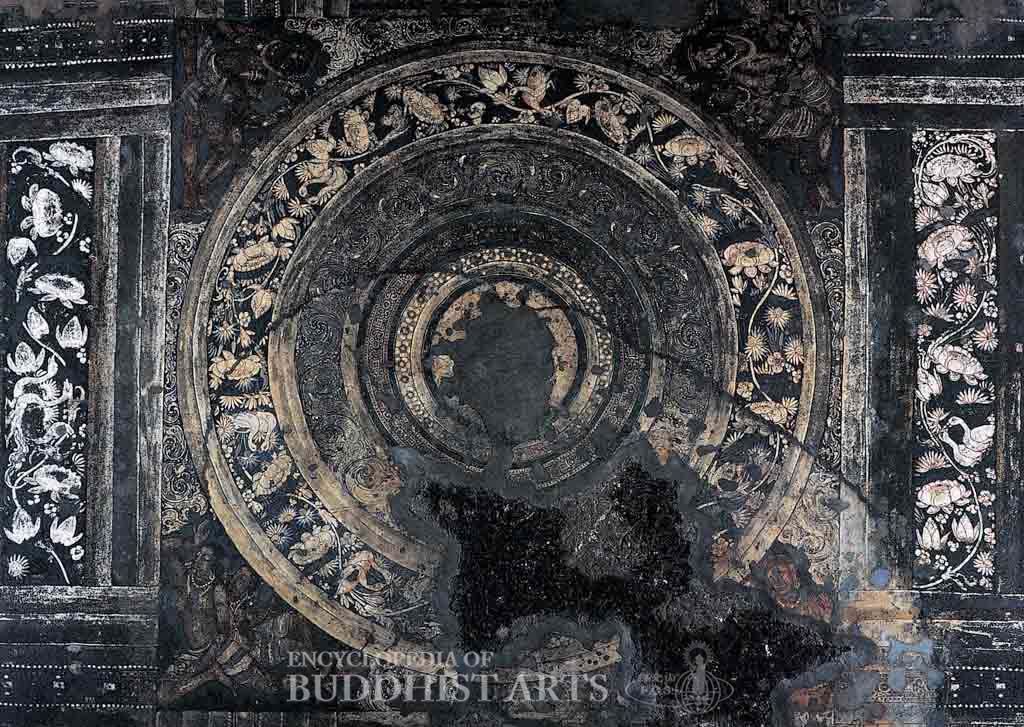
Ajanta Caves: Cave 2 - Antechamber - Ceiling
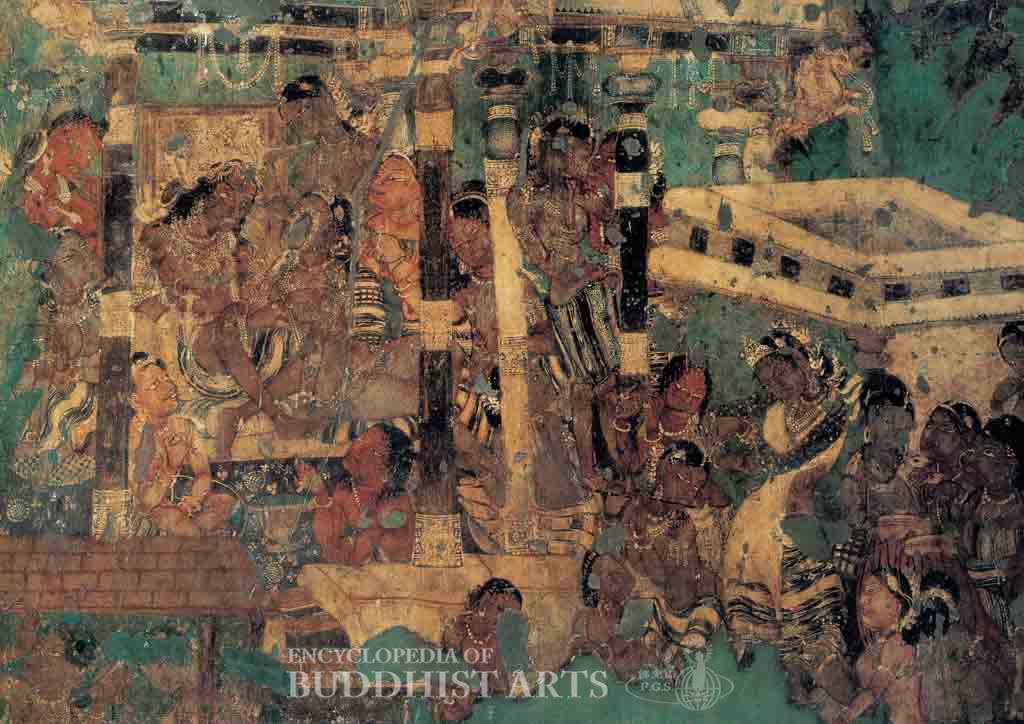
Ajanta Caves: Cave 1 - Mahajanaka Jataka (left wall)
Ajanta Caves
INDIA, Maharashtra, Aurangabad
The Ajanta Caves, located approximately 106 km northwest of Aurangabad city, consists of a total of 29 caves arranged along a U-shaped gorge. The caves stretch 550 m along the cliff, 76 m above the Waghora River near the Sahyadri Hills. The caves were created between the 2nd century BCE and 5th century CE. After Buddhism declined in India, the caves were deserted until their rediscovery in 1819 by members of the British army. In 1983, the site was listed as an UNESCO World Heritage Site.
The 29 caves are numbered sequentially from east to west, with the exception of Cave 29, which was discovered later and is positioned between Caves 20 and 21. The caves were constructed in two periods. The earlier ones were created during the 2nd and 1st centuries BCE. Caves 8, 9, 10, 12, 13, and 15A were constructed during this period and are comparatively simple. Caves 9 and 10, similar to other caitya halls of this period, each have caitya windows above the entrance. Cave 9 has a rectangular layout, while Cave 10 is apsidal. Their barrel-vaulted ceilings are supported by colonnades that line the caves. The stupas, situated at the back, are rather simple in form. The cave murals are some of the earliest surviving in India. The mural in Cave 10 illustrates various scenes, including the Saddanta Jataka. Cave 8, 12, 13, and 15A are vihara caves. They are square in shape, lack pillars, and contain small residence cells on three sides.
The later caves were constructed during the 5th century under the rule of the Vakataka dynasty (circa 250–550) and show evidence of Mahayana Buddhism. Though the area was not under the direct rule of the Gupta regime, the Vakataka dynasty was heavily influenced by the art and culture of their northern neighbors. The caves built during this period are complex and lavishly decorated. Caves 19, 26, and 29 are caitya halls and display Buddha images and decorative reliefs on the facades, columns, and beams. The front of each stupa also exhibits niches with large Buddha images. The right wall of Cave 26 has numerous Buddha niches, while the left wall has large narrative reliefs from the Life of the Buddha, including the Defeat of Mara, as well as the Buddha’s Parinirvana. A niche constructed at the front of the stupa is enshrined with a 3 m high Buddha image, seated with legs pendent.
Caves 1, 2, 16, and 17 are known for their richly illustrated murals depicting the Jatakas and stories from the Life of the Buddha, as well as other images of Buddhas and Bodhisattvas. In addition to their Buddhological meaning, these murals create a colorful space when combined with the decorative patterns and images on the ceilings, colonnades, and cave entrances.
For more details, go to the Encyclopedia of Buddhist Arts: Caves A-E, page 5.
Cite this article:
author = Hsingyun and Youheng and Johnson, Peter and Mankuang and Huntington, Susan and Edson, Gary and Neather, Robert,
booktitle = {Encyclopedia of Buddhist Arts: Caves A-E},
pages = 5,
title = {{Ajanta Caves}},
volume = 5,
year = {2016}}