
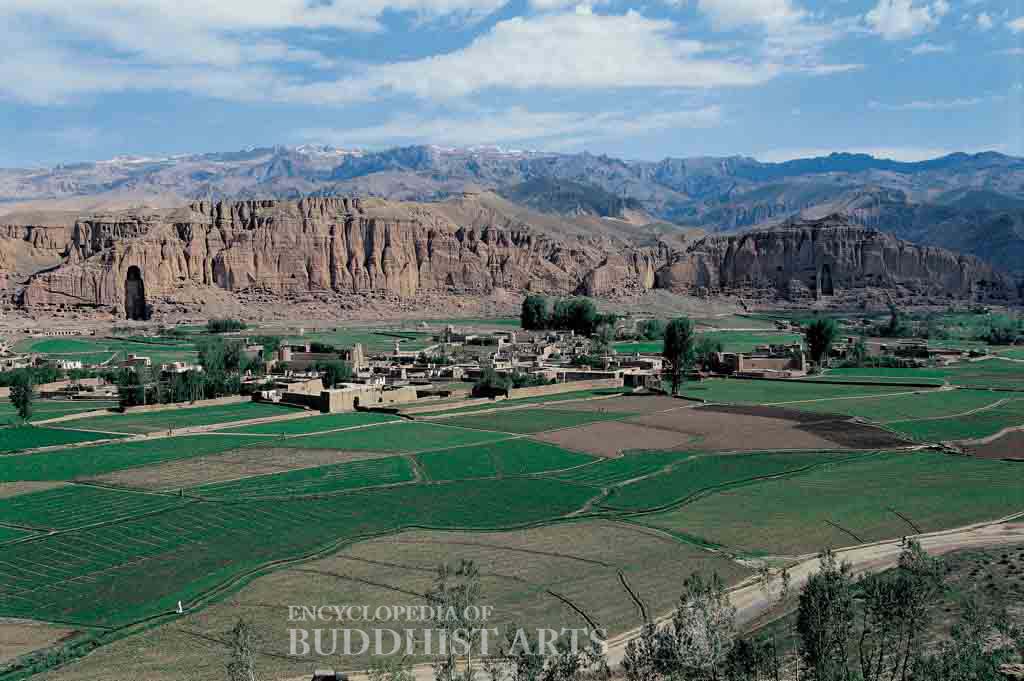
Bamiyan
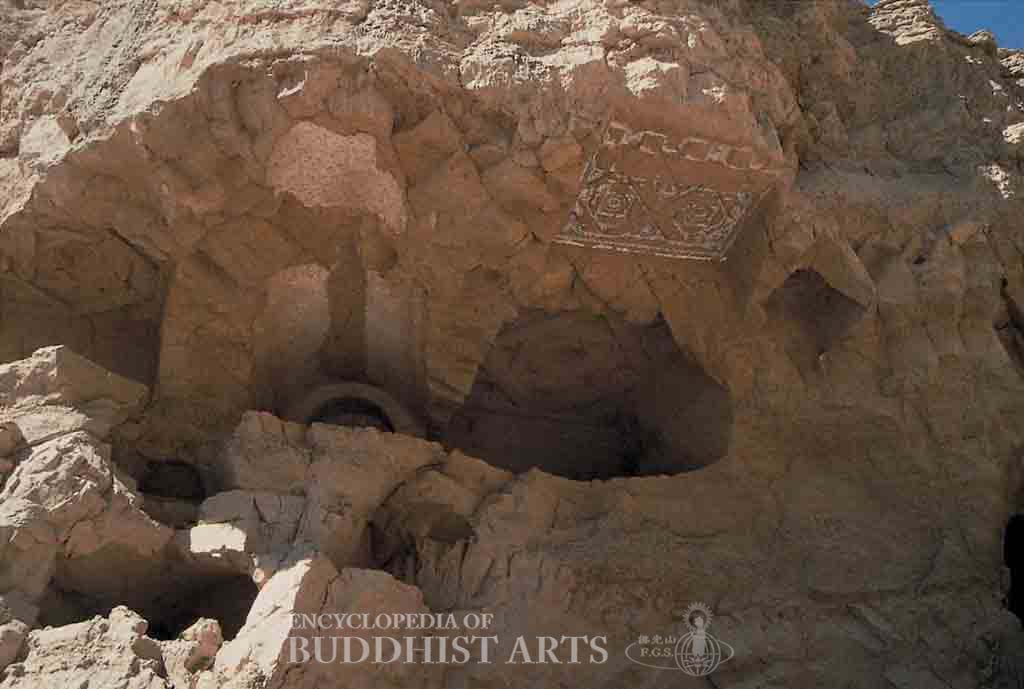
Bamiyan: Fuladi Valley
Bamiyan
AFGHANISTAN, Bamiyan
Bamiyan is situated in the Hindu Kush in Afghanistan, approximately 240 km west of Kabul, and is one of the most famous Buddhist archaeological sites in the world. The main sites in Bamiyan are the north cliff of Bamiyan Valley itself, Kakrak Valley to the southeast, and the Fuladi Valley to the west. The main features of the valleys include almost 1,000 caves and niches, as well as the caves of what were once two of the largest Buddha statues in the world. According to carbon dating, the remains date from the mid-5th century to the mid-9th century. The Bamiyan Valley was part of the main ancient route between South and Central Asia for merchants, travelers, and pilgrims. Chinese Master Xuanzang mentioned the flourishing of the Bamiyan Valley in his book Great Tang Records on the Western Regions, written in the 7th century. The Cultural Landscape and Archaeological Remains of the Bamiyan Valley were listed as a UNESCO World Heritage Site in 2003.
The caves and niches of the Bamiyan Valley are built into the 100 m high and 1.5 km long north cliff of the valley wall. There are over 750 in the main area where the famous East and West Buddha statues were located. Ten percent of the caves contain Buddha niches, while monastic quarters, lecture halls, and storerooms occupy the other caves. The remnants of a stupa have also been discovered on the eastern section of the north cliff. The Kakrak Valley Caves number in the hundreds. There are very few Buddha statues remaining, and only fragments of murals are preserved in the caves. The Fuladi Caves contain more than 50 caves, and the layout of each is unique. They have two sets of numbers, first from an initial French survey which enumerates only the main caves using a mix of numerals and letters. The second set, from a Japanese survey, enumerates them all using only numerals.
The Bamiyan sites is of great importance but has been repeatedly assaulted, first by Genghis Khan (reigned 1206–1227) in the 13th century, and later by various Islamic iconoclastic leaders. The first modern survey of Bamiyan was initiated by French archaeologists in 1922. Restoration of the Buddha statues began in 1969 under a joint Indian-Afghan team. By 1973, the East Buddha was fully restored. The restoration of the West Buddha was halted by the Taliban, who destroyed both in 2001. Subsequently, a project to clear up, conserve, and collect fragments of the two Buddha statues was carried out under the auspices of UNESCO. In 2006, Afghani and French archaeologists found a 19 m long reclining Buddha statue, along with many other ancient temples, and massive stupas.
For more details, go to the Encyclopedia of Buddhist Arts: Caves A-E, page 97.
Cite this article:
author = Hsingyun and Youheng and Johnson, Peter and Mankuang and Huntington, Susan and Edson, Gary and Neather, Robert,
booktitle = {Encyclopedia of Buddhist Arts: Caves A-E},
pages = 97,
title = {{Bamiyan}},
volume = 5,
year = {2016}}