
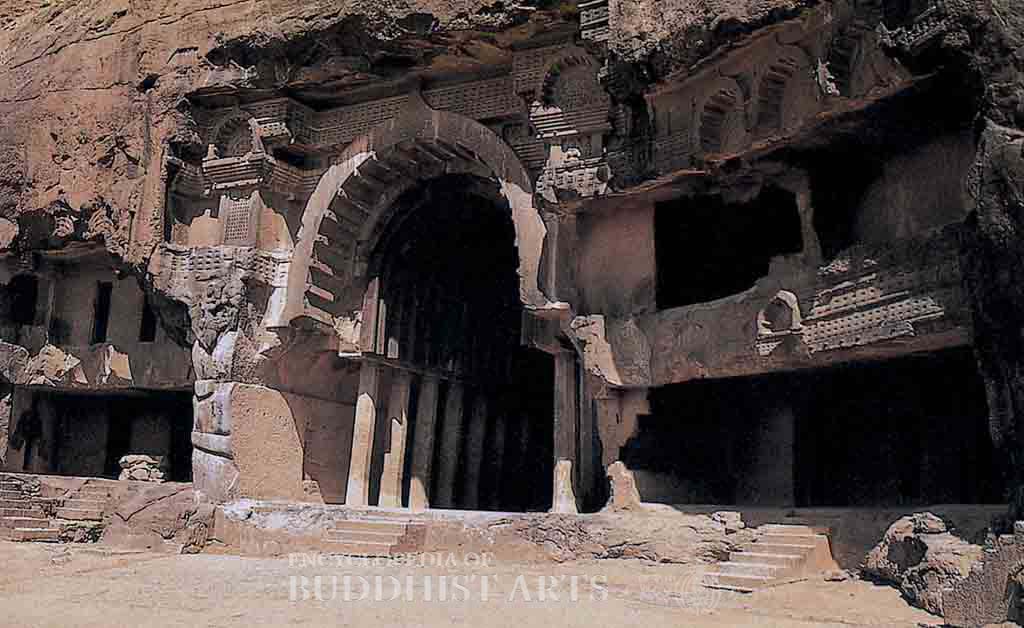
Bhaja Cave 12
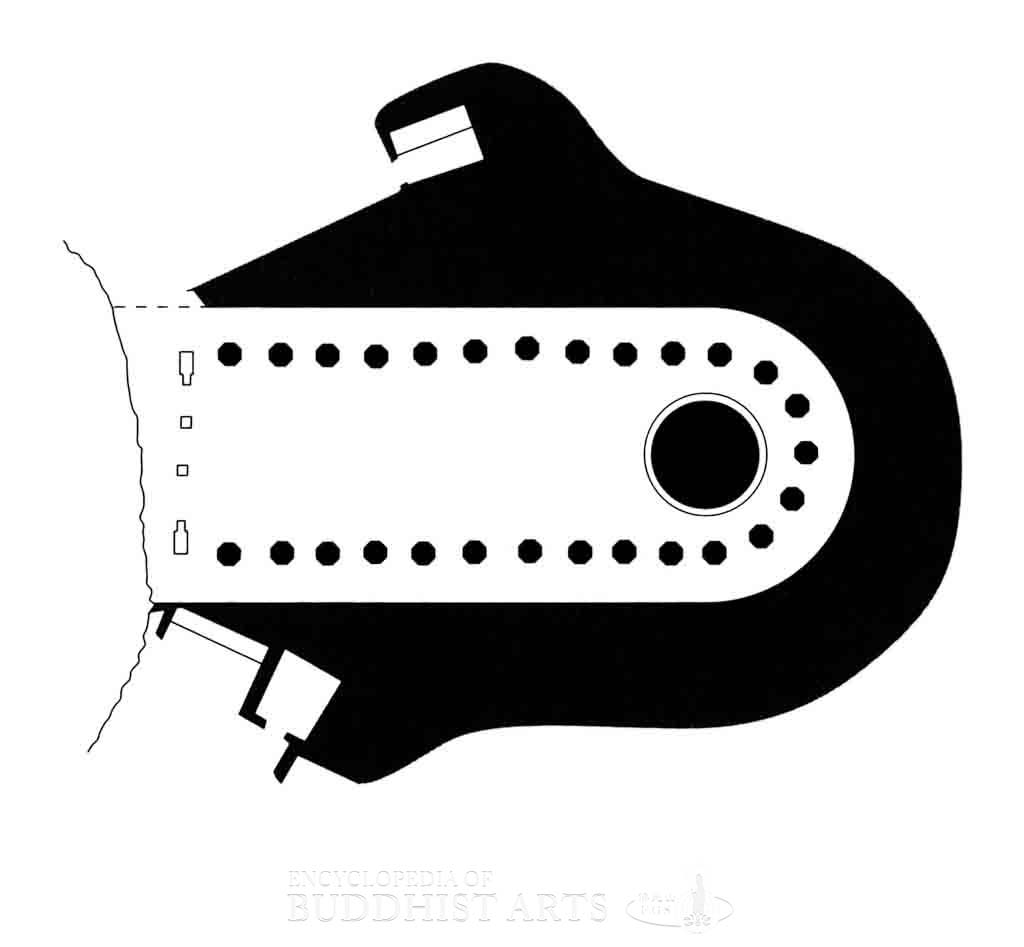
Bhaja Cave 12 (plan)
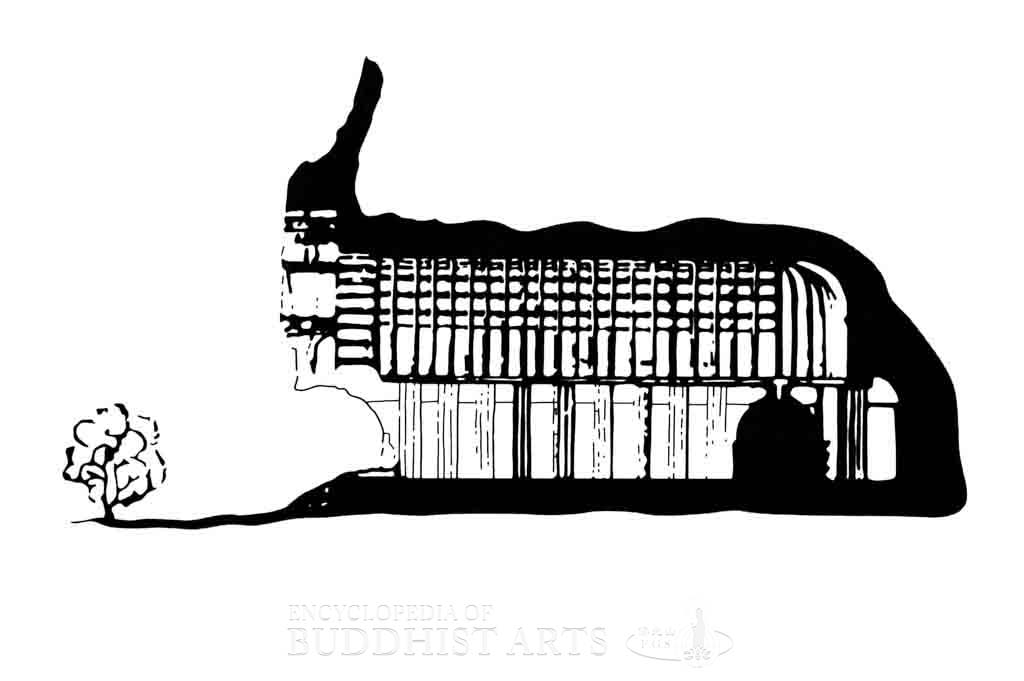
Bhaja Cave 12 (section drawing)
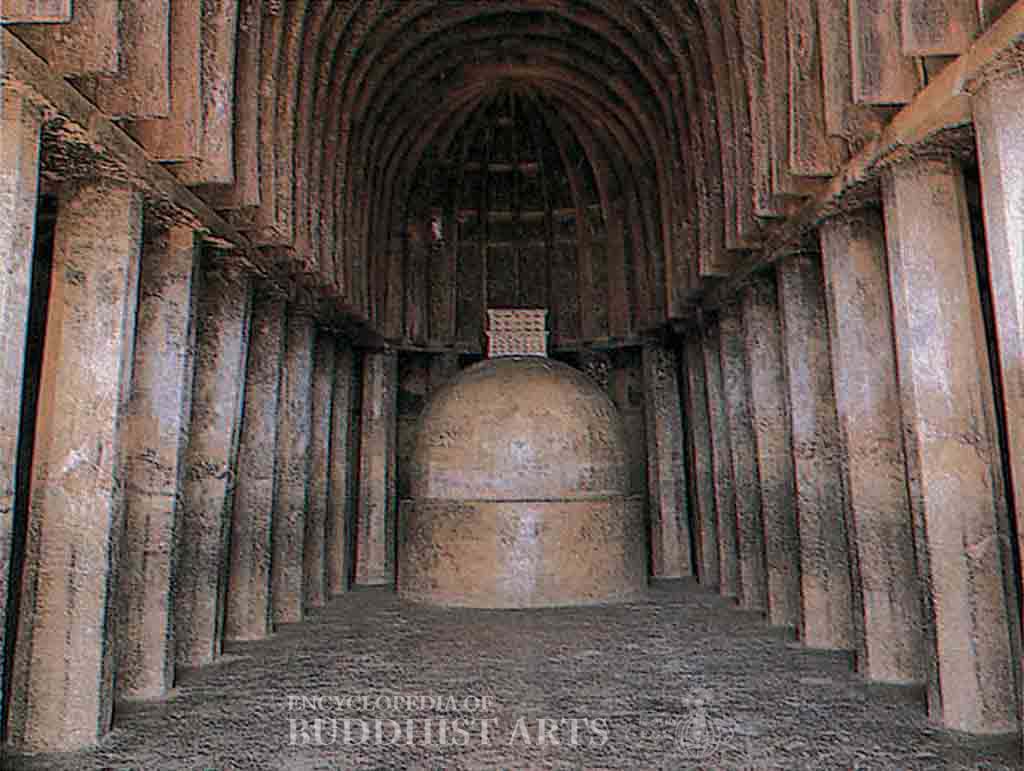
Bhaja Cave 12: Main Hall
Bhaja Cave 12
INDIA, Maharashtra, Pune
This cave was created at the end of the 2nd century BCE. It is one of the earliest apsidal caitya caves, and the only one within the Bhaja Caves. The cave is 8.13 m in width, 6 m in height, and 17.08 m in depth. It has a barrel-vaulted ceiling, which is nearly 10 m in height. Reliefs of balustrades and various figures are carved around the entrance and there is evidence that it was originally timber-framed.
Wooden architectural elements are emulated in stone throughout the interior. A row of 28 unadorned octagonal columns, lacking capitals and bases, lean slightly inward and form a corridor around the hall. The stupa at the rear of the cave has a cylindrical base. The stupa body, shaped like an inverted alms bowl, has a diameter of 3.45 m. Only the harmika remains at the top of the stupa, upon which canopies would have stood at one time. The Caves 11 and 13, adjacent to Cave 12, are approximately the same size and likely formed a complex with the caitya cave in the middle.
For more details, go to the Encyclopedia of Buddhist Arts: Caves A-E, page 148.
Cite this article:
author = Hsingyun and Youheng and Johnson, Peter and Mankuang and Huntington, Susan and Edson, Gary and Neather, Robert,
booktitle = {Encyclopedia of Buddhist Arts: Caves A-E},
pages = 148,
title = {{Bhaja Cave 12}},
volume = 5,
year = {2016}}