
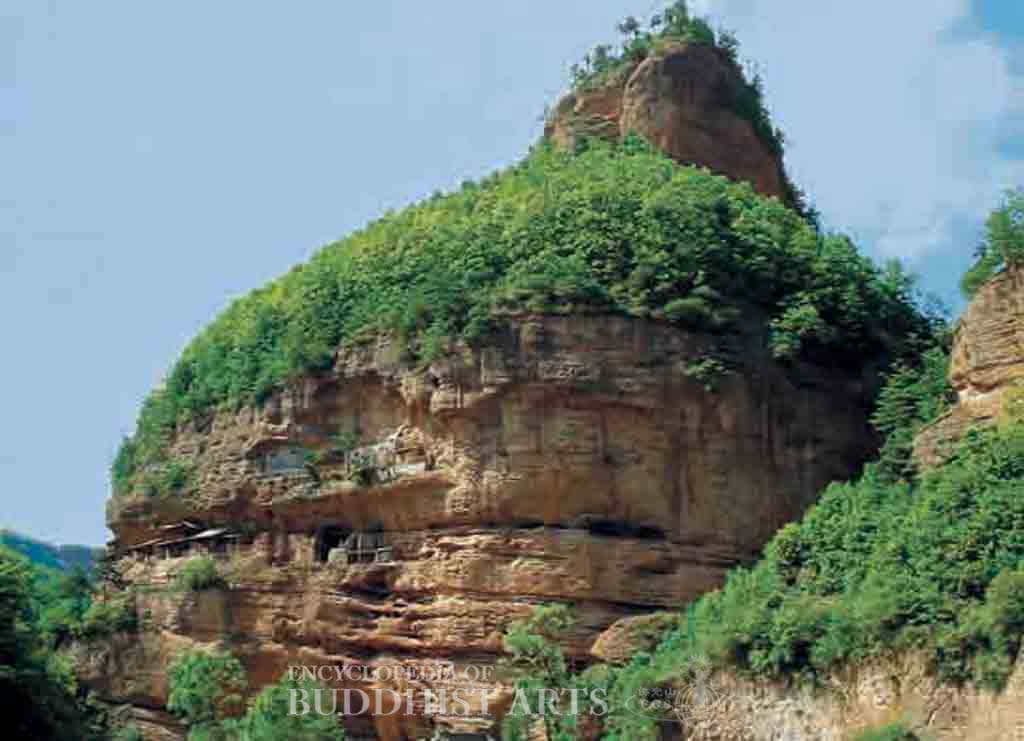
Yunya Temple Caves
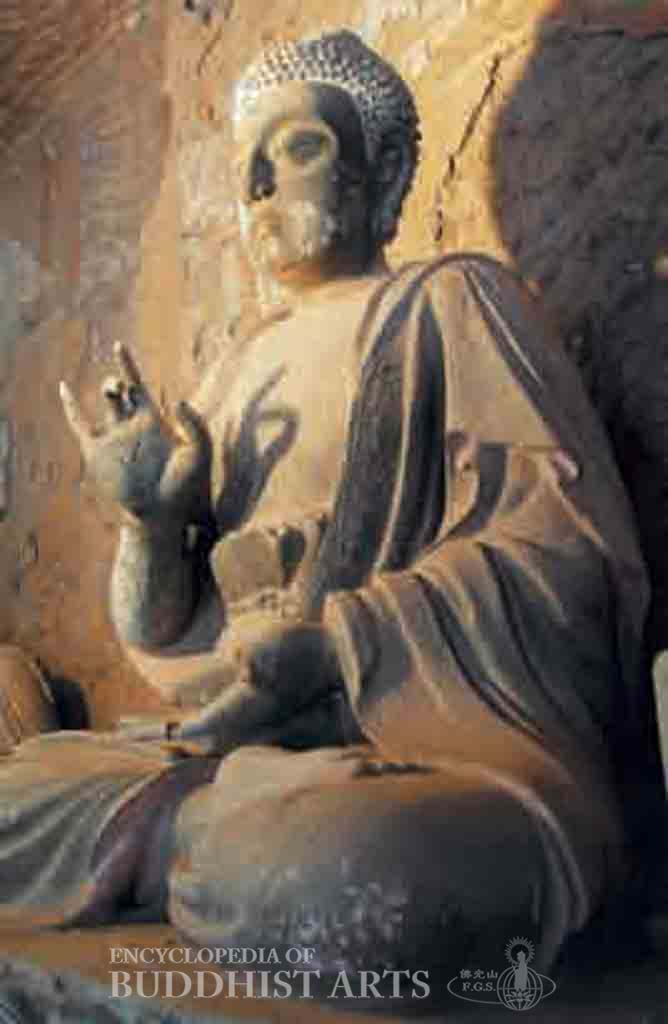
Yunya Temple Caves: Niche 6 - Seated Buddha
Clay
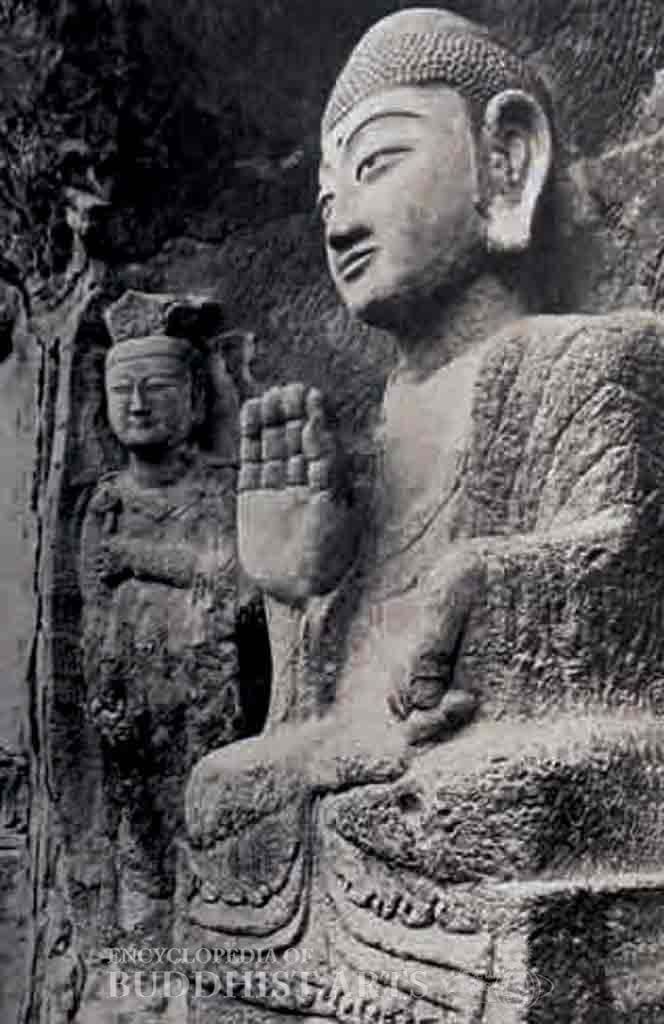
Yunya Temple Caves: Niche 4 - Seated Buddha
Stone
Yunya Temple Caves
CHINA, Gansu, Pingliang
The Yunya Temple Caves are located within the Yunya Temple National Forest Park, west of the Huangcao village in Handian, Pingliang. They were constructed during the Northern Wei (386–534), Western Wei (535–556), and Northern Zhou (557–581) dynasties, and were expanded during the Jin (1115–1234), Yuan (1271–1368), Ming (1368–1644) and Qing (1644–1911) dynasties. The inscriptions on the cliff walls and the sculptural style are reminiscent of the late Northern Wei dynasty. At present, there are still original sculptures from the Northern Zhou dynasty, but most of the figures were sculpted in the Ming dynasty. This group of caves was listed as a National Cultural Heritage Site in 2006.
The caves are cut into the cliffsides of the main mountain peak in three levels. There are currently 19 niches with a total of 18 stone sculptures, approximately 55 clay statues, 14 sq m of murals, and two steles from the Ming dynasty. The first level is about 10 m above the ground and originally contained a three-bay hall. Now only the platform remains. The second level stretches for 200 m and contains eight niches with approximately 17 figures. Niches 2 and 4 are the more interesting among the eight. Niche 2 is housed within a rectangular cave with a flat ceiling and contains a Buddha triad carved in stone, flanked by two attendant Bodhisattvas. Niche 4 has a seated Buddha statue and two Bodhisattvas. This Buddha sits in full lotus position and has a low usnisa and a rounded face, while the hands display the abhaya (fearlessness) and varada (wish-granting) mudras. The two Bodhisattvas are adorned with headdresses and necklaces, and each has one hand on its chest as the other hand drops naturally to the side. The Bodhisattvas are slender in shape yet sturdy in form and likely date from the Northern Zhou dynasty. There is also a 9 m deep cave on the second level that contains two Ming dynasty steles, the Stele of Yunya Temple and the Record of the Engraving in Yunya Temple, the latter describes the history of the temple caves.
The third level is 12 m higher than the second level and is accessible only via a hanging ladder. There are two caves: one contains figures of the Five Dhyani Buddhas and various Bodhisattvas; the other cave is smaller and contains a Buddha, two Bodhisattvas, two disciples, Eighteen Arhats, and Twelve Yaksa Generals.
For more details, go to the Encyclopedia of Buddhist Arts: Caves T-Z, page 1751.
Cite this article:
author = Hsingyun and Youheng and Johnson, Peter and Mankuang and Huntington, Susan and Edson, Gary and Neather, Robert,
booktitle = {Encyclopedia of Buddhist Arts: Caves T-Z},
pages = 1751,
title = {{Yunya Temple Caves}},
volume = 9,
year = {2016}}